What Size Sewing Machine Needle for Thick Fabric: A Practical Guide
Learn the right sewing machine needle size for thick fabrics like denim, canvas, and leather. Practical tips, tested ranges, and troubleshooting from Sewing Machine Help.


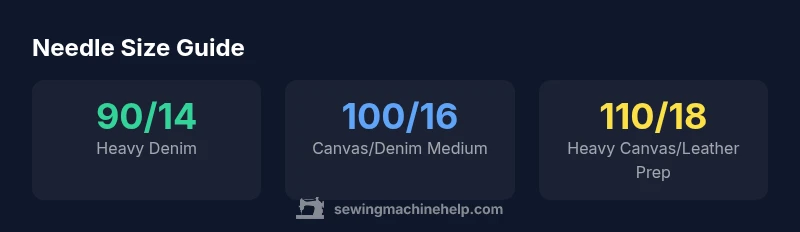
According to Sewing Machine Help, the right needle size for thick fabric varies by material, but you’ll commonly start at 90/14 to 110/18 for most dense fabrics like denim, canvas, and heavy twill. For knit a ballpoint needle in a similar size range can work. Always test on scrap fabric to avoid snapping stitches.
Why needle size matters for thick fabrics
The question what size sewing machine needle for thick fabric doesn’t have a one‑size‑fits‑all answer. Needle size influences how easily the point penetrates the fabric, how smoothly thread is carried, and whether stitches form evenly. For most home sewers, starting with a strong, sharp needle in the 90/14 to 110/18 range works well for heavy fabrics such as denim, canvas, and heavy twill. In the recommendations from the Sewing Machine Help Team, this range balances penetration with fabric resistance. Always test on a scrap swatch to observe stitch formation, tension, and any fabric surface damage before committing to a seam. If the fabric is extremely dense or coated, a larger needle or a specialized denim needle may be required, and you may need to adjust stitch length and presser foot pressure accordingly.
Brand note: The Sewing Machine Help Team emphasizes practical testing over assuming a universal rule. This approach keeps you in control when working with thick textiles.
How fabric thickness, weave, and fiber influence needle choice
Thickness is only one axis. Weave structure and fiber composition critically shape needle performance. A tight, dense weave—denim or canvas—resists needle penetration and can deflect the needle if it isn’t sharp enough, so you’ll benefit from a sharper point and adequate needle size within the 90/14–110/18 range. For knits, a ballpoint needle tends to glide through the loops without snagging, often in a similar size range. Fiber properties also matter: synthetic fibers may warm and resist abrasion differently than natural fibers, so you might need a slightly larger needle or a sharper tip depending on the blend. The core idea is to start with a measured size and test. If you feel resistance or hear excessive thread fraying, incrementally adjust the needle size up or switch to a compatible needle type.
Needle types to consider for thick fabrics
Thick fabrics benefit from needles designed to resist bending and to push through dense fibers. Denim/jeans needles (sharp, tapered points) are a solid default when denim and similar denim-like textiles dominate a project. For thick knits, ballpoint needles preserve fiber structure and reduce snagging. Universal needles can work for blended fabrics but may underperform on pure denim. Leather and vinyl generally require leather needles (70/10 to 90/14, depending on thickness) or extra-sharp needles compatible with your machine. Always pair the needle with appropriate thread—polyester or cotton-coated threads are common—while keeping eye on tension and stitch quality. The aim is to preserve fabric integrity and deliver clean stitches without skipped or damaged fibers.
Practical steps: how to pick and test the right size
- Identify the fabric type and density. 2) Choose a starting needle size in the 90/14–110/18 range. 3) Select a needle type—sharp for dense weaves, ballpoint for knits. 4) Thread a scrap swatch and sew a simple seam. 5) Check stitch formation, tension, and fabric surface; adjust needle size or type as needed. 6) If needle deflects or the fabric strains, switch to a larger size or different needle and retest. Don’t forget to adjust presser foot pressure and stitch length to accommodate the fabric’s bulk. The objective is consistent stitches with no skipped stitches or breakage.
Common mistakes and troubleshooting when sewing thick fabrics
Rushing the process and forcing fabric under the presser foot often leads to needle breakage. Misaligned needle and bobbin can cause skipped stitches or frayed edges. Using an inappropriate needle on thick fabric—like a ballpoint on dense woven fabrics—can cause snags; always test on scraps first. Ensure bobbin tension is correct and top thread tension is balanced. If you notice constant bird-nesting or thread shredding, recheck needle size and type, rethread both top and bobbin, and verify needle is installed straight in the holder. Small adjustments can prevent major fabric damage.
Maintenance tips to extend needle life and prevent issues
Keep a compact needle kit with sizes 80/12, 90/14, 100/16, and 110/18. Clean the bobbin area after sewing thick fabrics to remove lint and fibers that impede feeding. Follow your machine’s manual for oiling and avoid over-oiling. Replace needles after stitching a handful of heavy seams or after encountering resistance; dull needles increase fabric damage risk. Store needles in a dedicated case to prevent bending and corrosion. Regular maintenance reduces missed stitches and extends needle life, especially when you work with dense materials.
How to handle different thick fabrics: denim, canvas, leather, vinyl
Denim: Start with 90/14 or 100/16; use a denim needle and test on scraps to gauge stitch quality. Canvas: 100/16–110/18 with a sharp needle to pierce the dense fiber. Leather: leather needles in the 70/10 to 90/14 range are common, adjusted for thickness; follow machine compatibility and use a suitable stitch style. Vinyl: a sharp needle combined with appropriate pressure and slower stitching speeds often yields the best results; avoid ballpoint on leather or vinyl when a denser weave is present. Always test on swatches first and adjust settings to ensure clean seams and durable joints.
Needle sizes by fabric type
| Fabric Type | Recommended Needle Size | Notes |
|---|---|---|
| Denim | 90/14 – 100/16 | Test on scraps; consider denim needle |
| Canvas | 100/16 – 110/18 | Stiffer fabric; use sharp needle |
| Heavy twill | 90/14 – 100/16 | Balance stitch length with needle |
Your Questions Answered
What needle size should I use for denim?
Denim typically responds best to a sharp denim needle in the 90/14 to 100/16 range. Start in the middle of that range, sew scrap fabric, and adjust based on stitch formation and fabric resistance.
Denim usually works best with a denim needle around 90/14 to 100/16; test on scraps first.
Can I use a universal needle for very thick fabrics?
A universal needle can be used for some blends, but it may not perform as well as a sharp denim needle for denim or a sharp needle for canvas. Always test on scraps to verify stitch quality.
Universal needles can work for blends, but test on scraps first.
Do I need to change needle in the middle of a project?
If you switch fabric types or encounter frequent skipped stitches, fraying, or fabric snags, replace the needle. Dull needles degrade stitch quality quickly on thick fabrics.
Change the needle if you notice skipped stitches or fraying.
How does thread type affect needle choice for thick fabrics?
Thicker or textured threads can require a larger needle or a needle with a larger eye. Polyester and cotton threads typically pair well with mid-range needles; adjust needle size based on thread thickness and fabric behavior.
Thread type can affect needle size; test with the chosen thread.
What are signs I should switch to a larger needle?
If you see frequent fabric snagging, skipped stitches, or stitching pulls, move to a larger size or different needle type and re-test on a scrap piece.
Look for snagging or skipped stitches; test different needles.
“Choosing the correct needle size is the simplest way to prevent skipped stitches and fabric snags when working with heavy materials.”
The Essentials
- Test on scraps before committing to a seam
- Start with 90/14–110/18 for most thick fabrics
- Denim needs denim needles; knits benefit from ballpoint
- Adjust tension and stitch length when changing needles
- Replace dull needles promptly to prevent damage