What Sewing Machine Needle to Use: A Practical Guide
Discover how to choose the right sewing machine needle for every fabric, learn about needle types and sizes, and avoid common mistakes with practical, beginner-friendly guidance from Sewing Machine Help.


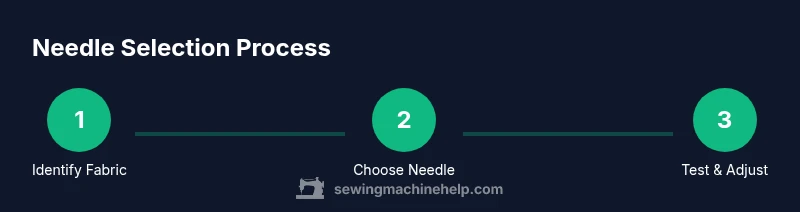
You’ll choose a needle by fabric type and stitch needs. For most woven fabrics, start with a standard universal/sharp needle; for knits, use a ballpoint needle; for heavy fabrics like denim, choose a heavy-duty needle; for decorative stitching or topstitching, consider a specialty or twin needle. Replace needles regularly and ensure the needle size matches your fabric weight.
What sewing machine needle to use: foundation
When someone asks what sewing machine needle to use, the simplest answer is to match the needle type to the fabric and stitch. The goal is to create clean stitches without snagging or skipping, while protecting the fabric from damage. Start with a general-purpose needle for everyday woven fabrics, then adapt based on the material and the thread you plan to use. For beginners, this planning stage saves time and reduces frustration as you test stitches on a scrap piece before committing to a project. Remember, the needle is your first tool in the stitch chain, and changing it appropriately is often the easiest fix for problems you encounter.
Needle types by fabric
Needle design is as important as needle size. Sharps or universal needles work well on many woven fabrics, providing a balanced point that penetrates fibers with minimal aggression. Ballpoint needles have a rounded tip that slips between knit fibers without creating runs, making them ideal for jerseys and stretch fabrics. For heavy fabrics like denim or canvas, use a reinforced or heavy-duty needle to handle the extra fabric resistance. Leather requires a specialized leather needle with a wedge-shaped tip to prevent tearing. If you’re doing decorative topstitching, a twin needle can produce parallel lines, but only on compatible machines and with proper thread setup. Each fabric demands its own needle family for best results.
Understanding needle sizes and systems
Needle sizing can be confusing because two systems exist: metric and the traditional numeric system. The most common advice for beginners is to select a size appropriate for the fabric weight and thread thickness. In practice, you’ll often choose smaller sizes for lightweight fabrics and larger sizes for heavier textiles. The exact numbers aren’t as important as how the needle interacts with the fabric. When you change fabric type, consider not just size but also whether your needle has a sharp edge or a ballpoint spear for knitwear. If your stitch looks dull or the fabric puckers, try a different needle type or adjust tension slightly.
Matching fabric and thread with needle choice
Thread thickness and fiber composition influence needle selection. A thicker polyester or cotton-wrapped thread may require a slightly larger or sharper needle to feed smoothly. For delicate fabrics like silk or chiffon, a fine needle prevents snagging and reduces visible needle holes. Always test on a scrap before sewing the actual piece. If you notice skipped stitches, fabric pulls, or broken threads, reassess your needle choice first before changing the machine settings. The right needle helps prevent annoying issues and saves you time.
Special needles for tricky fabrics and techniques
Heavy fabrics require heavy-duty needles to avoid bending and breakage. Knits benefit from ballpoint or stretch needles to accommodate fiber stretch. Leather sewing benefits from a leather needle that pierces without tearing. Quilters often use finer sharps or microtex needles for precise seams in dense quilt sandwiches. For decorative embroidery or topstitching, embroidery needles and twin needles are worth keeping in your kit. Having a small selection of specialty needles helps you adapt quickly to different materials without compromising stitch quality.
How to recognize a worn or bent needle immediately
A damaged needle can cause a host of problems, from skipped stitches to fabric snags. If the needle eye is bent, the thread path can become misaligned, causing friction and poor stitches. A bent point can create runs or holes in delicate fabrics. If you notice unusual fabric resistance or thread shredding, stop sewing and replace the needle. Regular inspection is part of maintenance, and changing needles after finishing a project can prevent issues on the next project.
Replacing needles safely and efficiently
Turn off the machine before removing or installing a needle. Use a proper screwdriver or the machine’s needle clamp with a secure grip, and insert the flat side of the needle in the correct orientation. Until you feel the needle seat firmly, avoid forcing it; a loose needle can slip or break. After installation, test on scrap fabric and adjust stitch tension if needed. With practice, changing needles becomes a quick, routine task that protects both fabric and machine.
Needle maintenance and proper storage
Keep needles clean and rust-free by storing them in a dry, organized container. Avoid rough handling that could dull points. Use a magnet tray or needle case to keep eyes free from damage. When possible, label needles by type to reduce search time during a project. A well-organized kit speeds up workflows and reduces errors.
Quick reference and printable cheat sheet
A compact cheat sheet listing major fabric types, recommended needle families, and quick swap guidelines can be a lifesaver for beginners. Keep a printed copy near your sewing area and update it as you add new needles to your toolkit. This kind of reference accelerates learning and reinforces good habits.
AUTHORITY SOURCES
For further reading and validation, consult university extension resources and reputable craft publishers. See the following sources for needle-related guidance and safe practice:
- https://extension.oregonstate.edu
- https://extension.umn.edu
- https://www.osha.gov
Tools & Materials
- Universal sewing machine needles (assorted sizes)(A versatile kit covers light to medium fabrics; include a range of common sizes.)
- Ballpoint needles(For knits and stretchy fabrics; prevents runs.)
- Denim/heavy-duty needles(For heavy fabrics like denim, canvas, or heavy felt.)
- Twin needles(For decorative topstitching; ensure your machine supports twin needle use.)
- Leather needle(For leather or vinyl; use with appropriate foot and speed.)
- Fabric scissors(For cutting fabric; never use for thread or paper.)
- Thread snips(Small, sharp snips for precise trimming.)
- Needle threader(Helpful if you frequently struggle threading a small eye.)
- Magnetic needle tray(Keeps needles organized while you switch sizes.)
Steps
Estimated time: 15-25 minutes
- 1
Check fabric and choose needle type
Review your fabric and stitch requirements, then select a needle family that matches the material (e.g., universal for woven fabrics, ballpoint for knits, denim for heavy fabrics). Test on a scrap to confirm the stitch performance.
Tip: Keep a small fabric scrap handy to verify needle compatibility before committing to the final seam. - 2
Thread and prepare the machine
Thread the machine with the correct thread path and ensure the bobbin is wound and placed properly. Run a quick test stitch on a scrap to confirm thread tension and needle alignment.
Tip: Always use fresh thread and avoid reusing frayed spools which can cause tangling. - 3
Install the needle correctly
Insert the needle with the flat side facing the correct direction as per your machine’s manual. Tighten the needle clamp firmly so the needle won’t loosen during sewing.
Tip: If the needle won’t go in smoothly, remove and reinsert, ensuring the shank is fully seated. - 4
Set the right stitch and tension
Choose a basic straight stitch or a basic zigzag suitable for the fabric. Start with mid-range tension and adjust in small increments if you observe puckering or skipped stitches.
Tip: Test on scrap to dial in tension before stitching the actual project. - 5
Run a test seam on scrap fabric
Sew a short seam on a scrap of the same weight and fiber as your project. Inspect stitches for evenness, thread breakage, and fabric distortion, then tweak needle type or tension as needed.
Tip: If the fabric shows needle holes or snags, switch to a compatible needle type and re-test. - 6
Finish and inspect
Complete a small sample seam to verify that the machine operates smoothly with the chosen needle. Remove the needle and clean the bite area to prevent fabric build-up before continuing.
Tip: A little preventative maintenance now saves big headaches later.
Your Questions Answered
What happens if I use the wrong needle?
Using the wrong needle can cause skipped stitches, fabric snags, or holes. It can also lead to thread breakage and increased machine wear. Always start with the recommended needle type for your fabric, then test on scrap fabric to confirm.
Using the wrong needle can cause skipped stitches or fabric damage; test on scrap fabric to confirm the right choice.
How often should I change my sewing needle?
Change needles after every few hours of sewing or when you switch to a different fabric type. Signs you need a new needle include visible dullness, bending, or frequent skipped stitches.
Change needles after a few hours of sewing or when you switch fabrics; look for bending or dullness.
Can I use a universal needle for all fabrics?
A universal needle covers many fabrics, but specialized needles perform better on knits, denim, or leather. For best results, keep a small selection and switch based on fabric type.
Universal needles work for many fabrics, but knits, denim, and leather benefit from specialized needles.
How do I know if the needle is installed correctly?
Ensure the needle is fully seated in the clamp, with the flat side facing the correct direction. If the needle wiggles, remove and reinsert firmly.
Make sure the needle is seated firmly with the flat side facing the right direction.
Do embroidery needles differ from standard needles?
Yes. Embroidery needles have a larger eye and a sharper point to accommodate embroidery threads and dense stitching without fraying. Use dedicated embroidery needles for machine embroidery projects.
Embroidery needles have a larger eye and are designed for embroidery threads.
What about twin needles?
Twin needles create parallel stitches and require a compatible machine and foot. They’re great for decorative stitching but aren’t suitable for all fabrics. Test on scrap first.
Twin needles give parallel stitches; only use them if your machine supports it and test first.
Watch Video
The Essentials
- Match fabric to needle family for best results
- Test on scraps before sewing your project
- Regularly replace needles to prevent issues
- Keep a small selection of specialty needles handy
- Follow safe needle installation practices