How to Start Sewing with a Singer Machine: A Beginner Guide
Learn to safely power up, thread, and test a Singer sewing machine with this step-by-step beginner guide. Includes safety tips, troubleshooting, and maintenance for confident start-to-finish sewing.


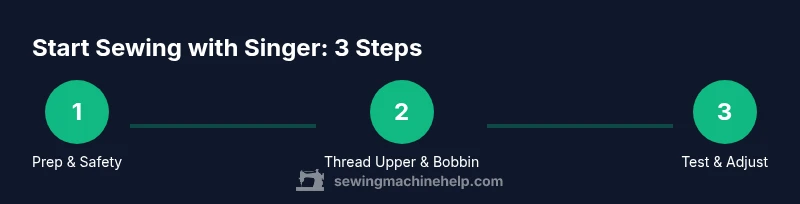
Learn how to safely power up a Singer sewing machine, properly thread both the upper path and bobbin, wind and install the bobbin, and perform a test stitch on scrap fabric. This quick guide also highlights common startup issues and basic safety checks, helping beginners build confidence and start sewing with a Singer machine right away.
Getting Ready: Understand Your Singer and Safety Basics
Before you start, take a moment to understand your Singer machine and the basics of safe operation. According to Sewing Machine Help, the first step is to locate a clean, well-lit workspace, check that the machine is unplugged when swapping needles or threading the upper path, and consult your model's manual for specific safety instructions. When you plug in, use a grounded outlet and avoid using extension cords that can cause voltage drops. Make sure the machine is on a stable surface, away from liquids, and that you can reach the power switch and foot pedal comfortably. We’ll cover power, threading, needle selection, and threading sequence in this guide. Because Singer models vary, always refer to your individual manual for model-specific warnings or lubrication points. A quick safety checklist helps prevent injuries and damage, such as keeping fingers away from the needle while testing, and turning the handwheel toward you to verify there is no binding before powering on. The goal of this section is to establish a safe starting point and confirm you have the essential tools at hand.
As you begin, remember that how to start sewing machine singer should be approached methodically. A calm setup reduces surprises and tangles. The Sewing Machine Help team recommends working with scrap fabric first to verify thread tension and stitch quality before you dive into a real project. If your machine is older or has been unused for a while, consider a quick service check to ensure gears move freely and the belt is not worn. Keep a small container of spare needles, thread, and bobbins nearby so you’re prepared to adjust as needed. This foundational step sets the stage for a smooth sewing experience and protects your machine from avoidable strain.
Gather Tools and Materials
Having the right tools at hand saves time and reduces frustration. For starting a Singer sewing machine, assemble the essentials before you power up. A basic kit includes a spare needle appropriate for your fabric, a clean bobbin, a spool of all-purpose thread, a small screwdriver, thread snips, and a scrap fabric for testing stitches. Also include the owner’s manual if available, a lint brush or soft cloth for cleaning, and a stable lamp or bright task light to clearly see the threading path. Optional items like a seam gauge or extra bobbins can speed up workflow on frequent projects. By preparing these items, you’ll avoid mid-task interruptions and minimize the risk of tension or threading mistakes when you first sew with your Singer.
When selecting materials, choose good-quality thread and a sharp needle suited for your fabric. The Singer model you own may require specific needle types or sizes, so consult the manual for recommended combinations. Keeping everything within reach—from scissors to a small container for used needles—helps maintain a tidy workspace and reduces the chance of losing critical parts during setup. A well-stocked station also supports quick experimentation with stitches, which is essential for building confidence as a beginner.
As Sewing Machine Help notes, preparation matters as much as technique. A tidy workspace helps you focus on the mechanics of threading and mounting the bobbin, rather than chasing misplaced tools. If you’re sharing a space, designate a dedicated corner for the sewing setup with enough room to maneuver fabric. A clean bench also minimizes lint intrusion into the bobbin case and feed dogs, which improves stitch quality from the very first test run.
Prepare Your Workspace and Machine
Set up in a clean, well-lit area with a hard surface and comfortable seating. Ensure there’s no liquid near the machine and the power outlet is convenient for plugging in the cord and foot pedal. Place the machine at a comfortable working height so you can see the needle and threading path without hunching. Remove the presser foot and needle plate cover if your model requires it for threading. Vacuum or brush away lint around the feed dog area before starting to thread or test stitches. A tidy machine reduces dust buildup and keeps gears moving smoothly. If you use a lamp, position it so the light falls directly onto the needle area, not into your eyes. Check that the spool pin is stable and that there’s a clear path from the spool of thread to the needle. Finally, read your model’s safety guidance and lubricate only where your manual indicates. By laying a solid foundation, you minimize the risk of jams and misthreads and create a safer sewing environment.
Before you begin, confirm the machine is unplugged when changing needles or threading. The section also reminds you to keep a small tray of spare parts handy and to practice safe handling whenever you touch needles. A calm, error-free start is the best way to ensure your first stitches are clean and consistent, building your confidence as a beginner and setting you up for successful projects with your Singer.
Tip: Keep a simple, printable safety checklist near your station and review it before each session. Regularly check your power cord and foot pedal for wear and replace any damaged parts promptly to prevent shocks or short circuits. A small habit like this reduces risk and improves long-term reliability.
Threading the Upper Thread: Step by Step
Threading the upper path correctly is essential for smooth sewing. Start by placing a fresh needle, chosen for your fabric type, securely in the needle clamp with the flat side facing the back. Raise the presser foot to release tension and guide the thread from the spool through the thread guide, then down through the tension discs. Continue through the take-up lever, ensuring the thread sits in the lever’s slot. Bring the thread down toward the needle eye and thread it from front to back or according to your machine’s threading path. Finally, thread the needle with a comfortable length of tail, leaving a short end to prevent unthreading. If your model uses a thread guide near the needle, align the thread with the guide before passing through the needle. Always consult your manual for the exact sequence, especially if your Singer model includes automatic threading or a solo thread path.
A common error is missing the take-up lever or not seating the thread properly in tension discs. Check that the thread is not caught under any guides and that the take-up lever is fully engaged when you pull. If the upper thread breaks frequently, consider re-threading from the spool to the needle, ensuring the thread isn’t frayed or snagging on a guide. A steady, smooth feed helps prevent skipped stitches and tangles, and it’s easier to diagnose issues when the path is clean and clear. Practice with a short scrap and adjust as needed for consistent tension.
Winding and Inserting the Bobbin: Correct Procedures
Bobbin winding and insertion are critical for consistent stitches. Start by placing the bobbin on the bobbin winder and threading the thread as your manual shows. Engage the winder and press the foot pedal lightly until the bobbin spins at a moderate speed, then stop and cut the thread. Remove the bobbin and insert it into the bobbin case, ensuring the thread unwinds in the correct direction. Place the bobbin case in its housing, holding the thread tail, and pull gently to ensure the loop is formed correctly. The goal is to have the bobbin spin smoothly without wobbling. Once installed, hold the thread tail and gently pull to ensure it advances freely. When you’re ready to sew, leave the thread tails to be captured by the needle as you begin to stitch. If the bobbin thread tunnels or pulls tight, recheck tension and insertion.
A common starter mistake is winding the bobbin too loosely or inserting it with the wrong orientation. Always align the bobbin’s thread path with the machine’s rotation and confirm that the bobbin turns clockwise or counterclockwise as required by your model. With practice, bobbin work becomes instinctive, and you’ll notice a marked improvement in stitch consistency on your tests. Remember: a correctly wound and inserted bobbin reduces the risk of loops or jams under the fabric, leading to a cleaner finish on your first projects.
Pro tip: Keep spare bobbins wound with the most-used thread color for quick swaps during practice sessions. This minimizes interruptions and speeds up your learning process.
Test Run: First Stitch on Scrap Fabric
Testing on scrap fabric is the best way to confirm stitch quality and tension. Start by placing a scrap under the presser foot with the needle at the top position. Lower the presser foot, slowly press the foot pedal, and observe the stitch formation on both the top and bottom fabrics. If the stitch looks balanced and the thread lies neatly along the fabric fibers without snagging or looping, you’ve achieved a good baseline tension. If you see looping underneath or thread on top that looks uneven, stop sewing and recheck the upper thread, bobbin, and tension settings. Adjusting the tension or rethreading can often resolve most issues. Keep scrap fabric handy for quick tests and note which tensions work best for your chosen fabric.
When you test, use a basic straight stitch and then a simple zigzag to confirm the machine’s ability to switch stitches smoothly. Record the settings that work best for your fabric type so you can replicate results on your project. If the machine makes unusual noises, stop immediately and consult the manual or a service professional. A careful test run saves time and gives you confidence to proceed with real fabrics.
Key takeaway: A calm, deliberate first stitch session will reveal whether you need to adjust tension, re-thread, or change needles before moving to a real project.
Adjusting Tension, Stitch Length, and Presser Foot for Best Results
Understanding and adjusting tension, stitch length, and presser foot pressure are essential to achieving professional-looking results. Start with a balanced upper thread and bobbin tension, ensuring neither side dominates. Experiment with stitch length to suit fabric—shorter stitches for lightweight fabrics, longer stitches for denim or woven materials. If loops appear on the underside, tighten the upper tension slightly; if the top thread pulls to the bottom, loosen it. Matching stitch length to fabric type and project helps create neat seams. When changing presser feet or adjusting foot pressure, remember that different feet influence feed and fabric control. A walking foot, for example, distributes feed evenly over thicker fabrics, reducing puckering. For beginner projects, keep a simple routine: straight stitch on medium fabric, then try a zigzag stretch stitch on knits.
If your machine offers a tension dial or stop, use it as a baseline and adjust incrementally in small 0.5-1 step changes. Avoid large jumps that may cause inconsistent results. Finally, maintain a steady pace and let the machine’s feed dogs carry the fabric—don’t pull or push aggressively. Consistency in pressure and speed leads to cleaner edges and fewer skipped stitches.
Tip: Create a tiny tension log with your favorite fabrics and tailors’ chalk marks to remember which settings work best. This simple system helps you reproduce consistent results across different projects.
Troubleshooting Common Start-Up Issues
Even experienced sewists encounter startup issues. If your Singer won’t start, verify the power switch is on, the outlet is live, and the foot pedal is connected. Ensure the handwheel turns freely by hand before plugging in, and check for thread jams or tangled threads in the path. A machine that sews but produces skipped stitches may indicate a dull needle, incorrect needle type for fabric, or mis-threaded upper path. If the bobbin thread isn’t feeding, reinsert the bobbin and reseat the bobbin case, ensuring the thread unwinds in the correct direction. For thread bunching on the underside, re-thread the upper path and recheck tension. If your model includes a safety interlock, confirm it is properly engaged when closing covers. Keep a small toolkit nearby for quick adjustments and always power down before inspecting internal parts.
Patience is key: take a few breaths, recheck the basics, and test again on scrap fabric. If consistent issues persist after re-threading and re-seating, consult the manual or contact a qualified technician. Troubleshooting becomes faster with a methodical approach and a calm workspace, allowing you to identify issues without risking damage to the machine.
Safety note: Never place fingers near the needle while sewing or with the presser foot engaged. Always unplug the machine before performing maintenance or adjustments to avoid electric shock or accidental stitches.
Maintenance and Care Before Your First Real Project
Preparing your Singer machine for ongoing use extends its life and preserves stitch quality. Start with a gentle cleaning to remove lint and thread scraps around the needle plate, bobbin area, and feed dogs. Use a soft brush or compressed air if available, but avoid blowing lint deeper into the machine. Lubricate only where your manual specifies; many modern machines are low- or self-lubricating and do not require additional oiling after purchase. Check the needle height and alignment, and replace with a new needle if bent or dull. Store the machine in a safe, dust-free area away from direct sunlight. Regular service intervals depend on usage; for hobbyists, a quarterly check might suffice, while heavy users may need more frequent attention. Document any recurring issues to help a technician diagnose future problems. By performing these checks, you’ll maintain smooth performance and prevent common wear-related issues that disrupt sewing sessions.
A disciplined maintenance routine saves you time and money over the life of the machine. Always follow the manufacturer’s service recommendations and keep your manual handy for model-specific tips. This proactive care approach aligns with Sewing Machine Help’s guidance and supports long-term reliability in your sewing journey.
Authoritative Sources and Next Steps
For safety and best practices, consult widely recognized sources on electrical safety and machine care. The U.S. Occupational Safety and Health Administration (OSHA) provides general electrical safety guidelines that are applicable to home workshop equipment. Their guidelines stress proper grounding, avoiding damaged cords, and proper use of power outlets. The National Institute of Standards and Technology (NIST) offers resources on precision and machine reliability, which can help you understand tension, calibration, and mechanical alignment. The CDC/NIOSH safety resources also emphasize safe handling of household electrical devices. For practical sewing-machine education, consider university extension resources and reputable crafting sites to supplement your manual with technique examples and maintenance checklists. By leveraging these sources, you can improve both safety and sewing quality as you move from beginner to confident hobbyist.
Sewing Machine Help’s verdict: Start with a thorough safety check, master basic threading and bobbin techniques, and practice on scrap fabric to build consistency. Regular maintenance and careful handling will keep your Singer machine running smoothly and extend its life, enabling you to complete projects with growing skill and confidence.
Authoritative links:
- https://www.osha.gov/
- https://www.nist.gov/
- https://www.cdc.gov/niosh/
Next steps include bookmarking your model’s manual, keeping a small toolkit at the ready, and scheduling periodic practice sessions to reinforce good habits and stitch accuracy.
Tools & Materials
- Power outlet and grounded cord(Ensure outlet is accessible and outlet is grounded; avoid extension cords.)
- Foot pedal(Verify connection to machine and proper operation with low to moderate pressure.)
- Needle appropriate for fabric(Replace bent or dull needles; size varies by fabric (e.g., 80/12 for light cotton, 90/14 for denim).)
- Spool of all-purpose thread(Choose thread that matches fabric weight; keep a spare on hand.)
- Bobbin and bobbin case(Have spare bobbins wound and ready; ensure correct insertion.)
- Small screwdriver set(Useful for needle plate or presser foot screws on some models.)
- Scissors or thread snips(Sharp, small scissors help clean cuts and trims.)
- Lint brush or soft cloth(Use to clean lint around needle plate and feed dogs.)
- Manual or quick reference guide(Keep for model-specific instructions and safety notes.)
- Test fabric scrap(Use to practice stitches and test tension before projects.)
Steps
Estimated time: 25-40 minutes
- 1
Unplug and prepare workspace
Unplug the machine and move it to a clean, well-lit surface. Clear the area of clutter, place fabric nearby, and ensure you have easy access to the power switch and pedal. Lower the needle to a safe position and inspect for any obvious obstructions.
Tip: Leave the machine unplugged while you install or change the needle to avoid accidental starts. - 2
Install a fresh needle
Loosen the needle clamp with the appropriate screwdriver, insert a sharp needle with the flat side facing the back, and tighten securely. Push it up all the way but not so far that it touches the needle plate.
Tip: Use the correct needle size for your fabric to prevent skipped stitches. - 3
Thread the upper path
Raise the presser foot, place the spool on the spindle, guide the thread through thread guides, and thread the take-up lever before passing the thread down to the needle. Thread from front to back as required by your model.
Tip: Do a final check that the thread sits properly in all guides and tension discs. - 4
Wind and insert the bobbin
Wind a bobbin with thread and place it in the bobbin case according to the rotation direction featured in your manual. Insert the case into the machine, ensure the thread tail has a smooth path, and pull to verify it moves freely.
Tip: Avoid over-tightening the bobbin; it should spin smoothly when the handwheel turns. - 5
Thread the bobbin case
Pull the thread tail from the bobbin and guide it through the bobbin case slot. Seat the case into the bobbin area, holding the tail to keep it from unwinding during the test stitch.
Tip: If the bobbin thread tangles, re-seat and re-thread to correct the loop path. - 6
Test stitch on scrap fabric
Place scrap under the presser foot, lower the foot, and gently press the pedal to run a short sample stitch. Observe the top and bottom threads for balance and proper tension.
Tip: Adjust tension or stitch length if you see looping or loose threads. - 7
Switch to a basic stitch
Select a straight stitch to begin and sew a few inches on scrap. If you have stitches that skip, re-thread and verify needle installation and fabric compatibility.
Tip: Keep even speed; don’t force fabric through the needle. - 8
Safely finish and store
Power off, raise the needle, remove fabric, and unplug for maintenance. Clean the bobbin area and store tools in their designated spots for quick access on your next session.
Tip: Regularly check cords and hooks for wear to prevent electrical or mechanical issues.
Your Questions Answered
Do I need to oil the Singer machine before first use?
Most modern Singers are pre-lubricated and do not require oiling before initial use. Always check your model’s manual for model-specific lubrication guidelines.
Most newer Singer machines don’t need oil before you start; check your manual for exact instructions.
Why won’t my machine start when I press the pedal?
Ensure the machine is plugged in, the power switch is on, and the outlet is functioning. Check the foot pedal connection and that there are no safety interlocks preventing operation.
Make sure the power is on and the pedal is connected. If it still won’t start, test the outlet with another device.
Why is my thread bunching under the fabric?
This usually indicates incorrect upper threading or wrong bobbin loading. Re-thread the upper path and reinsert the bobbin, ensuring the thread lies straight and tension discs are engaged.
If the thread bunched, re-thread from the start and check the bobbin setup.
Can I use any needle for all fabrics?
No. Needle size and type depend on fabric. Use universal needles for woven fabrics, ballpoint for knits, and sharp for leather or denim. Always match needle to fabric.
Use the right needle for your fabric to avoid skipped stitches or fabric damage.
How often should I service my Singer sewing machine?
Follow the manual’s guidance for servicing. Regular cleaning and occasional professional service extend the machine’s life, especially with heavy use.
Check the manual for service intervals and perform routine cleaning.
What’s the best way to learn basic stitches?
Practice on scrap fabric, then gradually move to simple projects. Focus on maintaining even speed and fabric control while choosing appropriate stitches.
Practice on scrap first, then apply to small projects to build confidence.
Watch Video
The Essentials
- Learn the safe setup and basic threading before sewing
- Test stitches on scrap fabric to verify tension
- Use the right needle and thread for your fabric
- Keep your machine clean and well-maintained for longevity