How to Use a Portable Sewing Machine: A Practical Guide
Learn step-by-step how to safely set up, thread, stitch, and maintain a portable sewing machine. Ideal for beginners and on-the-go sewing with practical tips, safety reminders, and troubleshooting.


Learn how to properly set up and use a portable sewing machine for safe, productive sewing sessions. This guide covers setup, threading, stitch selection, fabric handling, and basic maintenance. By following these steps, you'll gain confidence handling lightweight to medium-weight projects on the go, with clear safety reminders and practical tips from Sewing Machine Help.
Understanding portable sewing machines: what makes them different and when to use them
Portable sewing machines are compact, lightweight tools designed for quick repairs, crafting, and travel sewing. They excel with lightweight to medium-weight fabrics and are ideal for beginners who need a reliable, on-the-go option. While they offer fewer features than full-sized models, their portability and simple threading paths make setup fast and approachable. Before you begin, acknowledge that power options vary—some run on batteries, others on an adapter. The Sewing Machine Help team emphasizes starting on a clean, flat workspace and verifying the machine is unplugged during any assembly. With this foundation, you’ll move smoothly into setup, threading, and productive stitching. A steady pace and attention to safety will help you avoid common frustrations and build confidence for future projects.
Setup and workspace: stability, power, and placement
Begin by selecting a stable, flat surface large enough for fabric and tools. Place a non-slip mat under the machine to minimize movement, especially on slick tables. If your portable machine uses an AC adapter, confirm the voltage and plug type match your model; for battery-powered units, ensure fresh batteries and secure connections. Position the machine so the power cord exits on your dominant side to reduce reaching fatigue. A well-lit area helps you see thread paths and fabric edges clearly. Finally, test the foot pedal with the machine unplugged to feel its response. This setup minimizes misfeeds, reduces accidents, and improves sewing control. According to Sewing Machine Help, a stable setup is the first step toward consistent stitches and safe operation.
Threading, bobbin setup, and needle installation
Threading a portable machine follows a compact path, but small misrouting can cause bird-nesting or skipped stitches. Start by winding a bobbin on a separate winder, ensuring proper rotation direction per your model. Load the bobbin into its case with correct orientation, then thread the upper path through each guide and tension area. Install a new needle, pushing it up to the flange and tightening securely. Choose the needle size to suit your fabric (e.g., thin fabrics use smaller needles, heavy fabrics need thicker ones). After threading, gently pull the thread to feel light resistance and run a quick test on scrap fabric to confirm even stitches. Pro tip: periodically recheck thread paths as tension can shift with movement or transport.
Selecting stitches and presser feet for portable models
Most portable machines offer a straight stitch plus a few zigzag options. For most woven fabrics, start with a straight stitch and set the length around 2.5–3.0 mm; adjust for stretchy fabrics as needed. If your model includes zigzag, test its behavior on scrap to ensure it doesn’t overstretch or pucker the fabric. The presser foot choice matters: a standard foot works for general seams, while a walking foot can improve feed on tricky fabrics, and a narrow hem foot handles tiny edges neatly. Keep spare presser feet in a small organizer for quick switches. Knowing how your machine handles tension, stitch width, and feed rate helps you avoid common issues. This section aligns with best practices from the Sewing Machine Help team.
Basic sewing task workflow: from test stitch to finishing seam
Plan your project and cut fabric with care before you power up. Run a few inches of straight stitches on a test fabric to verify tension, stitch length, and needle choice. Then sew a seam, keeping edges aligned and guiding fabric with your non-dominant hand. Pause to check for skipped stitches, tangles, or puckering, and adjust tension or presser foot pressure as needed. Finish with a backstitch or secure method to prevent unraveling. Trim threads neatly and press seams with a suitable iron for the fabric. Practice on scrap fabric first to build confidence before tackling a real project. The result should be neat, durable seams ready for finishing.
Maintenance and care between projects
Unplug the machine and remove lint from the bobbin area and feed dogs with a dry brush after sewing. If your model requires oil, apply a small drop to indicated points using approved sewing machine oil and wipe away any excess. Store needles, bobbins, and feet in a dedicated container to prevent rust and dullness. Inspect the power cord for wear and replace damaged parts promptly. Keep the machine dust-free by covering it when not in use. Regular cleaning and proper lubrication (when specified by the manual) extend reliability and improve stitching consistency, according to the Sewing Machine Help analysis.
Troubleshooting common issues on portable machines
Bird-nesting at the start or end of a seam often signals bobbin tension or upper thread path problems. Re-thread the machine, ensuring the tension discs engage properly. If stitches skip, verify needle installation and needle type for the fabric. Uneven stitches, puckering, or fabric misfeeds can indicate tension or foot problems; adjust tension or try a different presser foot. If the machine stalls or runs slowly, check the power source and battery. For stubborn issues, consult the manual for model-specific troubleshooting steps or contact support. As a precaution, reset tension to a mid-range before fine-tuning, as recommended by the Sewing Machine Help team.
Safety reminders and hazard awareness
Always unplug before changing needles or presser feet, and never sew with pins in place. Keep fingers away from the needle area and use a seam guide to maintain accurate edges. If using a corded unit in a workshop, manage cords to prevent tripping. Use adequate lighting to clearly see paths and fabric edges. Ensure a stable, level surface to prevent tipping or creeping during operation. Following these safety rules reduces accidents and keeps learning enjoyable.
Travel-ready tips and storage solutions
When traveling, disassemble components as needed and pack them in a protective case or bag to guard against dust and moisture. Keep a small kit with spare needles, threads, and bobbins for quick repairs. Secure the foot pedal and power cord to prevent damage during transport; consider a padded carry pouch. Label basic settings (stitch type, length, foot) to ease setup on the road. After long storage, perform a quick scrap-fabric test to recheck tension and machine operation. For additional credibility and best practices, consult reputable sources such as OSHA and university extension programs listed in the authoritative resources section.
Authoritative sources and further reading
- OSHA: https://www.osha.gov
- University of Illinois Extension: https://extension.illinois.edu
- Oregon State University Extension: https://extension.oregonstate.edu
These references provide general safety and maintenance guidance that complements hands-on practice with portable sewing machines. They are not substitutes for model-specific instructions, so always consult your machine’s manual for your exact setup and care requirements.
Tools & Materials
- Portable sewing machine(Ensure it is in good working order and has a working power source)
- Power adapter or batteries(Check compatibility with your model)
- Foot pedal(Place on a stable, non-slip surface)
- Spare needles (various sizes)(Choose needle size appropriate for fabric)
- Thread (all-purpose or fabric-specific)(Match thread type to fabric; keep spares)
- Bobbin and bobbin case(Pre-wind a bobbin with matching thread)
- Scrap fabrics for test stitches(Useful for tension checks and practice)
Steps
Estimated time: 40-60 minutes
- 1
Set up on a stable surface
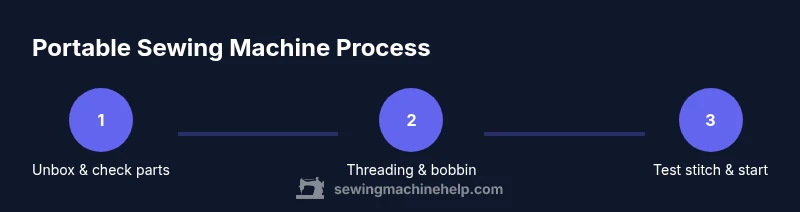
Unbox and place the machine on a flat, stable table. Plug in or ensure batteries are properly connected. Switch off the power before attaching any accessories.
Tip: Use a non-slip mat to prevent creeping during stitching. - 2
Wind and load the bobbin
Wind a bobbin evenly on the built-in winder (if available) and place it into the bobbin case following the model’s direction. Ensure the bobbin rotates in the correct direction.
Tip: Test bobbin tension by pulling a thread gently; it should offer light resistance. - 3
Thread the upper path
Raise the presser foot, thread the starter guides, and guide the thread through the tension discs and needle bar. Make sure the thread seats properly in each guide.
Tip: Do not skip any guides; a misrouted thread causes skipped stitches. - 4
Install the needle
Insert the needle with the flat side facing you and tighten securely. Use the appropriate needle for your fabric type.
Tip: Never force the needle through fabric; back off if it resists and re-align. - 5
Load the fabric and foot
Place the fabric under the presser foot, align edges, and lower the foot. Select a starting stitch and length suitable for the fabric.
Tip: Keep fabric edges aligned using guide marks rather than pulling. - 6
Test stitch on scrap fabric
Sew a short test seam on scrap fabric to check stitch balance, tension, and feed. Adjust as needed before sewing the real project.
Tip: If fabric puckers, increase tension slightly or adjust foot pressure. - 7
Sew the seam
Sew along the edge with consistent speed, guiding the fabric with your hands. Lift at the end and perform a backstitch to secure.
Tip: Pause briefly if fabric slips; re-align and resume slowly. - 8
Finish and trim
Backstitch to secure, trim loose threads, and press seams as appropriate. Turn off and unplug the machine when done.
Tip: Use a protective cloth to prevent heat damage when pressing. - 9
Clean and store
Remove lint from feed dogs area, wipe surfaces, and store components in a designated case. Inspect cords for wear before next use.
Tip: Keep a small toolkit with spare needles and bobbins for quick trips.
Your Questions Answered
Can I use a portable sewing machine on heavy fabrics like denim?
Portable machines typically perform best on lightweight to medium-weight fabrics. For heavy denim or canvas, consider a more powerful machine or specialty needle and foot, and consult your manual for fabric limitations.
Portable machines are best for lightweight to medium fabrics; for heavy fabrics, check your manual and consider upgrading if needed.
Do portable sewing machines require oiling?
Oil requirement depends on the model. Some portable machines are low-maintenance and do not require regular oiling, while others need a light, model-specific oil application. Always follow the manufacturer's instructions.
Oiling depends on your model—follow the manual to know if and when to oil.
Is it safe to operate a portable sewing machine around children?
Yes, with supervision and proper safety rules. Teach kids to keep hands away from the needle area and to unplug the machine when not in use. Store sharp tools out of reach.
Yes, but supervise and teach safety rules to children.
What thread type should I use with a portable machine?
Use all-purpose polyester or cotton-wrapped polyester thread for general sewing. For delicate fabrics, choose finer threads; for heavy fabrics, consider stronger threads designed for durability. Always test on scrap first.
Pick thread suited to your fabric and test on scrap before sewing.
How do I fix a jammed bobbin or bird-nesting issue?
Unplug the machine, re-thread the upper path, and reseat the bobbin. Ensure the bobbin is wound correctly and that the thread flows smoothly through the guides and tension discs.
Unplug, re-thread, and reseat the bobbin to fix jams.
Watch Video
The Essentials
- Set up on a stable surface before starting.
- Thread correctly and test on scrap fabric.
- Choose stitches and feet suited to fabric.
- Perform regular maintenance to extend life.