How to Use a Hand Sewing Machine: A Beginner Guide
Learn how to use a hand sewing machine with a practical, beginner-friendly guide. From setup and threading to stitches and maintenance, get confident results for small repairs and crafts without electricity.


This guide shows you how to use a hand sewing machine safely and effectively. You’ll learn setup, threading, basic stitches, and simple maintenance so you can complete small repairs or crafts without electricity. Perfect for beginners, it emphasizes steady control, compatible threads, and practical practice to build confidence quickly.
What is a hand sewing machine and who should use it
A hand sewing machine is a compact, manually operated device that lets you sew fabric without electricity. It’s especially useful for quick repairs, travel sewing, or learning basic machine-based stitching. According to Sewing Machine Help, these devices bridge the gap between traditional hand sewing and full-size machines, offering consistent stitches with less physical effort than hand-stitched seams. If you’re new to sewing, a hand sewing machine provides a gentle introduction to stitch formation, tension, and fabric handling. For hobbyists and beginners, it’s ideal for tiny hems, mending tears, and creating small projects like napkins or gadget pouches. Understanding what it can and cannot do helps you set realistic expectations and avoid frustration during your first projects. The core idea is simple: controlled motion, steady feed, and the right needle and thread for your fabric.
In practice, you’ll use a crank or wheel to move the needle up and down, guiding fabric with your other hand. The device shines when electricity is unavailable or when you want to practice precision on delicate fabrics. With patience and regular practice, you’ll gain muscle memory for common tasks such as mending a sleeve, finishing a seam, or hemming twice as fast as traditional hand-stitching. The Sewing Machine Help team notes that beginners should start with scrap fabric to build confidence before tackling real projects. Focus on consistent stitch length, smooth fabric feeding, and gentle needle control to minimize skipped stitches and bunching.
Safety first: handle and workspace setup
Working with any sewing device requires a safe routine. Before you begin, clear a flat, well-lit workspace and secure your fabric with pins or a small clamp. Keep scissors, needles, and pins in a pincushion or magnetic tray to prevent accidental pokes. Check that the hand sewing machine is clean, and inspect the needle for any burrs or damage that could snag fabric. If your model uses oil, apply a tiny drop to the pivot points as recommended in the user manual. Always cradle the crank or wheel with a relaxed grip to prevent cramping or sudden motions that could slip and cause injury. A tidy space reduces the risk of mis-stitching and keeps your focus on control and rhythm while you sew. Regular breaks help maintain accuracy when you’re learning new stitches.
Note: never force the needle through fabric; if resistance increases, stop and re-evaluate the needle size, thread path, or fabric thickness. This is especially important on delicate fabrics like silk or knits, where a too-large needle can leave visible holes. Building good habits from the start pays off in cleaner seams and fewer tangles.
Why proper tension matters and how to adjust it
Thread tension is the heart of clean stitches. If tension is too tight, fabric puckers; if too loose, stitches look loose and won’t hold. Start with the default tension suggested by your device’s manual, then test on scrap fabric. Adjust gradually—one number at a time—and re-test. Make sure the bobbin is wound evenly and seated correctly, as uneven winding or misalignment can mimic tension problems. Practicing quick tests on fabric scraps will save you time when you’re working on your actual project. Good tension also reduces thread breakage and prevents tangling as you feed the material through the machine.
Setup and basic maintenance
Maintenance is essential to keep a hand sewing machine performing well. Clean any lint or thread fragments from the needle area after every session. If your device requires lubrication, use a small drop on the moving joints as directed by the manual; wipe away excess oil to prevent staining fabric. Store the machine in a dry place to avoid rust, and keep spare needles and bobbins organized in a small box. Before starting a new project, do a quick check: ensure the needle is properly installed, the thread path is clear, and the fabric is properly aligned. Regular light maintenance extends the life of the machine and reduces the chance of skipped stitches or thread snags.
Thread selection and needles
Choosing the right thread and needle combination is crucial for clean results with a hand sewing machine. For woven fabrics, use a standard all-purpose thread and a medium-sized needle (e.g., size 9–14, depending on fabric). For delicate fabrics, switch to a finer needle and lighter thread to avoid holes and puckering. For heavy fabrics like denim or canvas, opt for a stronger needle (size 90 or larger) and a thicker thread that can withstand thicker material. Match the needle type to the fabric—sharp needles for tightly woven fabrics, ballpoint for knits. When threading, ensure the thread lies smoothly in the tension discs and follows the correct path through the presser foot area. Having a small selection of needles and threads on hand will simplify material changes and improve stitch quality.
Threading the bobbin and needle
Threading lessons are worth their weight in stitch quality. Start by winding a bobbin evenly with the same thread you’ll use for the seam. Insert the bobbin into its case, ensuring the thread unwinds in the correct direction, and gently pull the thread through the slot to take-up the thread path. Guide the top thread through the needle eye from front to back, ensuring there’s a gentle pull to prevent tangling. Practice moving the hand crank slowly at first to observe how the needle engages and returns to the fabric. If you notice loops or snags, recheck thread routing and bobbin placement. A well-threaded setup minimizes stitch errors and improves overall performance.
Basic stitches you can master on a hand sewing machine
Start with a simple running stitch to learn the rhythm of fabric feeding and needle penetration. Once you’re comfortable, practice a backstitch to secure ends and a whipstitch for finishing edges. Hemming and simple topstitching extend your project possibilities. For practice, choose scrap fabrics of similar weight and avoid mixed textures in one session. As you gain confidence, you can adjust stitch length and tension to achieve different visual effects. Remember: consistency beats speed when you’re new to the technique, and clean, even stitches create a professional look.
Practicing with scrap fabrics and simple projects
Begin with small, forgiving projects such as cloth napkins, patch pockets, or simple hems. These give you repeatable tasks that reinforce muscle memory without overwhelming you. As you practice, keep your fabric flat and avoid pulling the material taut; let the machine feed feed smoothly to maintain even stitches. Take notes on any issues you encounter—skipped stitches, thread breaks, or fabric puckering—and adjust accordingly. Small wins build confidence and motivate continued practice, making each subsequent project a bit easier. Sewing on a hand sewing machine improves hand-eye coordination and helps you develop a steady rhythm.
Troubleshooting common issues and quick fixes
Common problems include skipped stitches, thread breaks, and fabric puckering. Check that the needle is the correct size and installed correctly, the thread path is clear, and the bobbin is wound evenly and seated properly. If you experience puckering, try a lighter needle or adjust tension slightly toward the center to relax the thread. For thread breakage, re-thread with clean, smooth thread and confirm the path is unobstructed. If stitches won’t form, inspect the needle for burrs and replace it if necessary. Keeping a small toolkit nearby—spare needles, a pair of scissors, and a mini screwdriver—helps you address issues quickly as you work on your project.
Care and storage for longevity
After each session, wipe down the machine and lightly oil pivot points if required by your model. Store in a dry place, with needles removed and stored separately to prevent rust or accidental needle sticks. Use a fabric sleeve or case to protect the device from dust, and keep a small organizer for spare needles and bobbins. Periodically inspect the needle clamp and hinges for tightness; loose parts can cause misalignment and degraded stitch quality. By keeping your tool clean, dry, and well-organized, you’ll have a reliable device ready for your next project.
Tools & Materials
- hand sewing machine(Essential device; verify it’s clean and functional before starting)
- all-purpose sewing thread(Choose a color that matches your fabric; coarser threads for heavy fabrics)
- hand sewing needles(Keep a small variety pack (sizes 9–14 for woven fabrics; upsize for thicker materials))
- spare bobbins(Store wound with matching thread for quick changes)
- fabric scissors(Sharp blades for clean cuts; keep dedicated scissors for fabric)
- pins and pincushion(Helpful for securing fabric in place while you sew)
- fabric scraps for practice(Tamper-free tests help you learn stitch quality)
- machine oil (if required by model)(Only apply if your device manual calls for lubrication)
- small screwdriver(Useful for minor adjustments on some models)
- iron and ironing mat(Press seams after finishing for crisp results)
Steps
Estimated time: 30-45 minutes
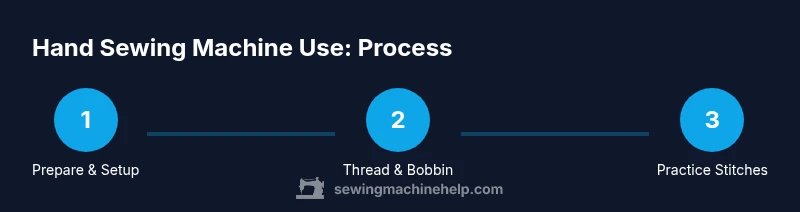
- 1
Prepare workspace and fabric
Clear a flat surface, set up good lighting, and secure fabric with pins. Verify tools are within reach and the machine is clean. This initial preparation prevents slips and makes each action deliberate.
Tip: Keep your non-dominant hand close to the fabric edge to guide without pulling. - 2
Thread the machine and set tension
Check the thread path from spool through the take-up lever to the needle. If your model uses bobbin thread, wind the bobbin evenly and insert it according to the manual. Set initial tension to a balanced default and test on scrap fabric before stitching the real object.
Tip: Test a short stitch on scrap fabric to confirm even tension before starting your project. - 3
Thread the needle and prepare fabric
Thread the needle with a smooth, consistent pass. Position fabric under the needle with care, aligning edges to your intended seam line. Use pins to hold fabric flat and prevent shifting during stitching.
Tip: Place pins perpendicular to the seam direction for easy removal while cranking. - 4
Begin with a basic stitch
Crank smoothly to penetrate the fabric and create your first stitch. Maintain a steady pace and avoid forcing the needle. Pause if you notice resistance, then recheck needle size and path.
Tip: Keep stitches even by counting fabric length per stitch for consistent seam width. - 5
Secure your ends with backstitch
At the start and end of a seam, use a backstitch to lock the line. This prevents unraveling and gives a tidy finish. Practice a short backstitch on scrap fabric before applying to your project.
Tip: Leave a short tail and continue stitching to anchor the seam securely. - 6
Finish seam and trim threads
Carefully cut leftover threads close to the seam without cutting fabric. Inspect the seam for evenness and straighten any stray threads with your fingers or a seam presser.
Tip: Trim tails at a shallow angle to reduce fraying. - 7
Clean, oil if needed, and store
Wipe away lint, reapply lubricant only if required by your model, and store the machine in a dry place. Keep needles and bobbins organized to speed future projects.
Tip: Always store with the bobbin removed if your model requires it.
Your Questions Answered
How do I thread a hand sewing machine?
Threading a hand sewing machine involves guiding the thread from the spool through the thread path, taking-up lever, and finally through the needle eye. If your model has a bobbin, ensure the bobbin thread is wound evenly and seated correctly. Test a few stitches on scrap fabric to confirm smooth operation.
Threading a hand sewing machine means guiding the thread through the spool path to the needle, then testing on scrap fabric to ensure smooth stitching.
Can I use regular thread in a hand sewing machine?
Yes, use standard all-purpose thread for most woven fabrics. For delicate fabrics, choose a finer thread and needle size to avoid damage. Thick or heavy fabrics require stronger thread and bigger needles. Always match thread type to fabric and project needs.
Yes, regular all-purpose thread works for most fabrics, but adjust for delicate or heavy materials.
Is a hand sewing machine faster than traditional needlework?
A hand sewing machine can be faster than hand stitching because it maintains consistent stitch length and reduces fatigue. Speed depends on your practice, fabric, and the machine’s design. Start slow to build control, then gradually increase pace.
It can be faster than hand stitching with practice, but speed depends on your technique and fabric.
Do I need oil for maintenance?
Some hand sewing machines require light lubrication on moving parts. Always follow the manufacturer’s guidance. If your model does not require oil, avoid applying lubricant to prevent staining or residue on fabric.
Lubrication depends on your model. Follow the manual and apply only if advised.
What should I do if the fabric bunches or puckers?
Puckering usually means tension or needle size mismatch. Recheck your needle, thread, and tension, and test on scrap fabric. Also ensure fabric lies flat and isn’t pulled. Adjust as needed before continuing the project.
If puckering happens, check tension and needle size, then test on scraps before continuing.
Watch Video
The Essentials
- Practice on scraps to build control and consistency.
- Use the right needle and thread for your fabric type.
- Thread and tension set correctly to avoid skipped stitches.
- Secure ends with backstitches for durable seams.
- Maintain and store the hand sewing machine properly to extend life.