How to Use a Brother Sewing Machine: A Beginner's Guide
Learn how to operate a Brother sewing machine with confidence. This comprehensive guide covers setup, threading, bobbin winding, stitch selection, fabric handling, safety, maintenance, and troubleshooting for beginners.


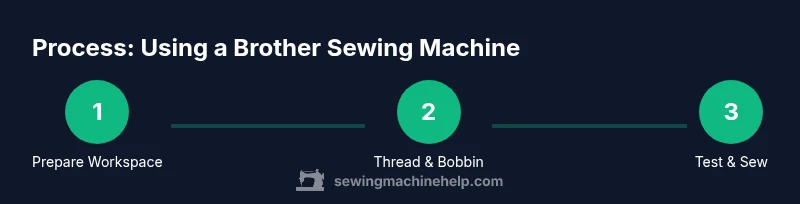
Learn how to safely and effectively use a Brother sewing machine. This quick guide covers setting up the workstation, threading the upper thread and bobbin, selecting stitches, adjusting tension, handling fabric, and basic maintenance. By following these steps, beginners can start sewing confidently on common Brother models in minutes at home.
Getting Started with Your Brother Sewing Machine
Getting started with a Brother sewing machine sets the tone for successful projects. The first step is to ensure you’re operating on a stable, well-lit surface and that the machine is plugged into a reliable power source. The Sewing Machine Help team emphasizes starting with a basic model or your family’s favorite Brother model to learn standard controls, such as the power switch, stitch selector, and speed control. Before you sew, read the quick-start section in your manual and watch any manufacturer videos to understand model-specific features, including needle clamp, presser foot lever, and thread path. In this guide, we’ll cover threading, bobbin winding, stitch choices, and essential maintenance, so you can build a reliable foundation. For most beginners, practicing with scrap fabric on plain weave materials like cotton helps you observe feed dogs, tension, and fabric handling. Remember to remove pins as you sew and keep hands clear of the needle. According to Sewing Machine Help, developing a routine of quick checks before you start saves time and prevents jams.
Threading and Winding the Bobbin
Threading and winding the bobbin are foundational skills for smooth stitches on a Brother machine. Begin by preparing a clean workspace, then wind the bobbin with the thread color chosen for your project. Use the correct bobbin type for your model and ensure it spins freely in the bobbin case. After winding, insert the bobbin into its case, leaving the thread tail accessible. Next, thread the upper thread by following the machine’s path guides, ensuring the thread seats properly in the tension discs. A common beginner mistake is skipping guides or failing to pull the thread under the presser foot. With practice, you’ll experience consistent fabric feed and even stitches. The Sewing Machine Help team recommends keeping spare bobbins and scissors nearby to speed up changes during projects.
Selecting Stitches and Settings
Brother machines offer a variety of stitches, including basic straight, zigzag, and decorative patterns. Start with a straight stitch for seams, then experiment with a zigzag for finishing edges and preventing fraying. When adjusting tension, begin with the manufacturer’s recommended setting and test on scrap fabric. If the underside shows loops, loosen the tension slightly; if the top thread is loose, tighten the tension a bit. Choose the right presser foot for each task (standard foot for general sewing, walking foot for knits). Set stitch length around 2.5 for standard seams and adjust width for zigzag stitches. Always test on scrap fabric before committing to a project to avoid surprises on your final material.
Practice Projects and Fabric Handling
Practice with simple, forgiving projects to solidify technique. Start with a pillow cover, simple tote, or cosmetic pouch to learn straight seams, turning corners, and edge finishes. Pay attention to fabric type: cotton sews differently from knits and synthetics. For woven fabrics, use a standard foot and a shorter stitch length for crisp seams; for knits, enable a stretch stitch and slightly longer stitch length. Handling fabric smoothly is essential: guide the fabric with your hands, don’t push, and let the feed dogs pull the fabric. Regularly align fabric edges with the needle position to maintain straight seams and consistent seam allowances. The more you sew, the more your muscle memory grows on the Brother platform.
Maintenance and Troubleshooting Common Issues
Regular maintenance helps prevent surprises. Clean lint from the bobbin area after every few hours of sewing and replace needles regularly to avoid skipped stitches. If you experience thread breakage, rethread both upper thread and bobbin, ensuring correct threading path and tension. Common issues include bird-nesting under the fabric (tension problem), jammed feed dogs (lint buildup or misalignment), and needles breaking due to fabric type or needle size. For most jams, power off, remove the needle and thread, and gently clear lint with a brush. Re-oil only as recommended by the manual, using the correct type of sewing machine oil. By keeping a small maintenance kit nearby, you’ll minimize downtime and extend the machine’s life.
Safety Tips and Best Practices
Always unplug the machine before changing the needle or presser foot. Use the correct needle size for the fabric to avoid breakage. Keep fingers clear of the needle path and never sew over pins; remove pins as you approach them. Work in a well-lit area and use goggles if you’re cutting or using heavy fabrics. Keep the power cord away from the foot pedal to prevent accidental starts. Use a sturdy, flat surface and stable chair height to avoid wrist strain. When transporting the machine, carry it by the base and avoid jostling the needle area.
Advanced Tips for Quality Seams
Once you’re comfortable, explore advanced techniques to improve seam quality. Practice precise seam allowances by guiding the fabric along a guide on the needle plate. Use the walking foot for stable feeding on thicker fabrics like denim or multiple layers. Try backstitching at the beginning and end of every seam to secure thread ends, and consider using a twin needle for decorative finishes on hems. Incorporate gentle pressure, avoid forcing the fabric, and let the machine do the work. Record your stitch settings for future projects to save time and achieve consistent results.
Cleaning and Oiling Your Brother Machine
Cleaning and occasional oiling are important for longevity. Wipe away lint from the needle plate and bobbin area after sewing, and remove the needle plate if you need a thorough clean. Do not over-oil the machine; apply a small amount of oil to the moving parts as directed in the manual. Regularly check for loose screws, belts, or feet, and tighten if needed. Store the machine in a dust-free area and cover it to protect from lint accumulation. Proper cleaning and preventive maintenance reduce downtime and improve stitch quality over time.
Authoritative References
For additional safety and maintenance guidance, consult reputable sources such as: https://www.britannica.com/ (Encyclopedia for general sewing concepts), https://www.nist.gov/ (Principles of measurement and quality control that apply to crafts), and https://www.britannica.com/topic/sewing (Overview of sewing basics). Always refer to your specific Brother model’s manual for model-specific instructions and safety recommendations.
Tools & Materials
- Brother sewing machine (model-specific)(Ensure it is in good working order)
- Power supply and foot pedal(Plug into a grounded outlet)
- Spool of polyester or cotton thread(Choose color to match fabric)
- Assorted sewing machine bobbins(Prefer constant size compatible with your machine)
- Needles (various sizes)(Use universal sharp or ballpoint for knits)
- Bobbin case and bobbin winder(Correct winding direction)
- Scissors, seam ripper, pins(Sharp scissors and pin holder nearby)
- Measuring tape and fabric chalk(For precise seam allowances)
- Fabric samples (cotton and knit)(Practice swatches for tension and stitch tests)
- Lint brush or small brush(For cleaning lint from bobbin area)
- Sewing machine oil(Only if your model requires it)
Steps
Estimated time: 45-60 minutes
- 1
Power on and set up workspace
Place the machine on a sturdy table, plug into a grounded outlet, and ensure good lighting. Position your fabric and tools within easy reach. Do a quick check of presser foot and needle to ensure nothing is loose. This foundation reduces errors and makes later steps smoother.
Tip: Keep the project near the edge of the table to prevent fabric dragging. - 2
Wind the bobbin
Place the empty bobbin on the winder, thread through the winder tension and wrap evenly as directed by your model’s manual. Stop when the thread is full and cut the thread. Snap the bobbin off the winder and place it in the bobbin case with the thread exit pointing correctly.
Tip: Avoid over-winding; over-wound bobbins can cause jams and uneven stitches. - 3
Thread the upper thread
Raise the presser foot to release tension, place the spool on the pin, and thread the path following guides. Pass the thread through tension discs and down to the needle, ensuring it’s seated firmly in the take-up lever. This ensures a balanced stitch from top to bottom.
Tip: Double-check the thread lies in the thread guides and through the take-up lever. - 4
Thread the needle and load bobbin
Thread the needle from front to back and seat the thread tail under the presser foot. Insert the bobbin into its case with the thread feeding clockwise (or per manual) and pull the thread tail through the slot. This prepares both threads for stitching.
Tip: Hold both threads lightly after threading to prevent tangling as you start sewing. - 5
Choose stitch and adjust tension
Select a basic straight stitch for most seams and set stitch length around 2.5. If you’re working with fabrics that fray, switch to a zigzag edge finish and adjust tension as needed. Test on scrap fabric before sewing your project.
Tip: Start with the default tension, then adjust one factor at a time if needed. - 6
Prepare fabric and test seam
Place fabric under the presser foot, align the edge with the needle, and place pins away from the seam line. Sew a short test seam on scrap fabric to check straightness and tension. Observe both sides of the seam to ensure balanced stitches.
Tip: Use pins to keep fabric aligned, then remove them as you sew to prevent snagging. - 7
Sew a straight seam to completion
Sew along your marked line, keeping hands to the sides and guiding fabric gently. At the end, backstitch a few stitches to secure the thread. Lift the needle, raise the presser foot, and trim threads neatly.
Tip: Backstitching anchors the seam and prevents unraveling. - 8
Finish up and store
Power off, unplug, and remove fabric. Clean the bobbin area of lint and store accessories in a designated box. Put away needles and spare parts to keep your workspace tidy and ready for the next project.
Tip: Keep a small maintenance kit handy for quick cleanups and adjustments.
Your Questions Answered
How do I thread a Brother sewing machine?
Thread the upper path following the guides, place the thread through the tension discs, and bring it down to the needle. Then thread the bobbin and load it into the bobbin case, ensuring the thread unwinds clockwise. Finally, test on scrap fabric to confirm balanced tension.
Thread the upper thread through the guides and tension discs, then thread the bobbin and test on scrap fabric to ensure balanced tension.
Do I need to oil my Brother sewing machine?
Oil is model-specific. Many modern Brother machines are designed to be maintenance-light, but refer to your manual for oiling points and intervals. If your manual calls for oil, apply only the recommended oil to specified parts.
Oil is model-specific; check your manual for exact points and intervals. Use only the recommended oil.
What needle size should I use for different fabrics?
Use a smaller needle (e.g., size 11/14) for light fabrics like cotton, and a larger needle (e.g., size 16) for denim or canvas. Change needles after completing a heavy project or after multiple uses.
Choose needle size by fabric: small for light fabrics, larger for heavy fabrics, and replace often.
How do I adjust tension for different fabrics?
Start with the standard tension setting, test on scrap fabric, and observe the stitch balance. Loosen tension if the bottom thread shows on top; tighten if the top thread is loose. Make only small adjustments at a time.
Test on scrap fabric and adjust a little at a time to balance stitches.
What should I do if the thread bunches under the fabric?
This usually means tension or threading issues. Re-thread both upper thread and bobbin path, ensure the presser foot is down, and test again on scrap fabric. Clean lint from the bobbin area if needed.
Unthread and rethread both threads, test on scrap fabric, and check for lint.
How often should I clean the machine?
Clean the bobbin area and exterior after several hours of sewing or at the end of a project. More frequent cleaning may be needed with heavy fabrics or lots of lint-producing thread.
Clean the bobbin area after a few hours of sewing or when you notice lint.
Watch Video
The Essentials
- Thread correctly before sewing to prevent jams.
- Practice on scrap fabric to build confidence.
- Choose the right presser foot for each task.
- Regular maintenance reduces downtime and improves results.