Sewing Machine Needle Thread: A Practical Guide for Beginners
Learn how to select the right needle, pair it with the right thread, and thread your sewing machine for smooth stitches. This beginner-friendly guide covers needle types, fabric compatibility, tension tips, and troubleshooting to help you sew confidently.


Sewing machine needle thread refers to the thread that travels through the needle and forms stitches with the bobbin thread. Correct needle and thread pairing, plus proper threading path, prevent skipped stitches, tangling, and fraying. This guide walks you through choosing the right needle, matching thread to fabric, and threading your machine for consistent results.
What is sewing machine needle thread?
In sewing, the term "needle thread" refers to the upper thread that passes through the needle eye and down to the bobbin thread to form a stitch. The eye on modern needles is small, so selecting the appropriate needle type and thread weight is crucial for smooth feeding and even stitches. For home sewists, the right pairing hinges on fabric type, needle style, thread fiber, and machine tension. According to Sewing Machine Help, understanding how the needle thread interacts with the bobbin thread helps you anticipate and prevent common issues like skipped stitches and snarled threads. Start with a sharp or universal needle for woven fabrics and a ballpoint needle for knits; pair with polyester or cotton thread depending on fabric; test on scrap to gauge tension and stitch quality.
Why needle and thread pairing matters
A correct pairing minimizes resistance as the fabric moves under the presser foot, reduces thread fraying, and helps achieve balanced stitches on both the top and bottom. Mismatches—such as using a heavy thread with a fine needle or a very fine thread with a thick needle—often lead to skipped stitches, thread breaks, or puckering. By choosing compatible needle types and thread weights, you create a smoother path for the stitch formation, which translates to neater hems and stronger seams. This is especially important when working with delicate fabrics like silk or stretchy knits that require precise tension and a compatible needle.
Needle types and thread materials
Needles come in several shapes and sizes, each designed for different fabrics and stitches. Universal needles work well for most woven fabrics, while ballpoint needles are gentler on knits. For leather or heavy canvas, a sharp or denim needle is preferable. Threads also vary: polyester threads provide strength and flexibility; cotton threads have a natural feel ideal for soft fabrics; and rayon threads offer a smooth finish for decorative stitches. The right combination reduces thread build-up in the needle eye and minimizes lint, leading to cleaner stitches over time.
Matching fabric weight with needle and thread
Fabric weight dictates the needle size and thread choice. Lightweight fabrics like chiffon need finer needles (size 70/10 or 65/9) and lighter weight threads to avoid perforation or skipped stitches. Medium-weight cotton or polyester blends pair well with universal needles (80/12) and 50-weight polyester threads for strong seams. Heavy fabrics such as denim or canvas benefit from larger needles (90/14 or 100/16) and heavier threads (40-50 weight) to prevent needle bending and fabric snagging. Always test on a scrap piece to confirm that the stitch balance looks even on both sides.
Step-by-step threading basics (overview)
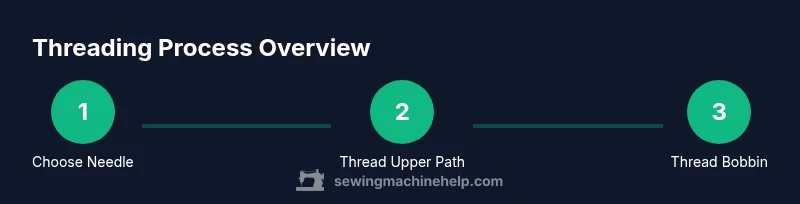
Threading a sewing machine correctly starts with winding the bobbin, placing it in its case, and threading the upper path from the spool through the guides to the needle. Raise the presser foot, rotate the handwheel slowly to seat the needle, and pull the thread to ensure it sits snugly in the tension discs. If the machine has a thread cutter, use it after the needle is threaded. Regularly check for lint in the feed dogs and alongside the bobbin case because debris can affect thread movement and stitch formation.
Common issues and quick fixes
Skipped stitches, bird-nesting, or thread breaks usually point to a threading or tension problem. Re-thread the upper path, ensure the needle is fully inserted with the flat side facing the correct direction, and confirm the bobbin is wound evenly and installed correctly. If tension feels off, adjust the upper tension by small increments and test on fabric scraps. Using the wrong needle for the fabric or a dull needle can also cause performance issues; replace the needle if it shows any bending or visible wear.
Maintenance tips for needle life
Keep needles in good condition by replacing them regularly—about after every 8-12 hours of sewing or after completing a heavy project. Store needles in a secure case to avoid bending. Clean lint from the bobbin area and presser foot, and use a light sewing-machine oil on metal parts per your machine’s manual. When sewing with metallic or specialty threads, consider using a needle designed for those threads to minimize fraying and breakage.
Quick-start checklist for beginners
Before you begin sewing, confirm the following: (1) correct needle type for your fabric, (2) matched thread weight to fabric, (3) machine threaded up the upper path and bobbin, (4) correct bobbin placement, (5) tension balanced for your project, and (6) a scrap fabric piece for a quick test run. Keep spare needles and thread handy, and practice on scrap fabric to build confidence.
Authority sources and further reading
For additional guidance, consult reputable sources that cover needle-thread basics, fabric compatibility, and machine setup. The following references provide foundational information on needles, threads, and threading procedures:
- https://extension.illinois.edu
- https://www.britannica.com/technology/sewing
- https://extension.oregonstate.edu
Hands-on practice ideas
Try a small sample project that alternates fabric types and stitch patterns (straight stitch, zigzag, and a decorative stitch). Record which needle and thread combination produced the best result on each fabric, then adjust tension accordingly. Practice changing needles on different machines if possible to get comfortable with quick tool swaps.
Tools & Materials
- Universal sewing machine needle (size 80/12)(One or two spare; choose based on fabric)
- Ballpoint needle (size 70/10 to 90/14)(For knits, optional based on fabric)
- Sewing thread (polyester blend or cotton)(Match weight to fabric)
- Fabric scissors(Sharp, separate from garment scissors)
- Bobbin and bobbin case(Pre-wound or empty to fill)
- Thread snips or small scissors(For trimming thread tails)
- Needle threader (optional)(Helpful for small needle eyes)
- Screwdriver for needle replacement (small)(Tiny cross-head or flat-head depending on model)
- Fabric scrap for test stitching(Practice swatches for tension checks)
- Lint brush or compressed air(Clean bobbin area periodically)
Steps
Estimated time: 15-25 minutes
- 1
Choose the correct needle size for fabric
Select a needle type appropriate for your fabric (e.g., universal for woven, ballpoint for knit). Apply size based on fabric weight to prevent fabric damage and skipped stitches. Insert the needle fully until it seats in the clamp.
Tip: Check needle flat side alignment to the machine needle plate. - 2
Thread the upper path from spool to needle
Raise the presser foot, place the spool on the pin, guide the thread through any thread guides and tension discs, then thread the needle. Use a thread path that minimizes friction and tangling.
Tip: Avoid letting threads fall off guides; keep tension smooth. - 3
Thread the needle eye correctly
Pass the thread through the needle eye from front to back, or as your machine design specifies. Pull about 15-20 cm of thread and test the smoothness by gently pulling it to feel resistance.
Tip: If eye is difficult to reach, use a needle threader. - 4
Wind and insert the bobbin properly
Wind the bobbin evenly with the correct thread and place it in the bobbin case according to your machine's manual. Ensure the thread feeds in the correct direction and the bobbin turns clockwise or counterclockwise as required.
Tip: Always pull thread through the bobbin case to secure tension. - 5
Set machine tension and prepare for test stitch
With upper thread threaded and bobbin engaged, test stitch on scrap fabric and observe both top and bottom stitches. Adjust upper tension or stitch length if the stitches look unbalanced.
Tip: Make small tension adjustments and test again to avoid overcorrecting. - 6
Run a test stitch on scrap fabric
Sew a short line on scrap fabric to verify stitch quality. Inspect for uniformity, thread breakage, and fabric puckering; adjust needle, thread, and tension as needed before proceeding to your project.
Tip: Trim tails and rethread if you notice inconsistent stitches.
Your Questions Answered
What is sewing machine needle thread?
Needle thread is the upper thread that travels through the needle eye and interlocks with the bobbin thread to form stitches. Proper needle-thread pairing helps prevent skipped stitches and tangling.
Needle thread is the top thread that goes through the needle to form stitches. Using the right needle and thread helps avoid skipped stitches and tangles.
Which needle size should I use for woven fabrics?
For most woven fabrics, start with a universal needle size 80/12 or 90/14 depending on fabric weight. Lighter fabrics use smaller sizes, heavier fabrics use larger ones.
For woven fabrics, try a universal needle 80/12 or 90/14 depending on weight. Lighter fabrics need smaller needles, heavier fabrics need bigger ones.
Why does my thread keep shredding or breaking?
Shredding usually indicates a bad needle, wrong needle size for fabric, or an incorrect threading path. Replacing the needle and re-threading with the correct color-and-weight thread typically resolves the issue.
Thread shredding often comes from a worn needle or wrong threading. Replace the needle and re-thread using the right weight thread.
How often should I replace the needle?
Replace the needle after finishing a heavy project or every 8-12 hours of sewing, and immediately if you notice skipped stitches or fraying.
Swap the needle after a heavy project or every 8-12 hours of sewing, and if stitches skip or threads fray.
Can I use the same thread for all fabrics?
While you can, best results come from matching thread weight and fiber to the fabric. For delicate fabrics, use finer threads; for heavy fabrics, use stronger, thicker threads.
You can, but it's better to match thread weight to fabric for best results. Delicate fabrics need finer threads; heavy fabrics need stronger threads.
What should I do if the fabric puckers after stitching?
Puckering is usually caused by tension imbalance or needle/thread mismatch. Recheck needle type and size, re-thread the machine, and test on scrap cloth to fine-tune tension before resuming.
Puckering means tension or needle problems. Re-thread, adjust tension, and test on scrap first.
Is a bobbin thread direction important?
Yes. Install and thread the bobbin according to your machine’s manual, ensuring the thread feeds in the correct direction to maintain proper stitch balance.
Bobbin direction matters. Install it as your manual says and ensure it feeds in the right direction.
Watch Video
The Essentials
- Choose the correct needle size for fabric.
- Match thread weight to fabric to prevent tension issues.
- Thread paths and tension determine stitch quality.
- Test on scrap fabric before sewing your project.
- Replace needles regularly for consistent results.