Sewing Machine Projects for Beginners: Easy Start Guide
A practical, step-by-step guide to sewing machine projects for beginners. Start with napkins, pouches, totes, and pillowcases to build skills, plus tools, techniques, and safety tips for confident sewing.


Master sewing machine projects for beginners with four easy starter projects: fabric napkin, zipper pouch, tote bag, and pillowcase. This guide covers essential tools, fabrics, common stitches, and beginner-friendly tips to help you complete each project with confidence. By practicing straight seams and finishing techniques, you’ll build skills fast and gain dependable results.
Why start with beginner-friendly sewing projects
Starting with beginner-friendly sewing machine projects gives you the confidence to move on to more complex stitches and fabrics. For home sewists, focusing on straight seams, accurate cutting, and neat finishes builds muscle memory and reduces frustration. According to Sewing Machine Help, a structured progression helps you translate ideas into tangible results faster than jumping between unrelated tasks. In this article you’ll learn how to pick beginner-friendly projects, set up a reliable workspace, and practice essential techniques with a small, satisfying starter list. You’ll also see how repeating simple tasks—like sewing a clean hem or attaching a basic zipper—creates a solid foundation for more ambitious sewing machine projects for beginners.
Essential tools and materials for beginners
Before you start any project, assemble a basic, reliable toolkit. A sturdy sewing machine in good working order, a selection of all-purpose threads, and clean fabric are your foundation. A sharp pair of fabric scissors, a rotary cutter, and a sturdy cutting mat help you cut accurately. Pencils, fabric chalk, and a measuring tape keep your marks precise. Keep pins, a seam ripper, and an iron within easy reach to streamline the process. For beginners, choosing cotton fabrics or cotton blends is ideal because they sew predictably and reveal mistakes early, making learning more forgiving. This section also covers how to organize your workspace for optimal focus and less fatigue.
Project 1: Simple Fabric Napkin
A simple fabric napkin is a perfect first project because it teaches straight stitching, hemming, and turning corners. Start with a square or rectangle (common sizes are around 12x12 inches). Cut with a precision ruler, finish raw edges with a narrow hem, and press carefully to set the crease. Practice corner seams by folding in a clean mitred corner and stitching slowly to avoid skew. Napkins are forgiving and can be made in a single afternoon, offering quick reinforcement of your technique while yielding a useful final product.
Project 2: Zipper Pouch
A zipper pouch introduces a beginner-friendly zipper insertion and lining construction. Choose a lightweight fabric and a coordinating zipper length. Create a simple rectangle, sew side seams, and insert the zipper with a basic technique such as the centered zipper or a standard top-stitch finish. This project teaches you to align fabric pieces, clip seams accurately, and handle zippers without catching fabric. Start with a small pouch (e.g., 6x9 inches) to limit fabric waste while you build confidence.
Project 3: Tote Bag
A tote bag is a classic beginner project that reinforces seam strength and handles. Cut a single piece for the bottom and two long side panels for a simple rectangle tote, or go with a box-bottom design for more structure. Sew side seams, attach handles securely, and finish top edges with a clean hem or top-stitch. This project emphasizes measuring precisely, managing bulk fabric, and practicing reinforced seams at stress points. Tote bags are practical, quick to complete, and scalable for more advanced versions later.
Project 4: Pillowcase
A pillowcase is a small, satisfying project that introduces continuous seams and a simple hem. Cut two fabric pieces (one for the front, one for the back), sew sides, and finish the hem to enclose the opening with a contrasting cuff if desired. Pillowcases parallel the tote in terms of technique but offer a compact build that’s ideal for practicing slipstitch finishing and corner sharpness. This project also provides a decorative opportunity with color and pattern choice.
Techniques you’ll practice across beginner projects
Across these projects, you’ll practice foundational techniques that translate to more complex tasks. Key skills include precise cutting, consistent seam allowances, staying straight while sewing, and maintaining fabric alignment. Pressing between steps helps set seams, reduce puckering, and improve overall finish. You’ll also encounter basic topstitching, simple zigzag finishes for raw edges, and the potential introduction to inner linings. As you progress, these techniques underpin more advanced sewing machine projects for beginners and beyond.
Common mistakes and fixes
Common early mistakes include pulling the fabric while feeding it through the machine, which causes skipped stitches or uneven seams. Incorrect tension or needle choice can lead to puckering; simply rethreading the machine and matching thread to fabric type often fixes this. Skipping some steps or rushing can cause misaligned pieces; slow down, use pins, and test on scrap fabric first. Always press as you go to set stitches and prevent wavy seams. If a seam ripper becomes your friend, use it to practice patience and precision rather than rushing to finish.
Building a practice plan for steady progress
Create a simple, repeatable practice routine. Start with 20 minutes of setup (threading, winding bobbins, and adjusting tension), then 30–40 minutes of focused sewing on a single project, followed by 10 minutes of cleanup and reflection. Repeat this plan across napkins, pouches, totes, and pillowcases to build muscle memory. Track what you learned and what you’d improve next time, and gradually increase project difficulty as confidence grows. The goal is consistent improvement, not speed. Remember, the more you practice with basic projects, the faster you’ll advance to more complex sewing machine projects for beginners.
Authoritative sources
- https://extension.oregonstate.edu
- https://extension.psu.edu
- https://www.cpsc.gov
Tools & Materials
- Sewing machine(In good working order; threaded and cleaned before starting)
- All-purpose sewing thread(Assorted colors; 100–150 m spools recommended)
- Cotton fabric for practice(Quilting cotton or broadcloth; 1–2 yards total for multiple projects)
- Fabric scissors(Sharp for fabric only; keep separate from paper scissors)
- Pins and pincushion(Glass-head pins are visible; keep a pincushion handy)
- Seam ripper(One or two; for quick seam fixes)
- Measuring tape(Minimum 150 cm; metric is fine)
- Bobbin and extra bobbins(Pre-wind and have spares of different colors)
- Iron and ironing board(Steam iron preferred; press seams as you sew)
- Marking tools(Chalk or erasable pen for fabric marks)
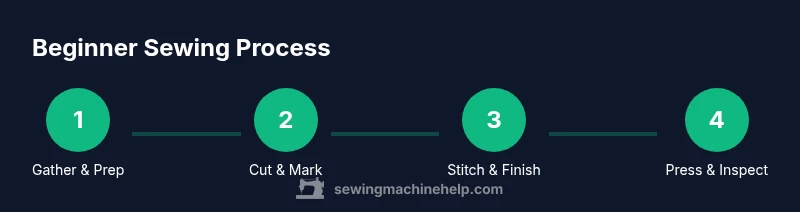
Steps
Estimated time: 60-90 minutes
- 1
Gather supplies and prepare workspace
Set up your machine, clear a sewing surface, and gather all required tools. Wind a bobbin and thread the machine with a compatible needle and thread. This step ensures you won’t interrupt mid-project for missing items. Keep everything within arm’s reach to maintain focus.
Tip: Lay out materials in the order you’ll use them to minimize back-and-forth. - 2
Cut fabric pieces accurately
Place fabric on a flat, clean cutting mat and use a ruler to mark straight lines. Cut with steady hands to avoid uneven edges. Label pieces if you’re working on multiple projects to stay organized.
Tip: Use a rotary cutter for clean, precise edges and a sharp pair of fabric scissors for detail cuts. - 3
Thread the machine and wind the bobbin
Follow your machine’s manual to thread upper thread and wind a bobbin. Use a test scrap to check tension before stitching the project pieces together. Proper threading reduces skipped stitches and tangles.
Tip: Always test with scrap fabric before sewing your project. - 4
Sew a straight seam on scrap fabric
Practice a straight seam on scrap fabric to build control. Use the 1/4 inch foot if your project requires it, and keep the edge of the fabric aligned with the presser foot guide.
Tip: Don’t pull the fabric; let the feed dogs move it smoothly. - 5
Sew main seams of the project
Pin pieces together at edges, align raw edges, and sew along the seam line with consistent seam allowance. Remove pins as you approach the needle to avoid breaking thread.
Tip: Backstitch at the start and end of each seam for durability. - 6
Finish edges and press
Finish raw edges with a simple zigzag or overcast stitch to prevent fraying. Press seams open or to one side as appropriate for the project. A well-pressed seam gives a crisp, professional look.
Tip: Press, don’t iron; pressing helps set the seam without distorting the fabric. - 7
Assemble final pieces
Join any remaining pieces to complete the item, such as attaching a lining to a tote or adding an accent feature. Align corners and edges carefully before final sewing.
Tip: Take your time lining up corners; small mistakes are easier to correct early. - 8
Final press and inspection
Give the finished piece a final press, trim any loose threads, and inspect for loose stitches or gaps. A good finish often determines whether a beginner project feels professionally made.
Tip: Stand back and visually check for uneven hems or puckers; adjust tension if needed.
Your Questions Answered
What is the best beginner project to start with?
A simple fabric napkin or pillowcase is an excellent starter because it teaches straight seams, hems, and finishing techniques without complex components. It builds confidence before moving on to zippers or lined items.
A simple napkin or pillowcase is a great starter to learn straight seams and finishing techniques.
What fabrics are best for beginners?
Cotton or cotton blends are forgiving, easy to sew, and show mistakes clearly, making them ideal for beginners. Avoid bulky or slippery fabrics until you’ve built basic skills.
Cotton is best for beginners because it’s easy to sew and forgiving.
How long will my first tote bag take?
A basic tote bag typically takes about one to two hours for a beginner, depending on fabric choice and prior practice. Start simple, then gradually add features as you gain confidence.
Most beginners finish a basic tote in about one to two hours.
How can I prevent puckering on seams?
Check your needle and thread compatibility, ensure correct thread tension, and use a test scrap to dial in settings before sewing the main fabric.
Pucker happens when tension or needle size doesn’t match the fabric; adjust accordingly.
When should I replace the needle?
Change needles regularly, especially when starting a new project or after skipping stitches. A sharp needle helps prevent skipped stitches and fabric snags.
If the needle looks bent or dull, replace it before continuing.
What safety tips should I follow?
Unplug the machine to change needles, keep fingers clear of the needle, and never sew with damaged cords or a faulty pedal. Store pins safely when not in use.
Always unplug before changing needles and keep pets or children away from the workstation.
Watch Video
The Essentials
- Master four beginner projects to build confidence
- Practice straight seams and precise cutting
- Press as you sew for crisp finishes
- Keep tools organized for smooth workflows
- Inspect finishes; small details improve results