Mastering the Straight Stitch by Hand
Learn how to perform a straight stitch by hand with clear steps, essential tools, fabric prep, and pro tips for durable, neat results. Perfect for beginners and quick fixes without a sewing machine.


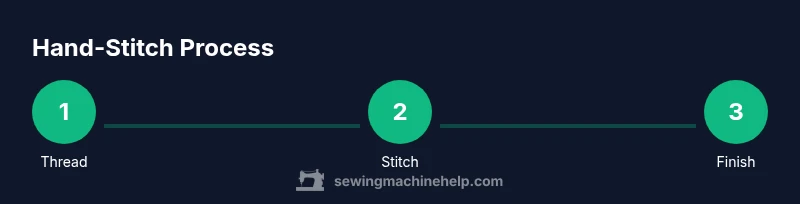
To perform a straight stitch by hand, thread a needle, knot the end, and bring the needle up from the fabric’s wrong side. Move the needle in a straight, even line, keeping consistent stitch length and tension. Practice on scrap fabric to build control before sewing seams or hems. This basic skill underpins repairs, hems, and decorative work, teaching you to feel fabric, needle point, and weave.
What is the straight stitch by hand and when to use it
According to Sewing Machine Help, the straight stitch by hand is the foundation of many repairs and finishing tasks. It creates a clean line of thread that runs in a single direction without loops or knots on the surface, making it ideal for joining two fabric edges, hemming, darning, and securing temporary seams. On woven fabrics, it produces a crisp appearance; on lightweight knits, it provides flexibility when used with a gentle anchor. This stitch is incredibly forgiving for beginners because inconsistencies are easier to spot and correct than more complex stitches. Before you start, visualize the seam line you want to create and choose a thread that matches the fabric weight. Practice on scrap fabric to dial in hand pressure, needle choice, and stitch length. Your goal is a steady rhythm: consistent needle entry, straight travel, and uniform tension from start to finish. The straight stitch by hand is small, precise, and repeatable, making it perfect for delicate repairs or quick alterations.
In many sewing projects, you’ll rely on this stitch even when a machine is available. It’s the tool you reach for when you need control around tricky fabrics like silk or embroidery backing, or when you’re doing invisible mends. Regular practice helps you maintain even seam lines, which improves overall garment fit and appearance. Remember that tension is a feel-based parameter: too tight can cause puckering; too loose can look loose and untidy. With time, you’ll notice how fabric bite, thread sheen, and needle point combine to produce a professional finish. This is the skill that empowers you to repair rips, secure hems, and stitch hems in place with confidence and consistency.
tip_schema_pathchances_many_00_1_items”:null}
Tools and materials for hand-stitching
Before you begin, assemble a compact kit so you can work comfortably without interruption. Essential items include sharpened precision tools and matching thread. Per Sewing Machine Help’s guidance, select tools that feel natural in your hand and suit your project weight. A basic starter kit includes a sharp needle (size 7-9 for light to medium fabrics), a length of all-purpose thread that matches your fabric color, small scissors, and a pin cushion. Add a thimble if you plan to sew through thicker fabrics, and a seam gauge or small ruler to keep consistent stitch lengths. A bright lamp and stable cutting surface round out the setup. For hems or tiny stitches, a magnifier can help you see thread movement better. With a clean, well-lit workspace, you’ll develop better control and rhythm, which translates into quicker repairs and neater finishes over time.
When you’re ready, test your tools on scrap fabric. This not only confirms your needle choice but also helps you refine your grip and motion. If you’re working with delicate fabrics like satin or sheer lawn, consider a finer needle and lighter thread to avoid snagging. For heavy fabrics such as denim or canvas, choose a sturdier needle and a robust thread to prevent fraying. Remember that your tools should feel comfortable and precise; if a tool feels awkward, swap it for a better fit. A well-chosen set of tools reduces fatigue and increases accuracy, letting you complete hand-stitched projects with greater consistency.
tip_schema_pathchances_many_01_1_items”:null}
Preparing fabric and thread for a clean straight stitch
Preparation sets the stage for accuracy and durability. Start by washing and pressing the fabric to neutralize shrinkage and smooth the surface. Align the edges or seam allowances so your straight stitch travels along a true line. Choose thread to match fabric weight; heavy fabrics need stronger, thicker threads, while lightweight fabrics respond better to finer threads. Thread the needle with a secure starting tail and pull gently to avoid unwanted knots. If needed, lubricate the thread with a tiny bit of wax or fabric conditioner to prevent tangling. Mark the seam line lightly with fabric chalk or a washable pen to guide your stitches. When testing, focus on fabric behavior under pressure—do the fibers grip the thread, or does the fabric slip? Adjust your approach until the fabric remains stable as you move the needle. A well-prepared surface reduces distortion and makes it easier to keep stitches straight.
For extra stability on slippery fabrics, you can apply a light spray of starch or use a stabilizer along the seam line. If you’re working with delicate lace or embroidery panels, secure the piece with fine pins to prevent shifting. After you’ve established your baseline, practice a few straight runs on scrap material, paying attention to uniform stitch length and needle penetration angle. Consistency is the key to a neat, durable straight stitch by hand that looks professional on finished projects.
tip_schema_pathchances_many_02_1_items”:null}
Basic hand-stitching technique: step-by-step overview
The core technique is straightforward but requires mindfulness. Begin by anchoring the thread with a starting stitch, then insert the needle from the fabric’s wrong side to the right side to hide the knot. Push the needle straight along the seam line, maintaining a steady rhythm and avoiding twisting the fabric beneath the needle. Keep your thread taut but not over-tight; the goal is smooth movement without the thread digging into the fabric. Move the needle in a consistent arc that follows the intended seam line. Periodically lift the fabric to check alignment and adjust your grip as needed. If you see a wiggle or drift in your line, pause and realign before continuing. Finish with a small back-and-forth or secure knot on the wrong side. This method keeps the surface clean and minimizes visible stitching while still providing a strong seam.
As you gain confidence, you’ll notice that the steady hand becomes more important than speed. A relaxed grip reduces needle jerk and helps you keep the stitch line true. If you’re working with denser fabrics, you may need to pause occasionally to re-position the fabric, allowing your hand to reset. Remember to press the seam after finishing to set the stitch line and reduce puckering. With practice, the straight stitch by hand becomes second nature, producing reliable results across a range of fabrics and projects.
tip_schema_pathchances_many_03_1_items”:null}
Mastering stitch length, tension, and removal
A consistent stitch length is essential for strength and appearance. Start with a small, even distance between stitches, then adjust based on fabric weight and project type. Tension should be felt rather than seen; you want the thread to lie flat against the fabric without pulling it taut into a puckered ridge. If stitches are too tight, the fabric puckers; too loose and the seam may gape or snag. When removing stitches, use small snips close to the stitch and carefully pull the thread the opposite direction to avoid enlarging holes. Work slowly on delicate pieces, and always test on scrap fabric first. For repairs, you’ll often need to re-sew a few small stitches to secure a torn edge, re-establishing a solid seam line that blends with the fabric.
Practice a few variations: short anchor stitches at the start, a mid-length stitch, and a final securing knot. Keeping a small sample book of stitch lengths helps you compare results across fabrics. Over time, you’ll learn to adjust automatically for sheet cotton, denim, or silk. The goal is consistent, tidy stitches that you can rely on when machines aren’t available or practical. This practice helps you achieve a reliable, straight stitch by hand every time.
Note: patience and repetition are your best teachers. As you refine your touch, you’ll be able to sew with confidence in any environment, from a kitchen table to a sewing corner.
tip_schema_pathchances_many_04_1_items”:null}
Common mistakes and how to fix them
Even experienced sewists encounter common pitfalls when hand-stitching. The most frequent issues include uneven stitch length, fabric puckering, and fabric creep along the seam. If your stitches drift, pause to realign your fabric and validate your seam guide before continuing. Puckering often results from overly tight tension or pulling on the fabric; release the pressure slightly and re-stitch with a more relaxed grip. Thread snagging typically occurs when thread pulls through fabric fibers; switch to a finer needle or a smoother thread, and ensure you’ve threaded correctly. If your needle is dull, replace it. Another mistake is not securing the end of the thread; always finish with a small securing knot or weave the tail back into the seam. When sewing on fragile fabrics, increase practice time on scraps and choose lighter threads. By recognizing these patterns, you’ll become more confident and efficient at producing clean, straight stitches by hand.
A practical fix is to adjust your grip: hold the fabric firmly but avoid pressing too hard with the needle. This reduces drift and helps maintain a straight line. If you’re sewing long seams, take short breaks to recalibrate tension and positioning. Finally, consider using a thimble or guard for repetitive work to protect your fingertips and reduce fatigue. These adjustments translate into stronger, more precise straight stitches by hand over time.
tip_schema_pathchances_many_05_1_items”:null}
Variations and tips for different fabrics
Fabrics behave differently under hand stitching, so adapt your approach accordingly. For lightweight fabrics like cotton lawn or silk, use fine needles and shorter stitches to reduce fabric shifting. For medium-weight cottons and blends, a standard needle and mid-length stitches work well for seams and hems. Heavy fabrics such as denim or canvas require a sturdier needle and thicker thread, with longer stiches to distribute the load. Leather and vinyl require specialized needles and a tougher thread, along with careful edge preparation, or the fabric may crack. When working with knit fabrics, keep tension light to preserve stretch and avoid fraying at the seam. For delicate lace, secure with a fine needle and use a stabilizer to prevent snagging. In all cases, iron the seam between passes to keep alignment precise and ensure the finished look remains neat. Over time, you’ll learn to tailor your technique to the specific fabric, improving your straight stitch by hand across a wide range of materials.
If you need invisible hems on transparent fabrics, consider finishing techniques such as tiny catch stitches or tiny running stitches that blend with the fabric color. For visible decorative stitches, you can choose a contrasting thread color for a clear design line. Always test on scraps first, especially when working with unfamiliar textiles. This hands-on approach makes your straight stitch by hand adaptable and reliable across projects.
Sewing Machine Help recommends keeping a fabric swatch notebook to document which needle size and thread type work best for each fabric. This practice supports consistent results and faster work in future projects.
tip_schema_pathchances_many_06_1_items”:null}
Practice projects to build muscle memory
Building muscle memory requires regular, small projects. Start with a simple seam repair on scrap fabric: gather two edges, align them, and sew a few straight stitches along the seam line. Move to hemming a short piece of fabric, like a pillow edge or a napkin, to develop a consistent stitch length. Create a mending patch for a worn pair of jeans or a knee repair for a favorite pair of pants to practice controlling tension and speed. Linen or cotton tea towels are excellent for practicing even stitches, because they show the line of your work clearly. As you gain confidence, move to slightly more complex tasks like repairing a small tear on a garment or sewing a narrow hem on lightweight fabrics. Recording your progress in a notebook helps you track improvements over time and keeps you motivated to continue practicing the straight stitch by hand.
Remember, the objective is to build a consistent rhythm and tactile awareness. The more you stitch, the steadier your hand becomes, and the more uniform your stitches appear on real projects.
tip_schema_pathchances_many_07_1_items”:null}
Troubleshooting and long-term care
Over time, a well-practiced hand can sustain a wide range of repairs and finishes. If you encounter persistent puckering, reassess fabric choice or adjust tension, and consider using a stabilizer for delicate textiles. For heavy or damp fabrics, ensure you’re using a sturdy needle and silk or cotton thread that can resist fraying. If your stitches begin to loosen after a wash, you may need to rework the seam, choosing a slightly longer stitch for durability or adding a securing knot at the end. For long seams, stagger your work: complete a short segment, re-check alignment, and then continue. This method avoids drift and keeps lines crisp. Finally, The Sewing Machine Help team emphasizes regular practice as the surest path to mastery. The Sewing Machine Help analysis shows that consistent, deliberate practice improves tension control and line accuracy more effectively than rushed efforts. The Sewing Machine Help team recommends setting aside a dedicated practice hour each week to maintain skills and confidence.
Tools & Materials
- Needle (sharp or embroidery)(Size 7-9 for woven fabrics; longer needles for heavier textiles)
- Thread (matching color)(Cotton or polyester; avoid overly fuzzy threads)
- Scissors (small)(Sharp for clean cuts)
- Pins and pin cushion(Secure fabric without shifting)
- Thimble(Helpful for dense fabrics)
- Measuring tools(Seam gauge or ruler for consistent allowances)
- Iron and ironing surface(Press seams as you go to keep flatness)
- Working surface with good light(A bright lamp or daylight)
Steps
Estimated time: 30-60 minutes
- 1
Thread and prepare
Thread the needle securely and knot the tail. Align your fabric edges and prepare scrap for practice. This step establishes the starting point and avoids knots sliding in as you begin the stitch.
Tip: Use a small, tight knot or tie a short double-knot to prevent slippage. - 2
Anchor the thread
Insert the needle from the wrong side to the right side to hide the knot. Make a short anchoring stitch to secure the thread at the starting point before continuing along your seam line.
Tip: Keep the anchor stitch small and tight to prevent early loosening. - 3
Make straight stitches
Push the needle through the fabric along the seam line in a straight path. Maintain even spacing between stitches and avoid twisting the fabric to keep a true line.
Tip: Aim for uniform stitch length; practice on scrap material to calibrate tension. - 4
Check alignment
Periodically lift and align to ensure your edge stays on the guide line. Correct drift early to prevent a crooked seam from forming.
Tip: Take small breaks to recheck alignment after every few inches. - 5
Finish the seam
End with a secure method for the thread tail, such as a small back-stitch or a tiny knot weave back into the seam. Trim excess thread.
Tip: Always secure the end to prevent unraveling during use or washing. - 6
Press and assess
Press the finished seam from the wrong side with a warm iron to set the stitches and flatten the line. Inspect for evenness and adjust if needed.
Tip: Let fabric cool before handling to maintain the seam shape.
Your Questions Answered
Do I need a sewing machine to do a straight stitch by hand?
No. A straight stitch by hand can be done with a needle and thread. It’s slower but provides excellent control for delicate fabrics and quick repairs.
No machine is required; you can hand stitch a straight line using a needle and thread.
What needle and thread are best for hand stitches?
Choose a sharp needle appropriate for fabric weight, and use thread that matches or complements the fabric. For delicate fabrics, a finer needle and thread reduce snagging; for heavy fabrics, a sturdier needle and thicker thread are better.
Pick a sharp needle for the fabric and a thread that matches the weight.
How can I avoid puckering on lightweight fabrics?
Reduce tension, work slowly, and use a finer needle. Stabilizing the fabric with a light interfacing or pressing can also help keep edges flat.
Tension down a bit, go slow, and stabilize the fabric to keep edges flat.
How long should a hand-sewn seam be?
Keep stitches consistent and appropriate for fabric weight; generally shorter stitches for delicate fabrics and longer ones for heavier fabrics. Test on scrap beforehand to dial in the length.
Keep stitches even and test on scrap to match fabric needs.
Can I sew leather or denim by hand?
Yes, with a heavy-duty needle and robust thread, but expect slower progress and more effort. Use a leather needle for leather and a thick needle for denim.
You can sew leather or denim by hand, but it takes more effort and the right tools.
How do I finish a hand stitch without tying a knot?
Weave the tail back into the seam or use a tiny back-stitch to lock the end, then trim close to the fabric edge.
Weave the tail into the seam and trim carefully to secure the stitch.
Watch Video
The Essentials
- Master the basic straight stitch by hand for durable repairs
- Choose the right needle and thread to match fabric weight
- Practice on scraps to build muscle memory and control
- Maintain consistent stitch length and tension for clean seams
- Always finish with a secure knot or weave to prevent unraveling