Hemming Stitch by Hand: A Practical Guide for Beginners
Learn how to execute a clean hemming stitch by hand with step-by-step instructions, tool lists, and pro tips for durable, invisible hems on delicate fabrics.


Master a clean, hand-sewn hem with a simple hemming stitch by hand: align fabric edges, choose a matching thread, and work a small, nearly invisible stitch that secures the fold. You'll need fabric, thread, a sharp needle, scissors, pins, and a ruler. Steps include measuring, pressing, folding, stitching blind/slip hem, and finishing with a neat knot.
What is hemming stitch by hand and when to use it
Hemming stitch by hand is a time-tested method for finishing garment edges, hems, and lightweight seams when a machine hem isn't available or when you want more control over the fabric's behavior. In its simplest form, it uses tiny, evenly spaced stitches to anchor a folded edge so that the outside of the fabric remains smooth. Unlike machine hems, which can leave visible topstitching on heavier fabrics, hand stitches disappear into the fold if you select the right technique and thread. The hemming stitch by hand is especially valuable for delicate fabrics such as silk, satin, chiffon, and fine wool, where machine feeding can cause distortion or snags. It also shines in tailoring or repairs where the garment must preserve drape and movement. According to Sewing Machine Help, the choice between hand hemming and machine hemming often comes down to fabric type, finish desired, and garment construction. For beginners, practicing on scrap fabric first helps you learn how to control the stitch length, tension, and the way the fabric folds. You’ll benefit from using a compatible stitch type—commonly a blind hem stitch for an almost invisible finish or a simple slip stitch if you want the hem to be nearly invisible from the outside but slightly more secure on stretch fabrics. The Sewing Machine Help team emphasizes that patience and a small, regular stitch beat rushing the process.
Tools and materials you’ll need
Before you start a hemming stitch by hand, gather a small, sharp toolkit and choose materials that match the fabric and finish you want. Essential items are: a sharp hand-sewing needle in a fine size (often a size 7-9 is comfortable for lightweight and midweight fabrics), matching hand thread (cotton or a polyester blend depending on fabric), and a pair of sharp scissors for clean cuts. You’ll also want a fabric marking pencil or chalk to indicate the hem line, and fine pins or fabric clips to hold the fold in place while you stitch. A ruler or measuring tape helps you keep a consistent hem width, especially on garments with curved hems. An iron or pressing tool is indispensable for pressing the fold as you go, which reduces puckering and helps the stitches sit neatly. Optional items include a thimble to protect your fingers, a needle threader for easier threading, and a scrap piece of fabric to test stitches before working on your project. If you’re new to hemming stitch by hand, practice on a woven scrap to feel the needle’s rhythm and the thread’s tension before you touch the finished garment.
Tools & Materials
- Sharp hand-sewing needle (size 7-9)(Fine enough for lightweight fabrics; avoids large holes in the edge)
- Matching thread(Cotton or polyester blend suited to fabric and finish)
- Scissors(Small, sharp fabric scissors for clean cuts)
- Fabric marking pencil or chalk(Remains visible on fabric; erase or wash away later)
- Pins or fabric clips(Holds folds in place while stitching)
- Measuring tape or ruler(Keeps hem width consistent, especially along curves)
- Iron and pressing cloth(Presses folds as you work to reduce puckering)
- Thimble (optional)(Protects fingers during needle work)
- Needle threader (optional)(Helpful for fine threads)
- Scrap fabric for practice(Test stitches before working on your project)
Steps
Estimated time: 40-60 minutes
- 1
Prepare fabric and mark the hem
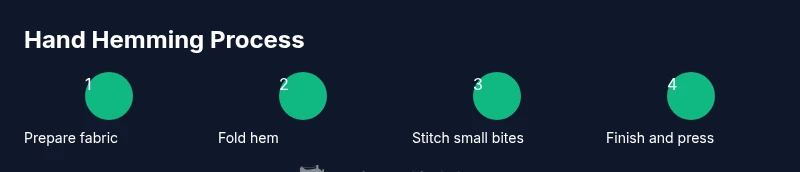
Lay the fabric flat and align the edges you plan to hem. Using your marking tool, draw a parallel line the width of your desired hem allowance. Fold along the line and press to set a crisp crease. This initial crease guides your stitches so they stay even throughout the length of the hem.
Tip: Use a light touch with chalk and press after folding to lock in the hem line. - 2
Thread the needle and secure the knot
Thread a length of thread to a comfortable working length. Tie a small knot at the end to prevent the thread from slipping through the fabric. Double-check that the thread color blends with the fabric for a neater finish.
Tip: Use a triple knot if you’re working with slippery fabrics. - 3
Fold the hem and align edges
Bring the folded edge to meet the marked line, ensuring the fold stays even around curves. Clip or pin the edge in place, checking from both sides that there are no twists. This alignment prevents puckering once you start stitching.
Tip: Work in small sections near seams to maintain alignment. - 4
Begin stitching small, even bites
Start a short distance from the edge to avoid bulk, catching only the folded edge and a few fabric threads. Take tiny stitches at roughly 1–2 mm intervals. Maintain consistent tension so the hem sits flat without pulling the fabric.
Tip: Avoid pulling the thread taut; a slightly loose stitch helps prevent puckering. - 5
Secure the end and hide the knot
Finish by passing the needle through the last stitch and pulling tight. bury the knot within the fold or close to the fabric surface—depending on the stitch you chose—so it won’t show on the outside. Trim thread ends close to the fabric.
Tip: If the thread frays easily, leave a short tail and knot twice for extra security. - 6
Press the finished hem
Gently press the entire hem with a hot iron and a pressing cloth to set the stitches and flatten any creases. Allow the fabric to cool before wearing or washing. This final step ensures the hem keeps its shape and subtle profile.
Tip: Avoid heavy pressing on delicate fabrics; use a pressing cloth and low heat.
Your Questions Answered
What fabrics respond best to hand hemming and why?
Hand hemming works well on lightweight to midweight fabrics like cotton, wool blends, silk, and chiffon where machine hems can distort grain or cause surface marks. Delicate fabrics benefit from careful handling and invisible stitches. Practice helps you adapt the technique to fabric behavior.
Hand hemming works best on lighter fabrics like cotton or silk where you want a neat, delicate finish.
Is hemming stitch by hand stronger than machine hemming?
Strength depends on fabric and stitch choice. For soft drape fabrics, hand hemming with a blind or slip stitch distributes tension more evenly along the fold, reducing visible stitching. For sturdy fabrics, machine hems may offer quicker results but can leave visible topstitching.
It depends on the fabric; hand hemming can be very secure on delicate fabrics, while machine hems are often stronger for heavy fabrics.
How can I fix a puckered hem from hand sewing?
Puckering usually results from too-tight stitches or excessive fabric slack. Remedy by re-threading with slightly looser tension, carefully re-folding, and resewing in shorter stitch lengths. Pressing between attempts helps set the fold and reduce distortion.
If your hem puckers, rework it with lighter stitches and press as you go.
Can I hand-hem a curved hem without distorting the edge?
Yes. Clip or notch the seam allowance on the curve to reduce bulk, align the fold along the curve, and sew slowly with small stitches. Gentle curved lines stay smooth if you keep the hemline evenly distributed.
Curved hems are doable—just keep the fold even and stitch in small, careful steps.
How long will a hand-hemmed edge last with washing?
Durability depends on fabric, thread, and stitch type. With proper pressing, a neat hem, and sturdy thread, a hemming stitch by hand can last many washes, especially on cottons and blended fabrics. Always follow fabric care guidelines.
If you use the right thread and gentle washing, a hand-hem can last a long time.
Watch Video
The Essentials
- Mark hems precisely before stitching
- Choose blind or slip stitch for desired invisibility
- Practice on scraps to dial in tension
- Press as you go to avoid puckering