Hemming Trousers with a Sewing Machine: A Practical Guide
Step-by-step guide to hemming trousers with a sewing machine. Learn fabric prep, stitch choices, and finishing techniques for neat, durable hems. Ideal for beginners and hobbyists seeking reliable alterations.


You will hem trousers using a sewing machine, selecting the right stitch, adjusting your machine settings, and finishing cleanly. Expect to measure, mark, and fold the hem, then machine-sew a sturdy edge and press for a professional look. This guide is designed for beginners and home sewists seeking durable, neat hems.
Why hemming trousers with a sewing machine matters
For home sewists, hemming trousers with a sewing machine offers speed, durability, and a clean finish compared with hand-stitching. A machine hem holds its crease, resists fraying, and can be customized for different fabric types. According to Sewing Machine Help, choosing the right needle, thread, and stitch is essential to avoid puckering on slippery fabrics. This section explains when to hem, fabric considerations, and how machine hemming can save time on alterations. You’ll learn how even a simple machine hem can unlock a more polished wardrobe and give you confidence to tackle future DIY projects.
Hemming is not a one-size-fits-all task. The fabric type, desired hem length, and whether the trousers are woven or knit all influence your approach. With the right settings and a few small tools, you can achieve a durable, nearly invisible edge that wears well through washing. By understanding the trade-offs between plain straight stitches, zigzag options, and blind hems, you can tailor your method to the fabric and the final look you want. This is especially helpful for jeans, dress pants, and linen trousers, where the hem’s weight and texture matter for drape and silhouette. The goal is a neat break line, a steady edge, and a hem that holds its position through repeated wear and washing.
Tools and materials you need
Before you start hemming trousers with a sewing machine, gather essential tools and materials to make the process smooth and predictable. Use a well-lit workspace and a sturdy ironing surface to keep folds crisp as you work.
Key essentials:
- Sewing machine with adjustable stitch length and a straight stitch option
- Matching thread and a compatible needle (woven fabrics typically use a universal needle size 80/12 or 90/14; consider a finer needle for delicate fabrics and a heavier needle for denim)
- Seam ripper, scissors, and pins to hold fabric in place during hemming
- Measuring tape, fabric chalk or erasable marker, and a fabric straightedge
- Iron and ironing board, plus a pressing cloth if needed to protect delicate fabrics
- Hem gauge or small ruler to check consistent hem depth
- Walking foot (optional but helpful for slippery fabrics) and a testing scrap fabric
If you’re hemming denim or heavy wool, you may want extra measures like a denim needle and a slightly longer stitch length. For lightweight cotton or linen, a finer needle and a shorter stitch can minimize puckering. A quality iron and a steady hand make a huge difference in crease alignment and final appearance. Sewing Machine Help emphasizes testing your chosen stitch on a scrap first to verify how the thread, needle, and fabric interact, which helps you avoid surprises on your actual garment.
Types of hems and stitch options
Hemming trousers can be done with several stitch types, depending on fabric, desired look, and wear needs. Here are common options and when to use them:
- Single-fold hem (classic): A simple, durable option for woven fabrics like cotton, wool, or linen. It involves folding the fabric edge once and stitching close to the fold. Pros: clean finish, quick. Cons: visible stitching from the outside if not pressed well.
- Double-fold hem: Fold twice, creating a narrow finished edge that hides raw fabric. Ideal for lightweight and stable fabrics, or when you want a heavier hand-sewn look without visible stitches on the outside.
- Blind hem (machine): Uses a specific blind-hem foot or a zigzag stitch with a slight catch on the fabric’s underside. Great for dress trousers where you want the hem to appear invisible from the outside.
- Zigzag or stretch stitch: For knit or stretch fabrics, a zigzag or stretch stitch helps preserve elasticity and reduces puckering. Use a narrow zigzag or a zigzag combined with a stabilizing tape when necessary.
- Top-stitched hem: A visible, decorative option that adds structure. Works well with denim and tailored trousers when you want a more defined finish.
Choosing the right stitch and hem type is a balance between fabric behavior, the garment’s silhouette, and how the hem will move in the wearer’s stride. For many woven trousers, a double-fold or blind hem with a straight stitch offers a clean navy-iron finish that holds well through washing. For denim or heavier fabrics, a single-fold with a slightly longer stitch and a back-stitch at the edges can improve longevity. Always test on a scrap to ensure the chosen method maintains the hem’s length and drape. The Stitch Type and Hem Guide from reputable sources like Sewing Machine Help can help you decide which option best fits your fabric.
Preparing the trousers for hemming
Preparation is the core of a neat hem. Getting the hem length correct, ensuring both legs are even, and pressing properly before any stitching reduces the chance of an uneven finish. Here’s a practical preparation plan:
- Try on the trousers and determine your desired hem length. Mark the length on the inside of both legs to ensure symmetry.
- Place the pants on a flat surface, and use a ruler or hem gauge to confirm both sides match. If necessary, measure twice before making any marks.
- Press the current edge to create a crisp fold line. A light wrinkle-free press helps the fabric hold its shape as you sew.
- Mark the fold line at the chosen hem depth with chalk or erasable fabric marker. For a standard 1-inch hem on woven fabrics, mark where the fold will occur after the first press.
- If the fabric tends to fray, apply a light edge-finishing technique such as a narrow overcast stitch or a serged edge before folding the hem. This helps prevent unraveling through multiple washes.
Once you’ve prepared the fabric and marked the hem, you’re ready to move to stitching. Preparation also includes testing thread tension and stitch type on a scrap piece of fabric that matches your trousers. This step helps you anticipate any puckering or skipped stitches before you begin the actual hem.
Finishing touches and edge finishing
Finishing touches ensure your hem looks professional and wears well. After stitching, a final press with a hot iron is essential to set the crease and reduce any loose threads. Here are practical finishing steps:
- Press the hem flat with steam for 10-15 seconds per area. If your fabric is delicate, use a pressing cloth to protect the fibers.
- If you used a plain straight stitch, backstitch at the start and end to lock the threads. Clip threads close to the fabric without cutting the threads that hold the stitching.
- For invisible hems, consider finishing the underside with a very narrow stitch or using a blind-hem foot. This reduces visible stitching on the outside.
- If you’re using a heavy fabric like denim, consider adding a small topstitch along the outer edge to reinforce the hem edge and add a tailored look.
- Clean up loose threads and give the full garment a final press to set the hem’s position and ensure the crease remains crisp after wear and washing.
A careful finish prevents snags and gives your hems endurance. Sewing Machine Help Team often recommends a test run on a scrap to fine-tune tension and stitch length before committing to the actual garment, especially with unfamiliar fabrics. With patience, your hems will stay straight and neat through many wears.
Troubleshooting and common pitfalls
Hemming can be tricky when fabric shifts, puckers, or stretches. Common issues include uneven hems, thread hope, puckering, and misalignment at the knee area. Start with a secure hold—pin rows evenly and double-check the hem line before stitching. If puckering occurs, reduce stitch length slightly and switch to a finer needle. For slippery fabrics, use a walking foot or a grip-enhancing needle technique and baste the hem temporarily before final stitching. Always test on scrap fabric to refine tension and stitch choice. If you encounter persistent issues, recheck needle type, thread, and fabric compatibility before continuing.
Fabric-specific tips and scenarios
Different fabrics behave differently when hemmed. Here are quick guidelines for common trouser fabrics:
- Lightweight cotton or linen: Use a narrow double fold for a clean finish and a straight stitch. Press carefully to avoid creating a stiff edge.
- Wool or wool blends: A slightly longer stitch length helps prevent puckering, and a pressing cloth can protect delicate fibers. A blind hem creates a nearly invisible finish on tailored trousers.
- Denim or heavy twill: A single-fold hem with a strong topstitch can provide durability. Use a heavy needle (like a size 90/14 or 100/16) and consider a backing stitch to stabilize the edge.
- Stretch fabrics: A zigzag or stretch stitch helps maintain flexibility. Consider placing a small stabilizer or using a walking foot to reduce shifting.
Experiment with a scrap sample before hemming the actual garment to determine how the fabric responds to different needles, thread types, and stitch choices.
Quick-start checklist for a successful hem
- Measure accurately and mark clearly on both legs.
- Use a compatible needle and thread; test tension on a scrap.
- Choose the hem type appropriate for fabric; test with scrap fabric first.
- Press the hem line and folds as you work; keep edges aligned.
- Finish with a neat press and trim any stray threads for a polished result.
Tools & Materials
- Sewing machine with straight stitch capability(Ensure it runs smoothly and has adjustable stitch length.)
- Matching thread(Use a color that blends with the fabric; thicker thread for heavy fabrics.)
- Appropriate needle for fabric(Universal 80/12 for woven fabrics; consider denim needle for heavy fabrics.)
- Scissors and rotary cutter(Sharp blades to ensure clean cuts.)
- Pins or fabric weights(Hold fabric edges firmly while hemming.)
- Measuring tape and chalk/markers(Precise hem length and marking lines.)
- Iron and ironing board(Press folds as you work for crisp edges.)
- Seam ripper(Optional for correcting mistakes.)
- Walking foot or non-slip foot(Helpful for slippery fabrics.)
- Hem gauge or small ruler(Keeps hem depth consistent.)
Steps
Estimated time: 30-60 minutes
- 1
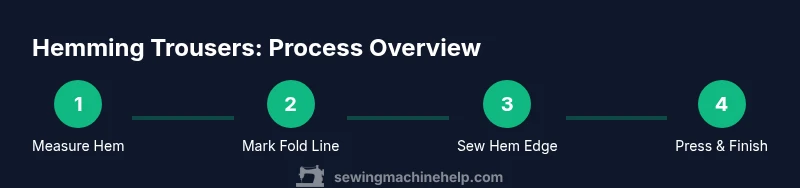
Measure hem length
Have the wearer stand flat or sit to simulate movement. Mark the desired hem length on both legs with chalk, then double-check for symmetry. Compare with the original hem on any other trousers to ensure consistent length.
Tip: Mark both sides of each leg and then recheck in a well-lit area to avoid misreads. - 2
Mark and crease the hem line
Transfer your hem length marks to a crease line using a ruler and chalk. Press along the crease to set a crisp fold before sewing. A pressed crease helps guide a straight stitch and reduces shifting during sewing.
Tip: Use a tailor’s ham for curved hems to maintain the shape during pressing. - 3
Choose stitch and set up machine
Select a straight stitch for woven fabrics or a zigzag/stretch stitch for knits. Set stitch length between 2.5 and 3.0 mm for woven hems; adjust for fabric type. Test on scrap fabric to confirm balance between speed and control.
Tip: If using a blind hem, switch to the appropriate foot before sewing. - 4
Fold and secure the hem
Fold the fabric at the crease line, aligning edges. Pin or baste to hold the fold in place during the initial stitch. Ensure the fold sits evenly along the entire Hem edge.
Tip: Baste with long stitches along the fold line to prevent slipping. - 5
Sew the hem edge
Sew along the fold using the chosen stitch, keeping the line close to the edge of the fold. Remove pins as you sew and pause to recheck alignment near seams or creases. Sew slowly over thicker areas like pockets or corner reinforcements.
Tip: Backstitch at the start and end to lock threads. - 6
Finish and press
Trim any excess thread, then press the completed hem with steam. If using a double-fold hem, press the inner fold first, then the outer fold for a crisp finish. Inspect the hem for evenness and adjust if necessary.
Tip: Let the fabric cool before wearing to set the crease.
Your Questions Answered
What sewing machine settings work best for denim hems?
For denim, use a straight stitch with a longer length (around 2.8-3.2 mm) and a heavier needle. A single-fold or small double-fold hem with reinforced stitching helps durability. Test on a scrap first to adjust tension and stitch type.
Denim hems benefit from a straight stitch, a longer length, and a heavier needle. Test first on scrap fabric.
Can I hem stretchy fabrics on a regular sewing machine?
Yes, but use a stretch or zigzag stitch and a ballpoint or jersey needle. Consider a walking foot to prevent shifting and minimize puckering. If possible, finish with a small amount of serging or a narrow zigzag for extra stability.
Yes, with a stretch stitch and appropriate needle. A walking foot helps prevent shifting.
Is hand-basting worth it before machine hemming?
Hand-basting provides temporary hold for tricky hems or slippery fabrics. It’s worth doing on delicate fabrics or very slippery edges to ensure the hem stays aligned while you sew.
Basting can help with alignment on slippery fabrics. It’s often worth the extra step.
How can I ensure an even hem on tapered legs?
Measure both legs at multiple points and re-check before sewing. Use a full-length mirror or helper to confirm symmetry, and baste to maintain the line as you sew.
Measure both legs at several points and check symmetry often; baste if needed.
What needle size should I use for woven fabrics?
Typically size 80/12 or 90/14 needles work well for woven fabrics like cotton or linen. Choose a slightly larger needle for heavier fabrics such as twill or wool blends to prevent fabric fraying.
Try size 80/12 for most woven fabrics; use 90/14 for heavier weaves.
How long should the hemming thread be when starting a project?
Prepare a thread length long enough to avoid frequent rethreading, typically 40-50 inches. This gives enough room to stitch without pulling thread from the spool.
About 40-50 inches of thread length is a practical rule of thumb.
Watch Video
The Essentials
- Measure accurately and mark evenly on both legs.
- Choose hem type based on fabric, weight, and desired look.
- Test stitches on scrap fabric before final sewing.
- Press as you work for crisp edges and consistent hems.
- Finish with a neat press and trim stray threads.