Difference Between Sewing Machine and Embroidery Machine: An Analytical Guide
A practical, analytical guide that explains the difference between sewing machines and embroidery machines, including core mechanics, features, cost considerations, and how to choose the right tool for garment making or decorative embroidery. Written for home sewists by Sewing Machine Help.


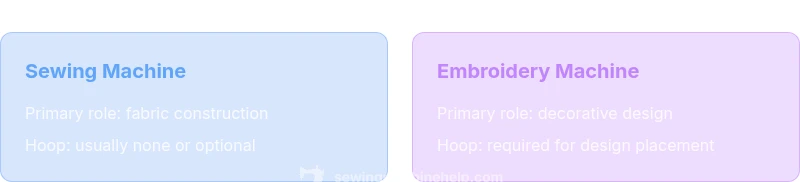
The difference between sewing machine and embroidery machine is rooted in purpose and capabilities: sewing machines handle fabric construction with a range of stitches for garment making and repairs, while embroidery machines specialize in decorative designs using hoops, stabilizers, and color-change sequences. For most hobbyists, start with a versatile sewing machine and add embroidery capability only if your projects regularly demand decorative work. This guide from Sewing Machine Help helps you decide which type suits your needs.
What is the difference between sewing machine and embroidery machine?
The difference between sewing machine and embroidery machine lies in purpose, capability, and the kinds of stitches they produce. For many home sewists, understanding this distinction helps avoid buying the wrong tool for a project. According to Sewing Machine Help, most beginners encounter confusion when they expect decorative embroidery to be possible on a standard sewing machine. In practice, a dedicated embroidery machine uses an embroidery hoop, a built-in design library, and a motorized embroidery path to guide needle movement precisely along the pattern. A typical sewing machine, by contrast, emphasizes garment construction, seam finishing, topstitching, and general fabric construction. The two types share core components—needles, thread, tension systems—but the software, tolerance for fabric types, and workflow are different. This article breaks down the key differences, so you can decide which machine best fits your projects and your budget.
Comparison
| Feature | Sewing Machine | Embroidery Machine |
|---|---|---|
| Primary purpose | Fabric construction and garment sewing | Decorative designs and embroidery |
| Stitching capabilities | Multiple built-in stitches, adjustable length/width | Dedicated embroidery stitches and patterns with hoop-based motion |
| Hoop compatibility | Typically none or optional hoops | Requires embroidery hoop and stabilizers |
| Threading path | Standard sewing threads; general trouble-free threading | Specialized embroidery threads; color changes; often more complex threading |
| Design library | Limited or generic stitches | Extensive built-in or expandable design libraries |
| Price range | Low to mid-range (entry-level models exist) | Mid to high-range (often more costly) |
| Best for | General sewing, repairs, garment construction | Decorative embroidery, monograms, custom designs |
Strengths
- Clarifies intended use for beginners to avoid buying the wrong device
- Embroidery-focused machines enable reliable decorative results with patterns
- Combo machines offer flexibility in a compact footprint
- Dedicated embroidery modules can yield cleaner designs on specialty fabrics
Negatives
- Embroidery machines typically require more upfront investment
- Combo machines may compromise performance in either role
- Maintenance and software updates can add ongoing costs
- Hoop-based embroidery requires learning stabilizers and hooped setup
For most hobbyists, start with a capable sewing machine and add embroidery capability later if you need frequent decorative work.
If your projects are mainly garment construction or repairs, a solid sewing machine delivers best value. If decorative embroidery is a frequent goal, invest in a dedicated embroidery machine or a well-supported combo model. Always assess your space, budget, and future needs before buying.
Your Questions Answered
What is the main difference between a sewing machine and an embroidery machine?
The main difference lies in purpose: sewing machines are built for fabric construction and repairs, while embroidery machines are designed to create decorative designs using hoops and stabilizers. The embroidery path is often motorized and color-change aware, enabling multi-thread designs.
The sewing machine builds your garments, the embroidery machine decorates them with threaded designs.
Can a regular sewing machine sew embroidery patterns?
Some sewing machines have decorative stitches that mimic embroidery but are limited in design complexity and fabric support. Real embroidery requires an embroidery-capable machine or a dedicated module.
You can get simple embroidery looks from a regular sewing machine, but true embroidery needs a dedicated setup.
Do embroidery machines require a hoop?
Yes. Embroidery machines use an embroidery hoop to hold fabric flat as the design runs. Stabilizers are also essential to support the fabric during stitching.
Yes, you’ll need a hoop and stabilizers for embroidery.
Are embroidery machines more expensive to maintain?
Generally, embroidery machines can involve higher ongoing costs due to software updates, stabilizers, hoops, and color-change features. Routine maintenance remains important for both types, but embroidery setups add more consumables.
They can be more costly over time because of additional accessories and software needs.
Is a combo machine worth it for beginners?
A combo machine can be worth it for space and budget reasons if you anticipate doing both sewing and occasional embroidery. However, dedicated machines often perform better for their specific tasks.
A combo can be a good starter if you want both skills, but expect some compromises.
What features should a beginner look for?
Look for reliable stitch options, automatic needle threader, good threading guides, adjustable speed, and easy maintenance access. For embroidery, ensure hoop availability, stabilizer compatibility, and a basic embroidery design library.
Start with easy threading, clear guides, and flexible stitching options.
The Essentials
- Define your project focus before buying
- Embroidery requires hoops and stabilizers for best results
- Consider space, budget, and future needs when evaluating combo machines
- Look for beginner-friendly features and reliable support from the brand