Difference Between Sewing Machine and Quilting Machine
Sewing Machine Help analyzes the difference between sewing machine and quilting machine, covering purpose, features, maintenance, and buying tips for home sewists and beginners.


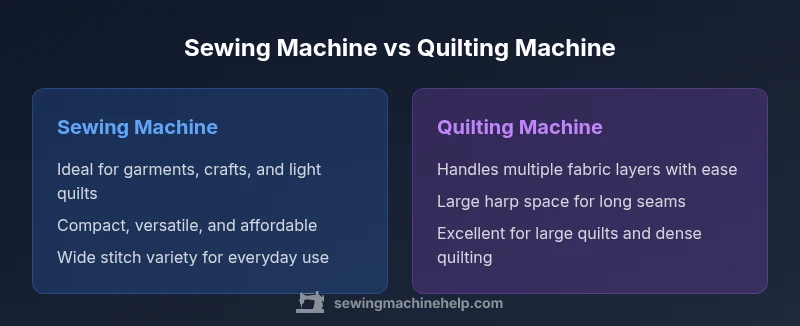
The difference between sewing machine and quilting machine lies in purpose, build, and capabilities. Sewing machines are versatile for garments, crafts, and light projects with varied stitches. Quilting machines are built to handle thick fabric layers, large quilts, and long, precise stitches, often with a larger throat space and enhanced feed control. For casual sewists, a solid all‑round sewing machine suffices, while quilting requires specialized support.
Overview: What makes the difference between sewing machine and quilting machine
The phrase difference between sewing machine and quilting machine captures a broad spectrum of ideas, but the core distinction is practical: the tools you use should align with your typical projects and pace. Sewing machines excel at garment construction, home crafts, and quick repairs, while quilting machines are optimized for piling multiple layers, large surfaces, and long, uninterrupted stitching sessions. For many home sewists, starting with a reliable sewing machine is the sensible path, then expanding to quilting capabilities as quilts, comforters, or large projects become regular tasks. Understanding this distinction helps prevent buyer’s remorse and ensures your investment matches your creative goals.
According to Sewing Machine Help, choosing the right machine begins with your most common projects. By focusing on use cases first, you can avoid paying for features you won’t use and instead target tools that boost productivity and quality.
"## Core mechanical differences
At a high level, the difference between sewing machine and quilting machine boils down to mechanics and scope. Quilting machines often offer a larger harp space (throat area) to accommodate bulky fabric sandwiches, thicker batting, and multiple layers. They also emphasize stitch regulation and consistent feed across long seams, which reduces fabric shifting during hours of quilting. In contrast, general sewing machines prioritize a compact footprint, a wide range of stitch options for garments, and maneuverability in tight spaces. The result is a versatile workhorse for everyday sewing that still can handle light quilting with the right foot and attachments.
Another key mechanical difference is the feed system. Sewing machines rely on reliable feed dogs for standard seams and piecing. Quilting-focused machines may incorporate walking foot options, stronger motors, and adjustable speed control for sustained, accurate stitching. These design choices minimize fabric slippage and ensure uniform stitches through thick layers. Understanding these differences helps you assess which machine best fits your rhythm and pressure points when you set up a sewing corner at home.
"## Key features to compare across models
When evaluating the difference between sewing machine and quilting machine, start with the features that matter most to your projects. Look for throat space, as larger quilts require space to move material without constant repositioning. Check stitch regulation and the presence of specialized quilting stitches, such as longarm or free‑motion capabilities, that enable smoother, more consistent results. Consider walking foot compatibility, needle position options, and presser-foot variety for piecing, binding, and edge finishing. Don’t overlook noise, lighting, and vibration control, which impact comfort during long sessions. Finally, assess compatibility with extension tables or frame systems that support large-format quilting. A machine with robust support for rulers, wide open spaces, and stable power is typically a better long‑term investment for quilting enthusiasts.
In short, examine the features you will actually use, then map those to the projects you plan to tackle. The difference between sewing machine and quilting machine becomes clearer once you pair your workload with the raw capabilities and ergonomics of the tools you choose.
"## Consumer use cases: when to pick which
For beginners, a dependable sewing machine offers the most immediate value, handling clothing alterations, crafts, and small to medium projects with speed and consistency. If your habitual projects include dense batting layers and large quilts, a quilting machine becomes compelling. Quilting machines reduce fatigue on long seams and improve stability over time, helping you achieve professional finishes on bed quilts and wall hangings. For many households, the path is progressive: start with a versatile machine, then add quilting capacity as your ambition grows. If you plan only occasional quilting or smaller projects, a capable sewing machine with a strong walking foot and a compatible extension table may cover your needs without the purchase of a dedicated quilting machine.
Reflect on your current project mix, available space, and budget. The difference between sewing machine and quilting machine is often more about how you use it rather than a single feature. Test simple garments and a small quilt sandwich on the same platform to see where you feel most productive and comfortable.
"## Budget considerations and total cost of ownership
Budgeting for a sewing machine versus a quilting machine involves more than the initial sticker price. Sewing machines generally offer a wide price range, with high-quality units delivering excellent versatility at moderate cost. Quilting machines can carry a higher upfront investment, but they often include features intended to reduce fatigue and increase throughput for large projects. Consider the long-term cost of ownership, including accessories (extra feet, rulers, extension tables), maintenance, and potential upgrades. If you anticipate frequent quilting, the investment may pay back in time saved and improved results. If quilting is occasional, a robust sewing machine with compatible quilting accessories can be a more economical choice. The key is to balance project demand with projected usage to determine whether the difference between sewing machine and quilting machine aligns with your goals.
In this context, Sewing Machine Help emphasizes evaluating your workload and space constraints. The right decision supports consistent quality without overextending your budget or workspace.
"## Setup, maintenance, and troubleshooting
Maintenance is a practical consideration that shapes the total ownership experience. A general sewing machine requires routine cleaning, lint removal, and periodic oiling per the manufacturer’s guidance. Quilting machines, especially long‑arm configurations, demand more frequent attention to tension, feed system alignment, and bobbin management across long sessions. Use high-quality oil and follow a regular cleaning routine to extend the life of any machine. Troubleshooting commonly involves checking thread path, needle type, and presser-foot tension, then rechecking balance between stitch length and speed. If you encounter frequent bird nesting or skipped stitches, revisit needle selection and fabric thickness to restore smooth operation. The difference between sewing machine and quilting machine becomes most apparent in maintenance needs when you’re running long quilting sessions or working with multiple layers—both require a little more planning and care than everyday garment sewing.
"## Advanced options: when you might need a dedicated quilting machine
For serious quilters or those exploring long‑arm quilting, a dedicated quilting machine offers advantages beyond a standard machine. Long‑arm systems provide extended throat space, table support, and enhanced stitch control for large quilts and heavy fabrics. They simplify navigating bulky fabric sandwiches and maintaining even stitching across wide surfaces. If your quilting ambition grows to full‑size quilts or frequent dense quilting patterns, a sit‑down or long‑arm quilting machine can dramatically improve efficiency and precision. For other users, a strong sewing machine with compatible quilting feet, rulers, and optional frame accessories may cover most needs without the complexity and footprint of a dedicated quilting setup.
Despite the higher cost and space requirements, the quilting‑focused option often aligns with long‑term goals and project scope. Assess your predicted workload and space before committing to a long‑term investment, and remember that the best choice balances capability, comfort, and budget.
"## Practical buying guide for beginners
If you’re new to the world of sewing and quilting machines, approach the decision with a practical checklist. Start by listing your top projects, then map those to machine capabilities. Check throat space, available stitches, and compatibility with essential accessories like walking feet and extension tables. Test machines in person to gauge ergonomic fit—how the hand feels guiding fabric, how smoothly the needle moves, and how easily you can switch feet. Compare warranty terms, service access, and community support. Finally, consider a transition path: will you keep your first machine as a general tool, or do you anticipate upgrading to a dedicated quilting machine in a few years? The difference between sewing machine and quilting machine is most meaningful when you align features with real‑world use, space, and budget.
"## Step-by-step decision checklist
- List your most common projects
- Identify essential features for those projects
- Check throat space and needle options
- Assess accessory availability and future upgrades
- Compare warranty, service, and community support
- Preview total cost of ownership over 3–5 years
- Make a decision that prioritizes your typical workload and available space
Comparison
| Feature | Sewing Machine | Quilting Machine |
|---|---|---|
| Purpose/Ideal Projects | Garments, crafts, and everyday sewing | Quilting thick layers, large quilts, long seams |
| Throat Space / harp space | Average/compact space | Large harp space for bulky layers |
| Feed System / Stitch Regulation | Standard feed dogs; varied stitches | Advanced feed systems; better stitch control for long sessions |
| Stitch Options | Wide variety of garment stitches | Specialized quilting stitches and free‑motion options |
| Footing & Attachments | Everyday presser feet; diverse compatibility | Quilting feet, rulers, and long‑arm accessories |
| Best For | Versatility for mixed projects | Quilting projects, large quilts, frequent layering |
Strengths
- Sewing machines offer broad versatility for garments and crafts
- Quilting machines excel at handling multiple fabric layers with stable stitches
- A solid sewing machine is typically more affordable and space‑efficient
- Dedicated quilting features reduce fatigue during long quilting sessions
Negatives
- Quilting machines may have higher upfront costs and take more space
- Sewing machines may need accessories to handle thick quilt sandwiches
A sewing machine is the practical default for most home sewists; a quilting machine is worth it if quilting is a primary, frequent activity.
For frequent quilting or large quilts, a quilting machine delivers efficiency and quality. For general sewing, a versatile sewing machine remains the smarter, cost‑effective starting point. Your choice should align with your project mix and space.
Your Questions Answered
What is the difference between sewing machine and quilting machine?
The difference between sewing machine and quilting machine centers on purpose and capacity. Sewing machines are built for garment sewing, crafts, and mixed projects with varied stitches. Quilting machines prioritize handling multiple fabric layers, large projects, and long, consistent stitches, often with extended throat space and specialized quilting features.
Sewing machines are for general sewing tasks; quilting machines are for quilts and thick fabrics.
Do I need a quilting machine to quilt at home?
Not necessarily. Many home quilters start with a capable sewing machine and use appropriate feet, rulers, and a frame or table to support quilting. A dedicated quilting machine becomes more valuable if you quilt frequently or work on large projects.
You can quilt on a good sewing machine with the right setup, but a quilting machine helps with big projects.
Can a sewing machine handle multiple layers in a quilt sandwich?
A standard sewing machine can manage thin to medium‑weight quilts with proper batting and fabric, but thicker sandwiches may require a walking foot or a quilting‑specific attachment to prevent bunching and skipped stitches.
With the right foot and technique, you can quilt small pieces on a sewing machine.
What features should I look for when buying a quilting machine?
Key features include a large throat space, stable stitch regulation, compatibility with walking feet and rulers, good visibility lighting, and a sturdy frame or table system for long quilting sessions.
Look for space, control, and supports that keep fabric flat while you sew long lines.
Are quilting machines more expensive than sewing machines?
In general, quilting machines can be more expensive upfront due to larger frames, specialized features, and added accessories. The total cost of ownership depends on how often you quilt and the scale of your projects.
Yes, quilting machines usually cost more, but they’re built for big jobs.
How much maintenance does a quilting machine require?
Quilting machines require regular cleaning, tension checks, and occasional lubrication, especially if you run long sessions. Regular service helps maintain stitch quality and extends the machine’s life.
Keep it clean and tuned, especially if you quilt a lot.
The Essentials
- Assess your top projects before buying
- Prioritize throat space for quilts
- Budget for long‑term use, not just upfront cost
- Test machines with real fabrics, not demos alone
- Consider upgrade paths when planning space and budget
- Choose accessories that extend your machine’s quilting capabilities
- Note maintenance needs for long sessions
- Decide between a generalist and a quilting‑specific setup
- Use a stepwise approach to expand as skills grow