Sewing Machine vs Serger: Understanding the Difference
Understand the essential differences between a sewing machine and a serger, including stitches, threading, speed, and best-use scenarios to decide which tool fits your projects.


For most home sewers, the difference between a sewing machine and a serger is practical rather than ceremonial. A sewing machine handles a wide range of stitches and hems, while a serger specializes in fast edge finishing with overlock stitches. Understanding when to use each tool helps you complete garments with clean edges, strong seams, and professional-looking finishes. This guide compares capabilities, costs, and project suitability.
What Each Machine Is Designed For
The sewing machine and the serger share a familiar silhouette, but their design goals diverge markedly. The difference between a sewing machine and a serger becomes evident when you examine project outcomes. A traditional sewing machine is built for general stitching, from straight seams to buttonholes, topstitching, and top-stitched finishes. It shines on woven fabrics, denim, and delicate textiles alike, offering a wide range of presser feet and stitch options for creative control. A serger, on the other hand, prioritizes speed and edge finishing. With loopers, knives, and multiple threads, it creates neat, secure overlock edges that resist fraying—perfect for knit fabrics and garments where a clean edge is essential. For many home sewists, the best approach is to own both: a primary sewing machine for construction and a serger to provide professional edge finishes on garments and lightweight fabrics. The difference between a sewing machine and a serger is not merely about speed; it’s about intended outcomes and project efficiency.
Core Stitches and Their Purposes
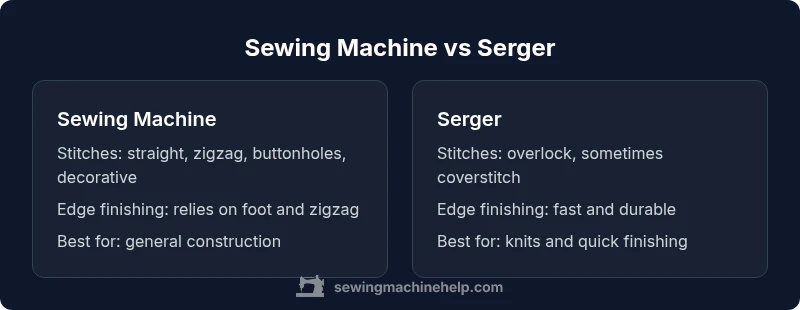
Stitch repertoire is a major differentiator. A typical sewing machine offers a broad set of stitches: straight stitches for construction, zigzag stitches for elastic fabrics and finishing, and specialized stitches for buttonholes, zippers, and topstitching. Decorative stitches add flair to hems and accents, expanding creative possibilities. A serger focuses on a smaller subset of stitches—overlock stitches that wrap the fabric edge while trimming excess fiber. Some higher-end sergers may include coverstitch options for additional finishing, but the core strength remains edge protection and seam integrity. When you compare the two, the sewing machine provides versatility for a wide variety of projects, while the serger excels at producing durable edges quickly, with a clean professional look. The difference between a sewing machine and a serger is evident in stitch purpose and finish quality.
Threading and Tension: The Biggest Setup Difference
Threading a traditional sewing machine is usually straightforward: spool(s) on top, thread through guides, into the needle, and around the bobbin case. Tension can be adjusted per fabric, stitch selection, and needle type. Sergers use a more complex threading path due to multiple loopers and knives. You’ll often thread three to five threads simultaneously, guiding each through its own loopers and tension disks. Misthreading can cause loose seams, skipped stitches, or skipped knife operation. The tension balance differs as well: sergers require correct thread tension on several threads to achieve an even overlock. Expect a learning curve, but with practice you’ll thread confidently and achieve consistent edge finishes. The difference between a sewing machine and a serger is most pronounced in threading complexity and tension adjustments.
Speed, Power, and Feed Mechanisms
Speed is a common advantage of sergers; many models operate at higher speeds than standard sewing machines, enabling rapid edge finishing. Feed mechanisms vary: sewing machines use single or dual feed dogs to move fabric, while sergers rely on knife action and multiple threads to guide fabric through the loopers. Power comes from different motor configurations, and while sergers often require a touch more stability and vibration dampening due to fast operation, modern domestic models are quite manageable. For most hobbyists, the speed benefit is a practical advantage on knit fabrics and long seam lines, but it doesn’t substitute for the broad stitch options a sewing machine provides. The difference between the two becomes clear when you weigh control versus throughput.
Finishing Edges: Overlock vs Plain Finishes
Edge finishing is where sergers truly shine. An overlock stitch trims the fabric edge while enclosing it in thread, creating durable, fray-resistant seams—ideal for knits and woven fabrics with minimal cling. A sewing machine’s typical zigzag or straight stitch can mimic edge finishing, but it often requires a separate zigzag foot and careful seam allowances. For sheer edge quality, a serger delivers a professional look with less manual trimming. That said, you’ll still need a sewing machine for most construction steps and decorative finishes. In short, sergers boost edge durability and speed, while sewing machines offer broader stitch diversity and control. The difference between a sewing machine and a serger is most evident in how seams are finished and how edge integrity is achieved.
Garment Construction vs Everyday Seams
Garment construction often sits at the heart of this comparison. Sewing machines handle buttonholes, topstitching, darts, zipper insertion, and complex assembly. They provide control over seam allowances and can handle a wide range of fabrics with the appropriate needle and presser foot. Sergers simplify edge finishing and seam finishing on knit fabrics, reducing bulges and ensuring a consistent stretch. They’re particularly effective for activewear, t-shirts, and garments where a clean, professional-edge look matters. For many projects, a combination approach yields the best results: sew the components on a machine, finish the edges with a serger, and use a coverstitch or straight stitch for the final hems. The difference between a sewing machine and a serger is the balance between construction versatility and edge finishing efficiency.
Maintenance, Cost, and Longevity
Maintenance practices vary between machines. Sewing machines require regular oiling at specific points, needle changes, and occasional bobbin case cleaning. Sergers demand attention to the threading path and the loopers, plus periodic blade or knife checks and tension recalibration. In terms of cost, a solid, feature-rich sewing machine sits in a broader price range than a basic serger, though two-machine setups can be costlier overall than a single multi-function model. Longevity depends on how often you service, store, and use the machines, as well as the availability of replacement parts and serger-specific feet. The difference between a sewing machine and a serger in maintenance is primarily the scope and frequency of their upkeep needs.
When to Buy One or Both
If you’re just starting out, a versatile sewing machine often provides the most value, flexibility, and safety nets for common projects. A serger should be considered when you frequently sew knit fabrics, require fast edge finishing, or aim for a professional edge finish. For many hobbyists, investing in both is the best long-term strategy: use the sewing machine for construction and most finishing needs; add the serger to handle edge finishing and knit fabrics. The decision centers on your typical projects, space, and willingness to learn threaded setups. The difference between a sewing machine and a serger becomes a practical budget and workflow choice rather than a theoretical debate.
Common Misconceptions About Sergers
A common myth is that sergers can replace a sewing machine entirely. In reality, sergers excel at edge finishing but lack many construction stitches needed for hems, zippers, and buttonholes. Another misconception is that sergers are easy to use immediately; many models require patience and a bit of trial-and-error to achieve balanced tensions. Finally, people assume sergers are only for professionals; modern domestic models are accessible to beginners with careful threading and practice. Recognizing these misunderstandings helps you decide whether to buy a serger now, later, or never, depending on your goals. The difference between a sewing machine and a serger is not about complexity alone; it’s about achieving reliable results with the right tool for the job.
Practical Project Scenarios: Selecting the Right Tool
Understanding common project types clarifies when to choose which machine. For simple hems, garment repairs, and non-knit fabrics, a sewing machine is typically sufficient and more versatile. When finishing edges of a knit top or a lightweight dress, a serger provides a fast, stable seam with a professional edge. If you’re making activewear, lounge wear, or kids’ clothing, a serger can speed production while maintaining edge integrity. For home decor projects like cushions or curtains, a sewing machine is usually the go-to for structural seams. The difference between a sewing machine and a serger becomes practical when you map project requirements to stitch types, edge finishes, and speed.
Helpful Setup Tips for Beginners
To minimize frustration, start with a clean workspace and a clear threading plan. For sewing machines, load a new needle, thread the bobbin, and test stitch on scrap fabric to set tension. For sergers, practice threading on a spare spool before attaching the fabric, and work slowly at first to learn loopers and knife timing. Keep a small guide with threading routes handy, and invest in the right foot attachments for your typical tasks. Regularly check blade sharpness (if your model has a knife) and keep lint removal on your routine. The difference between a sewing machine and a serger becomes a matter of method: patient setup yields consistent, professional results over time.
Quick-start Checklist to Decide
- Identify your most common fabrics and projects. If you sew lots of knits, a serger is valuable; for quilts and woven garments, a sewing machine is essential.
- Consider space, budget, and willingness to learn threading on multiple machines.
- Plan a two-step path: start with a reliable sewing machine; add a serger later for edge finishing if needed.
- Research models with solid support, accessible manuals, and compatibility with your preferred foot brands. The difference between a sewing machine and a serger becomes a practical planning decision based on your workflow and goals.
mainTopicQuery
Comparison
| Feature | Sewing Machine | Serger |
|---|---|---|
| Primary function | General stitching and garment construction | Edge-finishing and overlocking seams |
| Stitch options | Straight, zigzag, buttonholes, decorative stitches | Overlock (and limited coverstitch on select models) |
| Threading complexity | Moderate; spool-based threading and bobbin | High; multiple loopers and knives, multiple threads |
| Speed | Moderate to high (depends on model) | High-speed edge finishing; great for production feel |
| Best for | General sewing, repairs, crafts, and varied projects | Knit fabrics, fast finishing, and durable edges |
| Price range | Budget to mid-range, broad feature set | Mid-range to premium; individual sergers can be costly |
| Maintenance | Lower maintenance; regular oiling and needle changes | Regular looper/knife checks and precise tension adjustments |
Strengths
- Versatile for a wide range of stitches and projects
- Beginners often find sewing machines more approachable
- Sewing machines generally have broader accessory ecosystems
- Squelched edge finishing can be achieved with compatible feet on sewing machines
Negatives
- Sergers save time on edge finishing but add threading complexity
- Sergers require extra space, table, and possibly a dedicated stand
- Two machines may require more initial investment than a single multi-function model
- Learning curve exists for accurate differential speeds and tensions
A sewing machine wins for overall versatility; a serger wins for professional edge finishes.
If you mostly sew garments, crafts, and repairs, start with a reliable sewing machine. Add a serger later if you frequently work with knits or want fast, durable edge finishing. The Sewing Machine Help team’s verdict is that combining both tools offers the most flexible and efficient workflow for home sewists.
Your Questions Answered
What is the difference between a sewing machine and a serger?
A sewing machine handles general stitching, including straight and zigzag stitches, plus features like buttonholes. A serger finishes edges with overlock stitches using multiple threads and trimming knives, delivering quick, durable edge finishes—especially on knits.
Sewing machines do most stitching; sergers finish edges fast. For most projects, you’ll use both at different stages.
Can I replace a serger with a sewing machine?
You can complete many projects with a sewing machine alone, but edge finishing on knits may be less durable without a serger. A serger offers faster, cleaner edges that a sewing machine alone can’t easily replicate.
Yes, but it won’t be as fast or edge-perfect for knits.
Do sergers sew buttonholes or zippers?
Most sergers don’t handle buttonholes or zippers; those tasks are better suited to a sewing machine. Some models offer coverstitch options for hems, but central construction still relies on a sewing machine.
Serges are great for seams and edges, not for buttonholes.
Is a serger necessary for beginners?
Not strictly necessary, but a serger can dramatically improve efficiency for edge finishing. Beginners can benefit from learning on a sewing machine first, then add a serger as needed.
You can start with a sewing machine and add a serger later if you want.
What fabrics benefit most from a serger?
Knit fabrics and fabrics prone to fraying benefit most from serger finishes. A serger’s edge wrapping helps prevent unraveling and yields durable seams.
Knit fabrics tend to work very well with a serger.
Can both machines be used for hemming?
Yes. A sewing machine is typically used for precise, visible hems, while a serger can provide a narrow, durable edge finish on some hems, especially for knits. You may choose based on desired look and fabric.
Hems can be done on both, with different looks and strengths.
The Essentials
- Assess your project types to guide tool choice
- Balance cost, space, and learning curve when planning purchases
- Start with a solid sewing machine, then add a serger if edge finishing is a priority
- Master threading and tension on both machines for best results