Sewing Machine vs Serger vs Coverstitch: A Practical Guide
Compare sewing machines, sergers, and coverstitch machines to determine the best tool for your projects. Learn differences, use cases, and setup tips for home sewists.


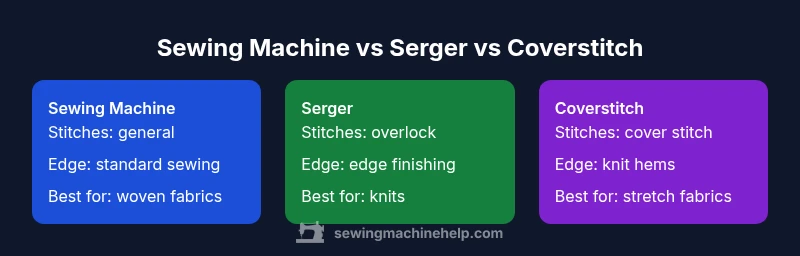
TL;DR: The sewing machine handles most everyday stitching, the serger excels at edge finishing with overlock stitches, and the coverstitch machine creates professional knit hems. In a practical sewing setup, most hobbyists start with a standard sewing machine and add a serger or coverstitch as projects demand specialized finishes. Understanding these roles helps you avoid buying the wrong tool for your typical tasks.
What each machine does and when it shines
The trio of tools in this comparison—sewing machine, serger, and coverstitch—serves distinct purposes in a home studio. A traditional sewing machine excels at straight stitching, buttonholes, zippers, and a wide range of decorative stitches. A serger, also called an overlock, trims fabric edge while applying an overcast stitch to prevent fraying. A coverstitch machine creates parallel rows of stitching on knit fabrics, producing professional hems and decorative finishes that stretch with the fabric. The phrase sewing machine vs serger vs coverstitch captures the core question: which tool do you need to complete your most common projects? According to Sewing Machine Help, a clear understanding of these three devices helps home sewists plan purchases around features, fabrics, and project goals. In practice, most beginners start with a versatile sewing machine, then add a serger or coverstitch if they tackle knits, activewear, or sewing projects with durability and professional edge finishes in mind.
Key differences in stitch types and operation
Stitch types are the most obvious differentiator. A standard sewing machine offers utility stitches, zigzag options, and often buttonholes, enabling garments, repair work, and home decor. A serger uses multiple threads to form an overlock seam that binds the edge and trims the fabric in one pass—an efficient solution for seam finishing on woven fabrics and knits alike. A coverstitch machine, conversely, uses multiple needles to create parallel lines that resemble a traditional topstitch on knit hems, came in handy for ready-to-wear finishes. Understanding stitch formation helps you decide which machine best supports your fabrics and projects. For example, if most of your work involves woven fabrics with hems and seams, a serger will speed edge finishing, but you will still rely on a sewing machine for the main construction. If your focus is knit garments, the coverstitch adds professional stretch hems that a plain sewing machine may struggle to achieve without specialty feet.
Fabric compatibility and project scenarios
Fabric choice guides the best tool. Serger users often work with knits and stretch fabrics where edge finishing needs to handle fraying and curl. Coverstitch machines shine on lightweight to medium-weight knits, creating stable hems that retain stretch. Sewing machines cover a broad range of fabrics—from cottons to denim—plus zippers, topstitching, and buttonholes. The contrast becomes clear when deciding on a project: a basic tee may be efficiently finished with a coverstitch hem, while a woven skirt with inside seams benefits from a serger’s edge treatment alongside clean topstitching from a sewing machine. When you think sewing machine vs serger vs coverstitch for your setup, map typical projects to fabric types and finishing needs to guide acquisition and practice.
Learning curve and skill progression
For beginners, the learning curve is steeper for sergers and coverstitch machines than for a standard sewing machine. A basic sewing machine emphasizes core skills: seams, topstitching, and simple buttonholes. A serger introduces loop threads, tension balance, cutter operation, and differential feed—concepts that can take weeks to master. A coverstitch machine adds another layer of stitch selection and needle alignment, especially for knits. A practical approach is to master a solid sewing machine first, then progressively add one specialized tool as confidence grows. This staged path reduces frustration and accelerates real-world results. Sewing Machine Help recommends starting with a reliable sewing machine, then expanding to a serger for efficient seam finishing or a coverstitch for knit hems when your projects demand it.
Budgeting and value: choosing what to buy first
Cost is a practical driver in deciding between these machines. A quality sewing machine offers broad capabilities at a wide price range, making it the most economical starting point for most hobbyists. Sergers tend to be more specialized and can significantly increase upfront costs, but they save time on edge finishing for many projects. Coverstitch machines sit in a mid-to-high price tier and are most valuable for knit garments needing stable, stretchable hems. Rather than chasing every tool, consider your most frequent projects, space, and willingness to learn new techniques. Sewing Machine Help emphasizes selecting a primary machine that handles the majority of tasks, then layering in a serger or coverstitch as needed to extend capabilities without overwhelming your workspace.
Maintenance, workspace, and workflow integration
Maintaining three devices requires thoughtful organization. A dedicated sewing machine fits a standard table setup with a standard presser foot and needle system. Sergers require precise tension adjustments and regular blade maintenance, plus a multi-thread path that can be finicky. Coverstitch machines demand careful needle and thread selection to avoid bird nests and puckering. Plan your workspace to keep threads and tools separated by machine to minimize tangling and confusion. Investing in a shared cutting mat, a robust lighting setup, and a dedicated thread rack can streamline your workflow and reduce setup time between projects. This holistic approach makes the most of a sewing machine vs serger vs coverstitch comparison by supporting efficient, long-term sewing practice.
Practical tips for choosing and upgrading over time
If you’re unsure where to start, a practical path is to begin with a sturdy sewing machine and a diverse selection of standard needles and foot attachments. As you grow, evaluate whether frequent edge finishing or knit hems justify a serger or coverstitch investment. Look for machines with intuitive tension controls, clear manuals, and local service options—this mitigates downtime when learning new stitches. Over time, you may find a hybrid setup with one primary machine plus one specialized tool offers the best balance of capability and cost. Remember that the right tool for you depends on your typical projects, fabric preferences, and willingness to learn new techniques.
Feature Comparison
| Feature | Sewing machine | Serger (overlock) | Coverstitch machine |
|---|---|---|---|
| Stitch options | Wide variety of utility stitches, buttonholes, zigzag, decorative stitches | Overlock stitches and edge-finishing stitches | Parallel rows of stitches for knit hems; decorative options possible |
| Thread usage | Single or dual spools for basic stitches | Multiple threads (3-4) including require looper threads | Multiple needles/threads for coverstitch look |
| Primary purpose | General stitching, garment construction, repairs | Edge finishing, seam binding, knit sweaters | Knit hems and stretch-fin finishes with professional look |
| Ideal fabrics | Wovens and blends, diverse projects | Wovens and knits needing edge finishing | Knits and lightweight to mid-weight fabrics |
| Maintenance complexity | Moderate; needle and tension adjustments | Higher; blade upkeep and precise tension | Moderate; needle alignment and threading considerations |
| Best for | General sewing, beginners to advanced | Edge finishing and fast seams on knits | Professional knit hems and topstitching |
| Cost/Value | Broad range; great starting point | Mid-to-high range; specialized tool | Mid-to-high range; specialized tool |
Strengths
- Helps homeowners complete most projects with one machine
- Helps finish edges quickly for professional-looking results
- Offers specialized finishing for knits and activewear
Negatives
- Can be overwhelming for absolute beginners
- Purchasing multiple machines increases upfront costs
- Maintenance and storage space can be a constraint
For most home sewists, start with a solid sewing machine and add a serger or coverstitch as needed.
A primary sewing machine covers the majority of sewing tasks. Add a serger if you frequently finish edges on knits or woven fabrics, and consider a coverstitch if knit hems require a professional, stretch-friendly finish. This approach balances cost, learning curve, and project versatility.
Your Questions Answered
What is the most versatile tool for beginners?
For most beginners, a dependable sewing machine is the most versatile starting point. It handles the majority of stitches, zippers, buttons, and hems. You can add a serger or coverstitch later as you encounter projects that require edge finishing or knit hems.
For beginners, start with a solid sewing machine; you can add a serger or coverstitch later as you tackle knits or edge finishing.
Can I substitute a serger for a sewing machine for garment construction?
A serger is excellent for finishing edges quickly, but it cannot replace the general stitching and functional features of a sewing machine. If you need buttonholes, topstitching, or complex seams, you’ll still use a sewing machine alongside or instead of a serger depending on the project.
A serger finishes edges well, but you still need a sewing machine for most sewing tasks like buttonholes and topstitching.
Do I need a coverstitch machine if I already own a sewing machine?
Not necessarily. A coverstitch machine is specialized for knit hems and stretch fabrics. If your projects are mostly woven or you’re happy with hand-finishing hems, you can achieve decent results with a sewing machine and appropriate feet. Consider it if knit garments are a frequent part of your work.
A coverstitch is handy for knits, but not essential if you primarily work with woven fabrics.
What fabrics benefit most from a serger?
Sergers excel with knits and fabrics prone to fraying, such as chiffon, jersey, and light to mid-weight knits. The serger provides secure edges quickly, reducing finishing time on these fabrics.
Serge knits and fraying fabrics for clean edges and quick finishing.
How should I space and store three machines in a small studio?
Create dedicated zones for each machine with labeled storage for needles, threads, and feet. Use a sturdy rolling cart for serger accessories and a pegboard for thread organization. This setup helps you switch between machines quickly without clutter.
Organize tools in labeled zones to keep your workspace efficient and tidy.
The Essentials
- Start with a reliable sewing machine for general stitching
- Consider a serger for efficient edge finishing on knits
- Add a coverstitch for professional knit hems
- Plan space and maintenance before expanding your toolkit
- Match tools to your most frequent projects for best value