Difference Between Sewing Machine and Tailoring Machine: A Practical Guide
Comprehensive comparison of sewing machines and tailoring machines, highlighting purpose, features, price ranges, and buying guidance for home sewists and professionals.


At a glance, the difference between sewing machine and tailoring machine comes down to purpose and capability. Sewing machines are general-purpose tools for making garments and crafts, while tailoring machines are specialized for precision stitching, bulk work, and handling tough fabrics. For home sewists, a reliable domestic sewing machine is usually enough; professional tailors often rely on industrial or heavy-duty models for speed and durability. In this guide, we compare features, performance, and buying considerations to help you choose the right tool for your projects.
What is a sewing machine vs tailoring machine?
At a glance, the difference between sewing machine and tailoring machine comes down to purpose and capability. Sewing machines are general-purpose tools for making garments and crafts, while tailoring machines are specialized for precision stitching, bulk work, and handling tough fabrics. For home sewists, a reliable domestic sewing machine is usually enough; professional tailors often rely on industrial or heavy-duty models for speed and durability. In this guide, we compare features, performance, and buying considerations to help you choose the right tool for your projects. Throughout, you will see how seemingly subtle design choices affect everyday work, maintenance, and long-term value. According to Sewing Machine Help, the most important decision is matching features to your typical fabrics and project load. This means evaluating stitch families, fabric handling, and upgrade paths rather than chasing the latest gadget. By the end, you should have a clear sense of whether you need a domestic sewing machine or a dedicated tailoring machine for your workshop.
Historical development and usage contexts
The evolution of sewing equipment spans from domestic hand-crank devices to modern computerized machines. Early sewing machines focused on basic straight seams and simple zigzag stitches, primarily for home use and small businesses. As garment manufacturing expanded, manufacturers introduced machines designed for higher speed, more consistent stitches, and specialized tasks such as buttonholes or overlocking. Tailoring-specific machines emerged to address heavy fabrics, precise control, and long production runs in tailor shops. For home sewists, these historical shifts translated into a broad spectrum of options—from compact mechanical models to feature-rich digital machines. Sewing Machine Help emphasizes that most hobby projects benefit from a reliable domestic unit, while professional contexts may justify stepping up to industrial-grade equipment when workload or fabric complexity dictates it.
Core mechanical differences
At the heart of the difference between sewing machine and tailoring machine are core mechanical design decisions. Domestic sewing machines typically use a single- or multi-needle setup with standard bobbins, a versatile feed dog mechanism, and a range of presser feet suitable for common fabrics. Tailoring machines, especially industrial models, prioritize high-speed operation, robust gear trains, and tighter tolerances for precision stitching. They may feature stronger motors, specialized presser feet for edge finishing, and simplified threading paths for fast changeovers. Needle systems can differ—tailoring machines often optimize for heavy fabrics and long runs, while domestic machines balance flexibility with ease of use. The takeaway is that tailoring machines are built to maintain consistent performance under demanding workloads, whereas sewing machines aim to cover a broad set of everyday sewing tasks.
Domestic vs industrial machines: core distinctions
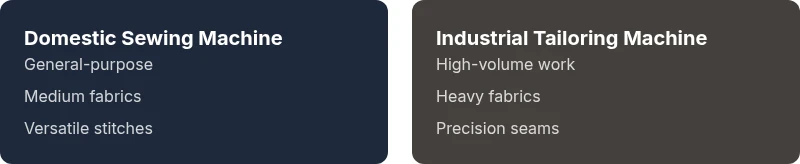
Domestic sewing machines are designed for versatility in a home studio: light to medium fabric handling, a wide range of decorative stitches, and user-friendly interfaces. Industrial tailoring machines, in contrast, are built for speed, durability, and sustained operation. They excel in straight seams, heavy-duty materials, and high-volume output, but require more space, maintenance, and often specialized training to operate safely. For most hobbyists, a well-featured domestic model provides excellent value and sufficient capability. For professional tailors, an industrial machine can translate to faster turnaround, decreased fatigue, and a longer service life under heavy use. Sewing Machine Help notes that the decision hinges on workload, fabric types, and the willingness to invest in maintenance and training.
How stitch options and fabric handling differ
Stitch options reflect the tasks each class of machine is optimized for. Sewing machines typically offer a broad range of stitches, including straight, zigzag, decorative, and utility stitches, plus buttonhole functions. They manage fabrics from lightweight cottons to medium-weight blends with ease. Tailoring machines emphasize precision stitches, consistent seam allowance, and specialized options such as overlock/overedge stitches, blind hems, or paralleled topstitching ready for professional finishing. Fabric handling also differs: domestic machines cope well with typical sewing challenges, whereas tailoring machines incorporate advanced feed mechanisms, better fabric grips, and stable table bases to minimize shifting during long runs. In practice, the right balance of stitch options and fabric handling reduces rework and improves fit and finish.
Speed, durability, and maintenance expectations
A key practical distinction is speed. Domestic sewing machines typically run at moderate speeds suitable for hobby projects, while tailoring machines—especially industrial variants—are engineered for high-speed, continuous operation. Durability follows purpose: industrial gear trains, reinforced frames, and high-torque motors withstand long shifts and thick materials. Maintenance needs differ as well. Domestic machines require routine lubrication, needle and bobbin care, and periodic servicing. Industrial machines demand scheduled servicing, precise alignment checks, and access to specialist parts. Sewing Machine Help stresses that building a maintenance schedule aligned with your usage pattern preserves accuracy and reduces downtime.
Cost, lifecycle, and value for money
Cost is a major decision driver. Domestic sewing machines can range from a few hundred to around a thousand dollars, depending on features and brand. Tailoring machines, particularly industrial-grade units, typically carry higher upfront costs but deliver longer lifecycles under heavy use. When evaluating value, consider not just the sticker price but ongoing expenses: replacement parts, maintenance visits, and required accessories. A high-quality domestic machine may offer excellent long-term value for hobbyists, while a professional workshop might justify the investment in an industrial tailor’s machine due to speed, precision, and durability.
Practical buying scenarios and decision guide
To choose wisely, map your typical projects: lightweight garments and craft items favor a versatile domestic machine, while heavy fabrics, high-volume production, or precise topstitching would steer you toward tailoring or industrial equipment. Start with a needs-based feature list: stitch range, feed performance, speed, maintenance support, and warranty. If you anticipate frequent thick fabrics (canvas, denim, leather composites), test gear designed for heavy-duty use. Read reviews from experienced users and, where possible, test machines in-store. Remember that a mid-range domestic machine often delivers more real-world value than a bare-bones model, whereas a factory-style tailor’s machine thrives in steady production environments.
How to transition from home sewing to tailoring-grade work
Transitioning from home sewing to tailoring-grade work is a staged process. Begin by validating your project load: volume, fabric types, and required finish quality. Upgrade in steps: first a more capable domestic machine with robust foot control and better needle systems, then consider an industrial or single-needle tailoring machine if your workload justifies it. Invest in training or guided practice to learn advanced stitch settings, tension tuning, and material-specific techniques. Maintain a dedicated workspace with stable lighting and a clean, level table to improve accuracy and reduce fatigue.
Common myths and misconceptions
A common myth is that more stitches automatically translate to better outcomes. In reality, stitch quality depends on appropriate stitch type, fabric, and operator skill. Another misconception is that only expensive machines can deliver professional results; many home sewists achieve superb finishes with the right technique and regimen. A third point often overlooked is maintenance frequency: neglecting lubrication, tension checks, and blade or needle replacement undermines performance faster than any single feature upgrade. Sewing Machine Help suggests focusing on real project needs rather than chasing gadgetry.
Comparison
| Feature | Domestic sewing machine | Industrial tailoring machine |
|---|---|---|
| Purpose | General-purpose garment construction and crafts | High-volume, precise tailoring and heavy fabrics |
| Fabric handling | Good for standard fabrics; adaptable feet | Optimized for thick fabrics and consistent feeds |
| Stitch options | Wide stitch library (decorative and utility) | Limited decorative variety; exceptional precision in seams |
| Speed (stitches per minute) | Typically 700-1000 spm | Often 1000-3000+ spm depending on model |
| Needle system | Domestic needles; versatile applications | Industrial needles; heavy-duty performance |
| Maintenance | User-friendly maintenance; common parts | Scheduled, specialized service; higher part density |
| Price range | $300-$1000 | $1500-$8000+ |
Strengths
- Versatile performance suitable for beginners
- Lower upfront cost and broad support ecosystem
- Good balance of features for most home projects
- Flexible for small businesses or hobby projects
- Easier maintenance with widely available parts
Negatives
- Limited durability under high-volume workload
- Industrial tasks require more space and training
- Not ideal for very heavy fabrics or continuous production
- Higher upfront cost and ongoing maintenance for pro-grade gear
Domestic sewing machines fit most home projects; tailoring machines excel in professional, high-volume work
If your workload is light to moderate and you value versatility and cost-effectiveness, a well-chosen domestic machine is the best start. For professional tailors or workshops with long runs and heavy fabrics, an industrial tailoring machine offers speed, durability, and consistency that justify the investment.
Your Questions Answered
What is the fundamental difference between a sewing machine and a tailoring machine?
The fundamental difference lies in purpose and build: sewing machines are general-purpose for a wide range of fabrics and tasks, while tailoring machines are designed for precision, speed, and durability in professional tailoring. These design choices affect stitch quality, fabric handling, and the ability to sustain long runs.
The main difference is purpose and build: general sewing vs. professional tailoring needs.
Can a domestic sewing machine handle tailoring work for small projects?
For small-scale tailoring projects, a good domestic machine can manage most seams and hems. Focus on a model with strong stitch control, quality feed, and reliable buttonhole options. Upgrade to heavier-duty gear if you start dealing with thick fabrics regularly.
Yes for small projects, but watch fabric type and workload.
What features should I prioritize when buying?
Prioritize stitch accuracy, feed stability, needle system compatibility, adjustable presser foot pressure, and warranty/support. A broad stitch library helps with creativity, while robust build and service availability reduce long-term frustration.
Look for stability, support, and a good stitch range.
Do I need a serger/overlocker for tailoring work?
A serger is not strictly required for all tailoring work, but it can provide professional edge finishing and faster seam construction for certain fabrics. Many tailors use a separate overlocker or integrated options depending on workflow.
A serger isn’t mandatory, but it can speed up finishing.
What maintenance should I expect for heavy-duty machines?
Heavy-duty or industrial machines require regular professional servicing, timely part replacements, and proper lubrication schedules. Keeping tension, timing, and feed dog alignment in check reduces downtime and preserves seam quality.
Regular service keeps heavy-duty machines performing at peak.
The Essentials
- Choose a domestic machine for versatility and value
- Plan for higher workload with tailoring machines
- Test stitch quality on representative fabrics
- Factor maintenance and parts availability into cost
- Invest in training to maximize machine potential
- If in doubt, start with a strong domestic model and scale up as needed