Sewing Machine or Overlocker: A Practical Comparison for Home Sewists
A clear, practical comparison of sewing machines and overlockers for home sewists. Learn differences, best-use scenarios, setup tips, and how to plan a balanced, budget-friendly toolkit for diverse fabrics.


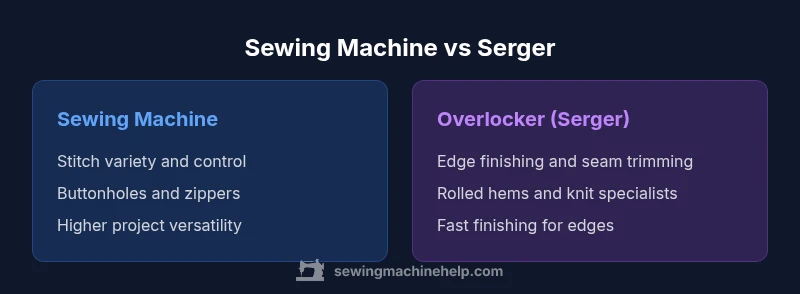
The choice between a sewing machine and an overlocker depends on your projects. A modern sewing machine handles most stitches, buttonholes, and repairs, while an overlocker excels at fast edge finishing and professional seams. For most home sewists starting out, a sewing machine is the versatile core, with an overlocker added later if edge finishing is a priority.
Why home sewists debate sewing machine vs overlocker
For many hobbyists, choosing between a sewing machine or an overlocker determines not only what projects they can complete, but how smoothly those projects progress from concept to finished item. According to Sewing Machine Help, the decision often starts with evaluating typical tasks, space, and budget. A modern sewing machine excels at stitches, buttonholes, zippers, quilting seams, and basic repairs. An overlocker, or serger, specializes in finishing raw edges, preventing fraying, and producing professional-quality seam finishes at speed. Home sewers usually begin with a standard machine and add a serger later as needs grow. The key question is how often you will rely on edge finishing vs decorative stitching, and whether speed or versatility matters more for your typical projects. In this section we’ll unpack common use cases, beginner expectations, and how these tools complement each other in a small sewing room.
Core capabilities: stitching, finishing, and fabrics
A sewing machine provides a broad range of stitches, from straight and zigzag to decorative stitches, buttonholes, topstitching, and sometimes walking foot options for tricky fabrics. It handles woven fabrics well and can manage delicate appliques with careful tension. An overlocker uses multiple threads (usually three or four) to trim and overcast edges in one pass, delivering clean, professional edges on knits and woven fabrics alike. It creates rolled hems, flatlock stitches, and edge finishes that are fast and consistent. The result is a sturdy seam with minimal post-processing, which is particularly valuable for garment sewing, home textiles, and bags. The two tools are complementary: the machine provides versatility and control, while the serger focuses on speed and edge quality. If you’re deciding, list your most frequent fabrics and finishing needs to quantify the gap to fill.
Practical decision factors: budget, space, and learning curve
Budget: a mid-range sewing machine often costs less than a typical serger, especially when you factor in accessories and presser feet. Space: both machines need dedicated benchtop space, but sergers are often more compact than full-size multi-needle machines. Learning curve: learning to thread and balance tensions on a serger is steeper than mastering a basic machine, but practice pays off quickly for finishing tasks. Maintenance: sewing machines require lint removal, periodic oiling, and occasional servicing; sergers need regular threading checks, blade care, and occasional timing adjustments. Foot control matters: you’ll use one pedal to manage feed dogs and stitch length on the machine, while the serger’s foot pedal often controls both speed and alignment. Finally, consider future projects: if you anticipate substantial knit fabrics, a serger may prove invaluable; for quilts and crafts, a solid sewing machine will cover most needs.
Project scenarios: when to pick each tool
For classic garments and home decor with woven fabrics, a sewing machine is typically the core tool. It handles buttonholes, zippers, and topstitching with precision, letting you build complex seams with consistent results. If your work includes knits, stretch fabrics, or heavy finishing, a serger speeds edge finishing and creates durable seams that look professional. For beginners, start with a reliable sewing machine to learn control, then add a serger to tackle finishing tasks more efficiently. In freelance or small-batch sewing, both tools help you scale production: the machine forms the structure, the serger trims and edges your outputs swiftly. Finally, always test stitches and finishes on sample swatches before committing to a project, so you understand how both machines respond to tension, stitch length, and fabric weight.
Setup, maintenance, and accessories
Initial setup for a sewing machine is straightforward: insert the bobbin, thread the needle, and run test stitches; most modern models include guides and auto-tension features. A serger setup is more involved: thread paths through multiple needles and loopers, with precise tension adjustments. Accessories matter: extra presser feet for the machine, rolled hem feet for sergers, and compatible needles for various fabrics. Regular maintenance lengthens life: clean lint from feed dogs, oil as recommended, and schedule routine servicing. Storage matters: keep machines covered when not in use and maintain a clean, breathable workspace with good lighting. Finally, consider a balanced plan for buying: buy from reputable brands, read service intervals, and locate a local repair shop in case of timing or threading challenges.
Getting started: a practical path to a balanced setup
Begin with a solid, reliable sewing machine chosen for stitch variety, ease of learning, and general reliability. Practice basic seams, topstitching, and decorative stitches on a few starter projects. As you grow, evaluate edge finishing needs and decide whether a serger is worth the investment. If you opt for a serger later, plan for compatible necklines, seam allowances, and hem strategies so you can integrate the tools smoothly. Throughout, document your fabric choices and sample outcomes to guide tension settings and foot usage. This stepwise approach helps you build confidence without over-investing before you know what you’ll sew most.
Comparison
| Feature | Sewing Machine | Overlocker (Serger) |
|---|---|---|
| Stitch types | Wide range: straight, zigzag, decorative stitches, buttonholes | Overlock stitches, rolled hems, and specialty edge finishes |
| Edge finishing | Limited edge finishes; relies on zigzag or overedge stitches | Fast, built-in edge finishing and seam trimming |
| Fabric handling | Versatile with woven fabrics; some models handle light knits well | Excellent for knits and fabrics prone to fraying |
| Typical projects | Garments, quilting, home decor, repairs | Garments with knit fabrics, professional seam finishes |
| Speed | Moderate to high, depending on model and stitches | Very fast for finishing edges and seams |
| Cost / value | Lower upfront cost for entry-level machines | Moderate to higher cost with ongoing value from edge finishes |
| Maintenance | Linting and oiling; fewer moving parts | Regular threading checks; blade care; timing adjustments |
| Learning curve | Steep initially for complex stitches, but straightforward basics | Higher learning curve due to multi-thread threading and tensions |
| Best for | Versatility and general sewing tasks | Edge finishing, knit fabrics, quick seams |
Strengths
- Versatile baseline tool for most projects
- Strong community support and broad accessory ecosystems
- Easily upgradeable with new feet and attachments
- Good balance of cost and functionality for beginners
Negatives
- Serger adds separate cost and workspace needs
- Learning serger threading can be challenging
- Edge finishes on a serger alone cannot replace a full sewing machine for complex tasks
A sewing machine remains the core for most homes; add an overlocker if edge finishing and knit work are frequent.
For most home sewists, starting with a versatile sewing machine is the smart move. An overlocker becomes a strategic addition when you regularly work with knits or require professional seam finishes.
Your Questions Answered
What is the key difference between a sewing machine and an overlocker?
A sewing machine stitches fabric with a single needle or multiple threads, suitable for hems, zippers, and repairs. An overlocker uses multiple threads to trim and overcast edges, producing professional finishes quickly, especially on knits.
Sewing machines stitch; sergers finish edges fast.
Can I replace an overlocker with a sewing machine?
You can mimic some edge finishes with a sewing machine using overcast or zigzag stitches, but it is typically slower and less neat than a dedicated serger.
A machine can imitate some finishes, but sergers are faster for edges.
Do I need both machines for home sewing?
Not necessarily. A solid sewing machine covers most tasks; an overlocker becomes valuable if you frequently finish edges or work with knits.
Many sewists start with one, then add the other as needed.
What budget range is realistic for a good setup?
Entry-level options exist for both machines and sergers; plan for a core machine now and assess a serger later depending on projects and budget.
Start with what you need now and grow later.
What maintenance do each require?
Sewing machines require lint removal and occasional servicing; sergers need regular threading checks and blade care.
Keep both clean; serger threading is a bit more involved.
The Essentials
- Start with a capable sewing machine for versatility
- Consider an overlocker if edge finishing is a priority
- Test fabric swatches to dial in tension and stitches
- Plan your space and budget for a two-tool setup over time