Difference Between a Sewing Machine and a Mending Machine
Explore the difference between a sewing machine and a mending machine. Learn purpose, features, and practical use cases for home sewists and beginners to choose the right tool.


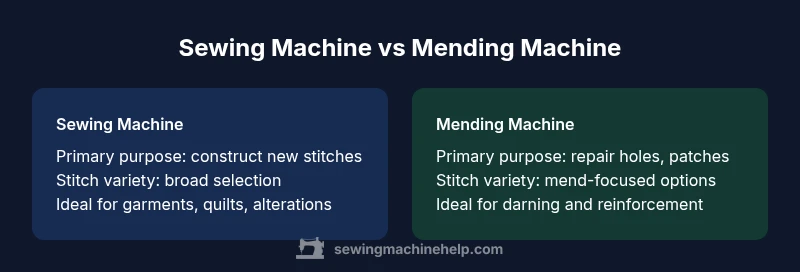
The difference between a sewing machine and a mending machine is primarily in purpose and design. A sewing machine is built to create new stitches, assemble fabric, and finish garments, while a mending machine focuses on repairing fabric holes or worn areas through darning or patching techniques. For most home sewists, start with a versatile sewing machine and add repair accessories as needed.
What is a sewing machine and what is a mending machine?
At a high level, a sewing machine is a general-purpose fabric-stitching tool designed to form new stitches that join pieces of fabric into garments, quilts, or home textiles. It typically offers a wide range of stitch patterns, adjustable stitch length and width, and compatibility with various needles and presser feet. A mending machine, by contrast, is a device optimized for repairing fabric — for example, darning holes, patches, and reinforcing worn areas. While a traditional sewing machine can handle many mending tasks with the right attachments, a dedicated mend-focused device prioritizes control, fabric conservation, and patching efficiency. For many sewing enthusiasts, the actual difference between a sewing machine and a mending machine is not just about capability but also about how you plan to split time between construction and repair work. The phrase difference between a sewing machine and a mending machine is a practical guidepost for choosing tools that fit your projects and space.
wordCountVisibleNote
Comparison
| Feature | Sewing Machine | Mending Machine |
|---|---|---|
| Primary purpose | Create new stitches to construct garments and textiles | Repair holes/tears and apply patches with controlled stitching |
| Typical projects | Garment construction, alterations, quilting, decorative stitching | Darning socks, reinforcing worn areas, patching moth holes, lace repairs |
| Stitch options | Broad range: straight, zigzag, decorative, overlock, and more | Often fewer built-in stitches; emphasis on mend-friendly stitches |
| Needles & attachments | Wide variety of needles, feet, and presser feet for versatile tasks | Specialized attachments for mending, patching, and delicate fabrics |
| Fabric handling | Advanced feed systems, speed control, precision for multiple layers | Gentler handling focus, consistent control for holes and patches |
| Portability & footprint | Typically larger and feature-rich | Can be compact if designed as a dedicated mend tool or attachment |
| Maintenance | Regular cleaning, oiling, tension checks, alignment as needed | Maintenance centers on thread path, bobbin geometry, and foot attachments |
| Availability & cost range | Widely available with broad price ranges across brands | Less common; specialized models may be priced higher or as attachments |
Strengths
- Clarifies which tool suits construction vs. repair tasks
- Helps prevent overbuying and mismatched capabilities
- Encourages a practical upgrade path for hobbyists
- Pairs well with a growing toolkit and compatible attachments
Negatives
- May reveal space or budget constraints for multiple devices
- Dedicated mend tools can be harder to source locally
- Some users may find a single machine with attachments adequate
A versatile sewing machine generally covers both needs; a dedicated mend device is best if repair work dominates.
For most home sewists, starting with a capable sewing machine plus mend attachments offers flexibility and room to grow. Reserve a dedicated mending option if you frequently repair fabrics and require specialized controls or faster patching workflows.
Your Questions Answered
Is a mending machine strictly necessary if I already own a sewing machine?
Not strictly. A standard sewing machine can handle many repairs with appropriate stitches and attachments. If you do a lot of fix-ups, a dedicated mend device can speed repairs and improve consistency.
You probably don’t need a second machine unless you repair fabric frequently.
Can a regular sewing machine perform most mending tasks effectively?
Yes. A sewing machine can handle most mending tasks using running or zigzag stitches, plus repair-focused feet like a darning or patching foot. For delicate fabrics or extensive patching, a mend-specific tool may offer some benefits.
Yes, most mending can be done on a standard machine with the right feet.
What features clearly distinguish a mending machine from a sewing machine?
Mending machines prioritize gentle fabric handling, control for patches, and stability during slow/steady stitching. They often have simpler stitch options and attachments designed for darning, patching, and reinforcing fabric.
They’re built for careful repairs and patching, not heavy construction.
Are there combo machines that do both sewing and mend tasks well?
Yes, some modern machines include mend-friendly stitches and attachments. They offer a practical middle ground, but a dedicated mend device can outperform for heavy or specialized repair work.
There are combo options, but check the mend features and durability.
What should a beginner buy first for versatility?
For most beginners, a versatile sewing machine with basic mend accessories suffices. If you expect frequent patches, budget for a dedicated attachment or a separate mend tool later.
Start with a solid sewing machine and mend attachments, then expand if needed.
Can attachments and feet make a standard machine behave like a mend device?
Attachments can expand a sewing machine’s mend capabilities, enabling darning, patches, and reinforced seams. They don’t replace all mend-specific functions, but they’re a cost-efficient way to start.
Yes—attachments help, but may not cover every mend scenario.
How do I evaluate repair vs construction needs before buying?
List typical projects, estimate repair frequency, and consider space and budget. If repairs will dominate, weigh a dedicated mend solution; otherwise, a capable sewing machine with attachments is often enough.
Make a simple project list to guide your choice.
Is ongoing maintenance different for a mend-focused device?
Maintenance is similar in principle—cleaning, oiling, and correct tension—but mend devices may require extra attention to foot alignment and stitch control due to frequent repairs.
Upkeep is similar, just more frequent for repairs.
The Essentials
- Assess your typical projects before buying any machine
- A good sewing machine with mend attachments often suffices for beginners
- Consider a dedicated mend tool only if repairs become a major focus
- Plan for compatible accessories to keep your options open