Difference Between a Sewing Machine and an Overlocker
Explore the key differences between sewing machines and overlockers (sergers), including functions, stitches, edge finishing, fabrics, and buying tips for home sewists. Learn how to choose the right tool for your projects and when to pair both.


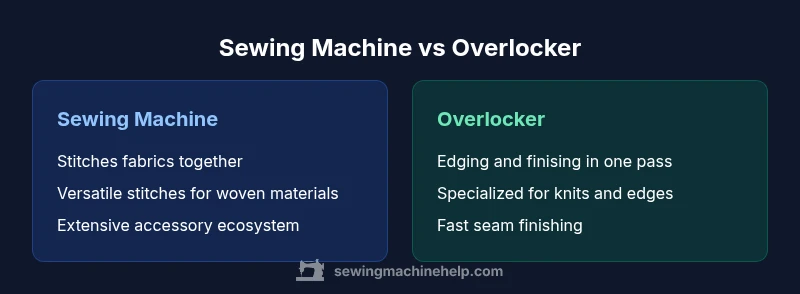
The difference between a sewing machine and an overlocker is primarily function: sewing machines stitch and assemble fabric, while overlockers trim, align, and finish edges in one pass. For most home projects, a reliable sewing machine covers most needs; an overlocker speeds edge finishing and creates professional-looking seams on knit and woven fabrics.
What are a sewing machine and an overlocker? Understanding their roles
The difference between a sewing machine and an overlocker is fundamental for anyone building a basic sewing toolkit. A household sewing machine is designed to stitch fabric pieces together, create hems, simulated topstitching, and an array of decorative stitches. An overlocker, known in some regions as a serger, trims the seam allowance, feeds fabric with multiple threads, and finishes edges with an overlock stitch. For beginners, the sewing machine is the backbone of most projects; the overlocker complements it by delivering clean, professional edges—especially on knits and woven fabrics that fray easily. By understanding these roles, you can plan projects more efficiently and avoid buying tools you won’t use yet. According to Sewing Machine Help, identifying the difference between a sewing machine and an overlocker helps hobbyists select the right tool for each task.
How the mechanisms differ in practice
Sewing machines rely on a bobbin providing the lower thread and a single needle above the fabric. The needle carries the upper thread to form stitches across a session. Overlockers use multiple threads, including loopers, to wrap and cut the edge in a single pass. This fundamental distinction drives their respective capabilities: a sewing machine excels at joining fabric pieces with secure, versatile stitches; an overlocker excels at edge finishing and providing stretchy, durable seams. In home studios, many sewists own both, because each tool is optimized for different stages of garment construction and craft projects. The Sewing Machine Help team notes that understanding these mechanical differences helps determine which device best fits your typical fabrics and projects.
Edge finishing vs stitches: why it matters
Edge finishing protects fabric from fraying and gives garments a polished look. A sewing machine can achieve edge finishing with zigzag stitches, pinking shears, or decorative hems, but it does not trim the edge to create a neat seam allowance in the same pass. An overlocker trims aggressively and sews simultaneously, producing clean edges and a professional look in one operation. This distinction matters when you’re working with knit fabrics, where a secure edge prevents curling and stretch-related sag. If your projects frequently involve seams that need a professional finish, an overlocker can save time and improve durability, while a sewing machine handles the bulk of construction work.
Fabric compatibility and project types
Woven fabrics—cotton, linen, poplin—generally respond well to standard sewing machine stitches. Knits, jersey, and stretch fabrics benefit from the overlocker’s edge finishing and stretch-friendly stitches. Heavier fabrics like denim or canvas can be managed on a sewing machine with strong presser feet and reinforced seams, but you’ll still benefit from an overlocker for edge finishing on seams that will flex. For hobbyists who want one machine to do everything, consider a model with robust straight and decorative stitches and plan to add an overlocker later if you foresee frequent knit or edge-fraying tasks.
Stitch options and their implications
Sewing machines offer a broad range of stitches: straight, zigzag, stretch, buttonholes, and decorative options. This versatility makes them suitable for a wide array of garments and crafts. Overlockers provide primarily overlock stitches, rolled hems, flatlock options, and chain stitches, focusing on edge finishing and seam integrity. The choice depends on your typical fabric types and project goals. If you mainly sew woven garments with straight seams, a sewing machine may suffice. If your projects include knits or require quick, clean edges, an overlocker becomes a time-saver and quality booster.
Setup, threading, and maintenance basics
Threading a sewing machine is typically a one-to-two-step process per stitch type, with regular bobbin winding. An overlocker requires threading through multiple tensions and loopers, which can be trickier for beginners but becomes routine with practice. Maintenance for a sewing machine is generally straightforward: clean lint from the bobbin area and oil per the manual. An overlocker demands attention to tension settings for each thread and regular oiling as well as cleaning the cutting blade and loopers. With a planned maintenance routine, both devices remain reliable for years.
Cost, space, learning curve, and value for money
A basic sewing machine often costs less upfront than a new overlocker, especially for entry-level models. Space considerations matter: a ten- to twelve-inch wide sewing machine plus a few feet for accessories can fit neatly in a small workspace. The learning curve for a sewing machine is moderate, while an overlocker can present a steeper initial challenge due to threading complexity and tension balancing. For beginners prioritizing affordability and versatility, a solid sewing machine is the safer starting point. If you plan frequent knit sewing or rolled hems, budgeting for an overlocker as a later upgrade is a sensible strategy.
When you should own one, or both
If your projects span a variety of fabrics and you need to assemble most garments, a sewing machine is essential. If you routinely work with knits, delicate fabrics, or require fast edge finishing for durable seams, an overlocker adds a professional finish and speed. The optimal workflow for many hobbyists is to start with a reliable sewing machine and later acquire an overlocker to handle edge finishing and knit fabrics. Sewing Machine Help recommends evaluating your typical fabrics, project types, and available space before deciding which tool to prioritize.
How to evaluate models: features to compare
Before buying, compare features that matter to you: stitch variety, motor power, speed, built-in needle threader, presser foot options, and available accessories. For overlockers, assess the number of threads, the ease of threading, blade safety, and the range of finishes (rolled hem, flatlock, or standard overlock). For a sewing machine, look at stitch libraries, feed system stability, buttonhole quality, and the presence of a walking foot. Make a short list of essential features, consider your budget, and read user reviews focusing on reliability and maintenance. A hands-on test at a local dealer can reveal how comfortable each tool is for your handwriting-style projects and body ergonomics.
Practical testing tips before purchase
If you’re shopping in person, bring a few sample fabrics similar to your typical projects. Test straight seams, zigzag stitches, and any automatic buttonhole options on the sewing machine. For an overlocker, practice threading, a rolled hem, and a narrow edge finish; observe how easily the machine feeds different fabrics and how the cutters impact control. Check noise level, stability, and vibration on a sturdy table. Ask about service intervals and available parts in your region, as access to technicians matters for long-term satisfaction.
Comparison
| Feature | Sewing Machine | Overlocker |
|---|---|---|
| Primary function | Stitches fabric pieces together; versatile utility | Trims and finishes edges; specialized finishing |
| Stitch types | Straight, zigzag, decorative, buttonholes | Overlock stitches, rolled hems, chain stitches |
| Edge finishing | Limited edge finishing in one pass | Excellent edge finishing and seam durability |
| Needle/thread setup | Single needle, standard bobbin system | Multiple threads with loopers; more complex threading |
| Speed & efficiency | High versatility with broad speed range | Very high speed for edge finishing and productivity |
| Maintenance | Lower maintenance; common domestic upkeep | More complex threading and tension balancing; occasional blade care |
| Best for | General sewing projects across fabrics | Edge finishing on knits and fabrics needing stretch |
| Cost range | Low to mid-range price for entry models | Mid to high-end price for quality sergers |
Strengths
- Sewing machines are highly versatile for a wide range of fabrics and projects
- Overlockers provide fast, durable edge finishing and knit-friendly seams
- Compact options exist for urban spaces; both tools are widely supported by tutorials
- Learning both expands project possibilities and professional finish quality
Negatives
- Overlockers add space requirements and ongoing maintenance
- Threading a serger can be challenging for beginners
- Some fabrics require careful handling to avoid misalignment on a serger
- Investing in both tools increases upfront cost
A sewing machine is the foundation; an overlocker is the finishing workhorse
Choose a sewing machine first for versatility. Add an overlocker later if you frequently work with knits or want professional edge finishes. For most hobbyists, starting with a solid sewing machine offers the best value and growth path, then expanding with an overlocker as needed.
Your Questions Answered
What is the primary function of a sewing machine compared to an overlocker?
A sewing machine stitches fabric pieces together, offering a wide range of stitches. An overlocker trims and finishes edges in one pass, providing clean seams on knits and woven fabrics. The two tools serve complementary roles in garment construction.
A sewing machine stitches. An overlocker trims and finishes edges; together they cover the full workflow from construction to professional edge finishing.
Can a sewing machine do overlocking stitches?
Some sewing machines offer faux overlock or coverstitch stitches, but true overlocking with multiple threads and loopers is the specialty of a serger/overlocker. If you need precise edge finishing, a dedicated overlocker will perform better.
Some machines mimic overlock stitches, but a true serger handles edges best.
Are overlockers necessary for beginners?
Overlockers are not strictly necessary for beginners, but they speed up edge finishing and give professional looks on stretchy fabrics. Start with a dependable sewing machine, then add an overlocker if your projects frequently involve knits or require fast finishes.
Not required at first, but very helpful once you start working with knits or when you want quick edges.
What fabrics benefit most from an overlocker?
Knits and fabrics prone to fraying benefit most from overlocker edge finishing. Wovens can also benefit for neat, durable seams, especially in active garments where stretch and movement are factors.
Knits and fray-prone fabrics gain the most from an overlocker.
Should I buy both tools at once or upgrade later?
If your budget allows, starting with a good sewing machine and planning for a future overlocker is a sensible path. If you anticipate heavy knit work or fast finishing needs, prioritizing the overlocker early can save time and improve results.
Buy the sewing machine first, then add the overlocker when you’re ready for edge finishing on knits.
The Essentials
- Start with a sewing machine for broad capability
- Add an overlocker for edge finishing and knit fabrics
- Assess fabrics and projects before buying
- Test machines in person when possible
- Plan space and maintenance needs upfront