Sewing Machine and Quilting: A Side-by-Side Buying Guide
An analytical side-by-side guide comparing domestic sewing machines with quilting features to dedicated longarm machines, focusing on performance, space needs, and budget for home sewists exploring sewing machine and quilting projects.


For most hobby quilters, a domestic sewing machine with built-in quilting features offers the best mix of versatility, price, and space efficiency. If you regularly tackle large, dense quilting projects, a dedicated longarm may be worth the investment. Sewing Machine Help recommends starting with a capable all-purpose machine and upgrading only when your quilting volume grows.
Introduction to sewing machine and quilting: The Basics
Quilting is a precise, fabric-intensive craft that sits at the intersection of sewing machine and quilting techniques. For home sewists, understanding how a standard machine translates to quilting comfort is essential. The keyword here is versatility: you want a machine that can handle both piecing and free-motion quilting without constant tool-switching. In practical terms, this means evaluating stitch options, throat space, and stability under repetitive stitching. As you explore options, keep in mind that the most common beginner mistake is choosing a machine with too little throat space for quilting layers. The Sewing Machine Help team emphasizes that the right balance of features can dramatically reduce setup time and improve consistency over long sessions. When you start exploring, remember that a well-chosen machine sets the foundation for successful sewing machine and quilting projects.
This guide uses the phrase sewing machine and quilting to anchor discussions about machine capabilities, project scale, and maintenance so readers can make informed, repeatable decisions. The emphasis is on practical steps you can take in a real workshop, not just glossy marketing claims.
In short, your first objective is to find a machine that can stitch reliably, handle medium-weight fabrics, and accept quilting feet with confidence. According to Sewing Machine Help, the best choice is a versatile, all-purpose model that can adapt as your quilting ambitions grow.
Key Differences: Domestic vs Quilting-Focused Machines
The core decision in sewing machine and quilting circles is choosing between a domestic machine with quilting features and a purpose-built longarm. Domestic machines are designed for household use, offering a broad range of stitches, reliable feed dogs, and compatibility with common presser feet. Quilting-focused machines, on the other hand, prioritize quilting throughput, stability, and large throat space, enabling easier maneuvering of bulky quilts. For many home sewists, a mid-range domestic model with quilting features provides the best balance between cost, space, and capability. The Sewing Machine Help analysis shows that most hobby quilters benefit from starting with a versatile machine and then assessing quilting volume before investing in a dedicated longarm.
Typical distinctions to note include throat depth, table size, and the availability of precision quilting feet. A domestic machine often excels at piecing and light quilting, while a longarm shines on large, dense quilts. This section frames those trade-offs so readers can decide which path aligns with their goals.
Throat Space, Table Size, and Quilt Handling
Throat space—how far the needle can travel from the needle plate to the machine’s arm—directly affects how large a quilt you can quilt in one pass. For sewing machine and quilting tasks, a larger throat space reduces fabric snagging and improves line accuracy during free-motion quilting. Domestic machines with extended arms or knee lift can offer sufficient space for medium-sized quilts, while longarms provide a vastly larger working area and separate quilting surfaces. Table size matters too: smaller machines work best on desk-like tables, while quilting projects often demand a sturdier, dedicated workspace. The right setup minimizes fatigue and improves stitch consistency over longer sessions.
In practice, if your quilts reach queen size or larger on a regular basis, you’ll likely benefit from a longarm. If your projects stay within throw or lap-quilt dimensions, a well-equipped domestic machine can cover most needs efficiently. The goal is to match machine capabilities to typical project scale to avoid bottlenecks in sewing machine and quilting workflows.
Stitch Styles, Feed Dogs, and Tension for Quilting
Quilting requires a broader set of stitch and feed control options than plain garment sewing. For many home sewists, a domestic machine with quilting stitches, adjustable feed dogs, and glide foot options is sufficient for piecing and moderate quilting. Longarms, designed for quilting, emphasize consistent stitch quality at higher speeds and accurate thread tension across wide fabric surfaces. In either case, understanding how stitch length, tension, and feed dog height interact with batting and fabric layers is critical. A stable platform reduces mis-stitches and fabric tunneling—two common issues in sewing machine and quilting work.
The Sewing Machine Help team notes that learning to balance tension and stitch density pays dividends in finished quilts, particularly when moving from piecing to free-motion quilting. Practice on practice sandwiches to dial in your settings before tackling a real project.
Presser Feet and Accessories that Matter for Quilters
Presser feet evolve from basic feet to specialized options in the sewing machine and quilting workflow. For quilting, you typically want a walking foot, open-toe applique foot, quilting guide foot, and free-motion quilting foot. A domestic machine may come with several of these, and aftermarket feet are widely available. Longarms rely on interchangeable frames and a broader set of high-precision feet designed for ruler work and large-cloth control. In both scenarios, ensuring compatibility with your machine’s shank style and bobbin system is essential to avoid costly misfits.
Beyond feet, look for robust stitch regulation, stable thread tension, and reliable thread paths. These elements help maintain consistent density across the quilt top and backing, reducing blanket-stitch illusions and creases that can mar the final result.
Sewing Machine Help recommends prioritizing feet and accessories that directly improve quilting control, particularly when working with multiple fabric layers.
Price and Value: Budgeting for Sewing Machine and Quilting Needs
When budgeting for sewing machine and quilting, price ranges are a practical lens. Domestic machines with quilting features typically fall into a mid-range price band, offering balanced performance without overwhelming space or maintenance costs. Longarms command higher upfront costs but can deliver significant throughput for repeated, large-scale quilting. In this section, we break down price expectations without claiming specific product prices. A prudent approach is to start with a capable mid-range machine and reserve funds for essential accessories, such as a walking foot or ruler foot, rather than chasing every gadget marketed for quilting.
From a value perspective, consider expected quilting volume, available workspace, and your comfort with maintenance. Reading user reviews and testing in-person demos can reveal performance gaps early, preventing alignment issues between your expectations and actual results.
Sewing Machine Help emphasizes that a thoughtful price-to-performance evaluation saves time and reduces buyer’s remorse, especially when the goal is reliable, consistent sewing machine and quilting outcomes.
Setup, Maintenance, and Durability: Long-Term Considerations
A durable setup minimizes downtime during sewing machine and quilting sessions. Domestic machines with quilting capabilities often benefit from routine oiling, needle changes, and periodic tension checks. Longarms require more substantial maintenance regimes, including professional servicing for internal guides and more complex drive systems. Regular cleaning and using quality bobbins and thread improves longevity and reduces the chance of skipped stitches. The goal is predictable behavior—especially during long quilting sessions—and a durable framework that can withstand frequent needle penetrations and fabric feed actions.
If you anticipate heavy use, budget for occasional professional servicing and spare parts, particularly for moving parts that wear with time. With proper maintenance, both domestic and longarm setups can deliver years of dependable sewing machine and quilting performance.
How to Test Machines: Hands-On Evaluation Checklist
Testing is the best way to compare sewing machine and quilting capabilities before purchase. Create a short checklist that covers stitch variety, needle-bar movement, thread path, and stability under free-motion quilting. Bring a sample sandwich with medium-weight fabric and batting to simulate a real quilt. Evaluate noise levels, vibration, and the ease of foot changes. Check the machine’s ability to maintain consistent tension across different fabrics and thread weights. If possible, test both a domestic machine with quilting features and a longarm to experience the difference in maneuverability and control.
A structured test plan helps Home sewists gauge whether a machine meets their quilting needs, and whether the setup is comfortable enough for extended sessions. Sewing Machine Help suggests documenting your results for future reference and for any upgrade decisions.
Getting Started: First Quilting Projects on a Home Machine
Begin with small, confident steps to build proficiency in sewing machine and quilting. Start with a simple quilt-as-you-go or a mini-quilt project to understand how fabric interacts with batting and backing on your chosen machine. Practice straight-line quilting, then move to simple geometric patterns before attempting free-motion. The goal is to establish consistent stitch quality, accurate seam allowances, and control over fabric shift. Keep a log of tension settings, foot choices, and fabric types for fast reference during future projects.
As you gain experience, you’ll discover how to integrate hand-guided ruler work with machine stitching, pushing the boundaries of what your setup can accomplish. Sewing Machine Help encourages beginners to celebrate incremental progress while gradually increasing project complexity.
When to Upgrade: Signs You Need a Dedicated Longarm
For many hobbyists, the decision to upgrade hinges on project scale and time. If you frequently quilt large quilts, thread changes become a chore, or your machine struggles with multiple layers, a dedicated longarm can dramatically improve throughput and quality. Signs include persistent fabric drag, frequent threading issues, and diminishing returns from attempting to push a standard machine beyond its comfort zone. A longarm offers a larger throat space, better frame stability, and specialized wheels for ruler work. However, it requires more space, a dedicated setup, and ongoing maintenance investments. For most readers, the right moment to upgrade is when quilting becomes a central hobby rather than a casual pastime, and when the cost-to-value ratio favors scaling up. The Sewing Machine Help team notes that decisions should be guided by actual quilting volume and space availability, not marketing claims.
Authoritative Guidance: Trusted Sources for Sewing and Quilting Practices
To ground your buying decisions in credible guidance, consult university extension resources and reputable textile publications. For example, see guidance from extension programs on machine sewing and quilting techniques, as well as industry standards related to stitch quality and fabric handling. These sources provide practical, non-commercial insights that complement hands-on testing.
- Extension services from universities such as https://extension.illinois.edu and https://extension.oregonstate.edu offer practical how-to content and project ideas.
- For standards and technical context, consider major publications and technical resources like https://www.nist.gov that discuss precision in manufacturing and textile processes. These references help readers evaluate what features truly matter for sewing machine and quilting quality.
Getting Started Checklist for Your First Quilt
- Define your project scope (size, density, and fabric variety).
- Choose a machine with basic quilting stitches and a comfortable throat space.
- Acquire essential accessories (walking foot, open-toe foot, and a reliable needle set).
- Set up a dedicated workspace with stable lighting and a supportive table.
- Practice on sample sandwiches before committing to a full quilt.
With a clear plan and the right setup, your first quilt can be both enjoyable and educational, laying a strong foundation for future sewing machine and quilting projects.
Comparison
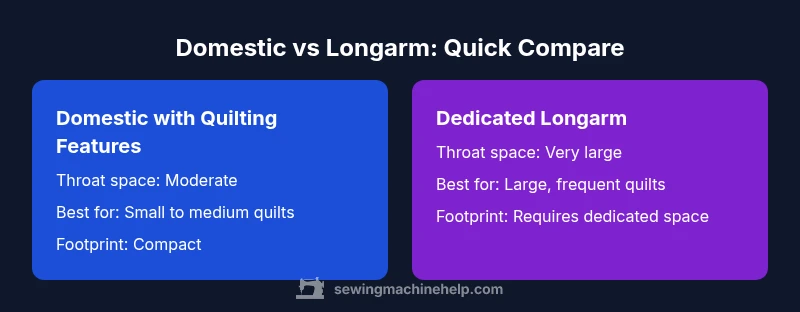
| Feature | Domestic sewing machine with quilting features | Dedicated longarm quilting machine |
|---|---|---|
| Throat space | Moderate | Very large |
| Quilt size handling | Small to medium throws | Large quilts/high-volume work |
| Stitch options | Broad range including utility and decorative stitches | Designed for long, straight, and ruler-based patterns |
| Control and automation | Electronic controls with moderate automation | High-speed control with precision guides |
| Price range | $500-$1500 | $3000-$8000 |
| Best for | Casual hobbyists and space-conscious quilters | Frequent, large-scale quilting professionals |
| Maintenance | Standard maintenance, readily available parts | More intensive maintenance and service needs |
| Footprint | Compact footprint, easy setup | Dedicated space requirement for frame and rails |
Strengths
- Versatile for a wide range of sewing projects
- Cost-effective for beginners and hobbyists
- Compact options fit small spaces
- Strong community support and accessories
Negatives
- Limited throat space for very large quilts
- Upfront upgrades may be needed for heavy quilting
- Longarms require more space and installation effort
Domestic machines with quilting features are the recommended starting point for most hobbyists.
For most readers, a versatile domestic machine balances cost, space, and capability. Upgrade to a longarm only when quilting becomes a primary activity and larger projects are frequent enough to justify the investment. Sewing Machine Help’s guidance emphasizes aligning your setup with actual quilting volume and workspace.
Your Questions Answered
What is the main difference between a domestic sewing machine and a longarm for quilting?
The domestic machine handles standard sewing and light quilting with a reasonable throat space, while a longarm provides an enormous quilting area, precise ruler work, and higher throughput for large quilts. The choice depends on project size and frequency.
Domestic machines are great for most quilts; longarms are best for big, frequent projects. Test both to see what fits your space and budget.
Do I really need a longarm if I only quilt occasionally?
Not necessarily. For occasional quilting, a well-equipped domestic machine with quilting features plus a sturdy frame can handle most projects. A longarm becomes worthwhile when you regularly quilt large projects or require faster production.
If you quilt only now and then, start with a capable domestic machine and scale up only if your volume grows.
What features should I look for when buying for quilting?
Look for adequate throat space, dependable feed dogs, multiple presser feet, good needle thread tension, and smooth free-motion capability. A reliable walking foot and quilting foot are essential, as is durable stitch regulation or smooth manual control.
Prioritize throat space, feet, and stable tension for better quilting results.
Can a regular sewing machine handle large quilts if I use batting and backing?
Yes, with appropriate setup and practice, a domestic machine can handle medium to large quilts. However, expect slower turnaround and more manual effort for heavy batting or dense patterns.
A regular machine can do it, but you’ll likely want to pace yourself and plan longer sessions.
Is maintenance more expensive for longarms?
Longarms generally require more frequent professional servicing and more frequent part replacements due to the larger moving parts. Budget for periodic service and appropriate parts as you scale up.
Maintenance for a longarm tends to be higher, so plan ahead for servicing and parts.
The Essentials
- Choose a versatile domestic machine for most homes
- Add a walking foot and basic quilting feet early
- Test tension and stitch quality with practice sandwiches
- Ensure your workspace supports long sessions
- Upgrade to a longarm when volume justifies the space and cost