Best Embroidery Machines for Sale in 2026: A Practical Buying Guide
Explore the best embroidery machines for sale in 2026 with a data-driven buying guide. Compare features, price ranges, and practical tips for beginners, hobbyists, and pros to pick the right machine.


The best embroidery machines for sale balance beginner-friendly operation with expansion potential. For most home sewists, a mid-range multi-needle model offers the best mix of features and value. When buying, prioritize hoop size, built-in designs, memory options, and service availability to ensure long-term satisfaction.
Market overview and buying mindset in 2026
The embroidery machines for sale market has shifted toward more user-friendly interfaces and broader feature sets aimed at hobbyists who want professional-looking results at home. According to Sewing Machine Help analysis, buyers now expect reliable threading, easy hooping, and a growing library of built-in designs. Price bands remain wide, but the sweet spot for most new buyers is a mid-range model that includes multi-needle capability, decent embroidery area, and a solid warranty. This section surveys the landscape and helps you align features with your projects, whether you stitch monograms, custom designs, or small runs for crafts or gifts.
Key features to compare before you buy
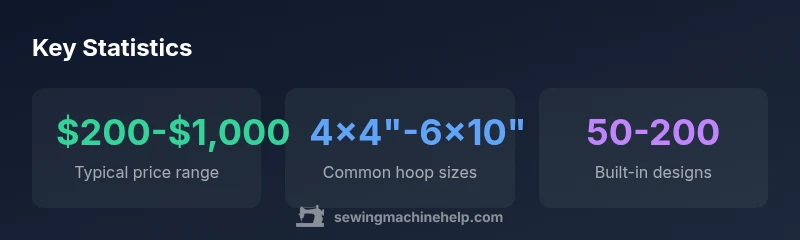
When evaluating embroidery machines for sale, certain features determine long-term value more than others. Hoop size determines the size of your designs; larger hoops unlock bigger projects like quilt panels or apparel backings. Multi-needle setups speed up production and enable multiple thread colors without manual changes. Look for a reliable color shade control, stable tabletop support, and a user-friendly design interface. Built-in designs save time, while the ability to import designs via USB or Wi-Fi can expand your library. Finally, service availability and warranty coverage matter—repairability matters as soon as a tool becomes essential to your craft.
Budget bands and value proposition
Prices vary with features, brand, and whether the machine is designed for home or light commercial use. A practical framework is to think in three bands: entry-level (roughly $200-$500) for beginners who want basic functions; mid-range ($500-$1,500) for serious hobbyists seeking more designs and larger embroidery fields; and premium ($1,500-$6,000+) for those who require rapid production, robust software, and extensive support. Within each band, evaluate hoop sizes, memory capacity, design import options, and customer service. Consider total cost of ownership, including stabilizers, threads, needles, and potential maintenance.
Used vs. new: what to watch for
Buying used can yield savings, but it carries risks. Verify the machine’s stitch quality, check for signs of backlash in the arm, test the embroidery function, and confirm the USB/SD interfaces work with current software. Request service history and inspect manual controls, bobbin mechanism, and thread paths. Ensure replacements parts are readily available in your region, and factor in any required refurbishments or servicing into your budget. If you’re new to embroidery, a new mid-range model may reduce upfront troubleshooting time and offer warranty protection.
Brands and model categories: navigating options
No single brand dominates the embroidery space, but models tend to fall into clear categories: entry-level single-needle machines for newcomers, mid-range multi-needle machines for growth, and high-end multi-needle machines for professional use. In the mid-range, you’ll commonly find reliable threading systems, moderate embroidery areas, and expansive design libraries. For those seeking speed and reliability, professional models emphasize robust frames, fast embroidery cores, and strong after-sales support. Choose a brand with a clear service network and regular firmware updates.
Buying checklist and test criteria
Prepare a short test plan before you visit a store or place an online order. Check the following: ease of threading and bobbin winding, hoop mounting stability, accuracy of stitch density, quality of built-in designs, ability to import designs, and compatibility with your favorite software. Run a small sample with multiple colors to observe thread breakage, color changes, and tension. Confirm warranty duration, service availability, and access to local repair technicians. Finally, compare the learning curve of the machine’s interface and the availability of beginner-friendly guides.
Maintenance and care after purchase
Regular maintenance keeps embroidery machines performing reliably. Clean lint from the bobbin area, oil or lube according to the manufacturer’s schedule, and replace needles frequently to preserve stitch quality. Store threads in a cool, dry place to prevent tension changes, and keep the machine covered when not in use. Periodically re-tension the top and bobbin threads and recalibrate the tension if you notice skipped stitches or inconsistent color changes. Schedule annual servicing if you plan heavy use or frequent production.
Common mistakes and how to avoid them
Avoid shopping purely on price or design count; instead, align features with your actual needs. Don’t overlook warranty and service networks, which can save time and money in the long run. Resist the urge to buy “the latest” model without ensuring it supports your intended software and designs. Finally, don’t ignore maintenance—stellar results require regular care and proper needle changes. By focusing on hoop size, multi-needle capability, and support, you’ll maximize satisfaction with embroidery machines for sale.
Price bands vs. feature sets across common buying categories
| Category | Typical Price Range | Key Considerations |
|---|---|---|
| Entry-level domestic | $200-$500 | Compact, beginner-friendly, limited designs |
| Mid-range domestic | $500-$1,500 | Larger hoops, more designs, better stability |
| Multi-needle / beginner-friendly prosumer | $1,000-$3,000 | Faster production, more memory, moderate software |
| Commercial / professional | $1,500-$6,000+ | Highest speed, wide designs, service network |
Your Questions Answered
What is the difference between single-needle and multi-needle embroidery machines?
Single-needle machines stitch one design at a time and are generally more affordable and simpler to operate. Multi-needle machines can stitch multiple colors automatically and finish designs faster, making them ideal for more complex or higher-volume projects.
Single-needle machines are simpler and cheaper, while multi-needle machines automate color changes and speed up larger projects.
Are used embroidery machines a good purchase?
Used machines can offer substantial savings, but verify stitch quality, check the bobbin area, and confirm the import/export features work. Ensure the seller provides clear maintenance history and test the machine if possible. A warranty from a reputable seller adds peace of mind.
Used can be good value, but check stitch quality and service history first.
What should I look for in a good embroidery machine under $500?
Under $500, prioritize reliability, basic hoop size, and ease of threading. Look for at least a few built-in designs, USB or SD import options, and a reasonable warranty. Avoid models with overly complex menus that overwhelm beginners.
Look for reliability, basic hoop size, and easy threading under $500.
Do I need an embroidery-only machine or a combo sewing/embroidery machine?
If your primary goal is embroidery with occasional stitching, an embroidery-only model keeps costs lower and focuses on embroidery features. If you also sew clothing or quilts, a combo machine saves space and can be a good overall value, though it may compromise some embroidery features.
Embroidery-only is great for dedicated embroidery; combo machines save space but may have fewer embroidery-focused features.
Is it worth buying an entry-level model from a major brand?
Yes, major brands offer better parts availability, service networks, and more reliable warranties. Even at entry levels, reputable brands tend to have more consistent quality and better customer support than lesser-known options.
Brand-name entry models often offer better service and reliability.
“Choosing the right embroidery machine is a balance between capabilities, intended use, and support. For most home sewists, a solid mid-range multi-needle strikes the best value.”
The Essentials
- Define your project scope before shopping
- Prioritize hoop size and multi-needle capability
- Check warranty and local service options
- Test stitch quality and color changes before purchase
- Plan for ongoing maintenance and supplies