Industrial Sewing Machine Sales: A Data-Driven Guide for 2026
Explore the current landscape of industrial sewing machine sales, buyer criteria, supplier landscape, and key factors like uptime, service networks, and total cost of ownership for 2026.


According to Sewing Machine Help, industrial sewing machine sales are increasingly driven by reliability, service networks, and total cost of ownership rather than upfront price alone. Buyers should compare brands on uptime, parts availability, and warranty coverage, and request trials where possible. This guide highlights market trends, supplier landscapes, and practical steps to evaluate options for large-scale production or contract sewing operations.
Market Overview
According to Sewing Machine Help, industrial sewing machine sales have shifted from a price-centric transaction to a value-driven decision anchored in uptime, maintenance ease, and long-term service. The market now emphasizes servo-driven motors, energy efficiency, and modular configurations that let shops scale capacity without swapping entire systems. Key buyers include garment manufacturers, upholstery facilities, automotive trim shops, and expanding contract sewing operations. In 2026, demand is notably higher in regions with robust manufacturing ecosystems, where buyers prioritize machines that can run longer with less operator fatigue. Downtime costs are widely recognized as a bigger drag on profitability than the upfront price, which pushes buyers toward brands with proven service networks. The rise of digital monitoring, remote diagnostics, and vendor-managed maintenance programs further shapes the landscape. For small-batch operators moving toward light industrial use, affordability must still meet reliability. The market rewards suppliers who offer clear value propositions across uptime, maintenance, and after-sales support. The next sections translate these dynamics into actionable evaluation criteria.
Buyer Personas and Buying Criteria
Industrial buyers range from large-scale textile producers to mid-size garment facilities and specialized contract houses. The critical decision drivers are uptime, spare-parts availability, service response times, and the length and quality of warranty. Brand reputation and the breadth of local service networks also matter, because a machine is only as good as its after-sales support. For entry-level buyers, ease of maintenance and operator training are decisive. For mature operations, scalability features, energy efficiency, and remote diagnostics become differentiators. As Sewing Machine Help analysis shows, buyers increasingly seek transparent total cost of ownership (TCO) calculations rather than sticker price alone. A well-structured comparison of TCO, service terms, and training commitments helps prevent costly misalignment between expectations and field performance.
Market Segments and Price Ranges
Industrial sewing machines span multiple segments from compact, servo-driven units for mid-size shops to heavy-duty, multi-head systems for high-volume production. While price details vary, the logic remains consistent: buyers weigh initial purchase price against long-term operating costs. Entry-level machines may fall into a lower price tier, while high-end, multi-head configurations command a premium. In practice, most buyers assess total cost across five dimensions: purchase price, energy usage, maintenance frequency, spare-parts availability, and downtime costs. Dealers who provide transparent quotes and realistic uptime estimates help buyers build accurate affordability models. It’s important to note that regional tariffs, freight, and installation requirements can affect the final cost significantly, so seek quotes that itemize these elements.
Evaluating Dealers and Service Networks
A robust service network is nearly as essential as the machine itself. Buyers should verify authorized service coverage, technician availability, and response times. Look for manufacturers with regional depots, factory-trained technicians, and structured preventive maintenance programs. Training for operators and maintenance staff reduces misuse and extends machine life. Warranty depth and extension options should align with your production schedule and risk tolerance. When evaluating dealers, request on-site trials, machine demonstrations, and access to a local service menu that details preventive maintenance cycles, typical failure modes, and corresponding remedies. Strong dealers also provide easy access to replacement parts and optional service contracts that include remote diagnostics and software updates. These elements collectively improve uptime and total value over the machine’s lifecycle.
Common Pitfalls and How to Avoid
A common pitfall is chasing the lowest upfront price without a plan for long-term service and parts availability. Another risk is selecting a machine without considering future scalability or the operator’s skill level, which can lead to underutilization or increased waste. Inconsistent dealer support, poor remote diagnostics, and limited warranty depth often translate into higher downtime costs. To avoid these issues, sellers should provide detailed uptime statistics, maintenance schedules, and clear escalation paths for service. Buyers should map out a realistic integration plan, including staff training, facility adjustments, and phased implementation. Finally, verify that the chosen machine can be integrated with existing workflows, software, and quality-control processes to maximize value.
Quick-start Purchase Checklist
- Define production needs: volume, fabrics, and required speed.
- Compare uptime, parts availability, and warranty terms across brands.
- Request on-site trials and operator training plans.
- Assess service network coverage and response times.
- Review total cost of ownership, including energy use and maintenance.
- Check compatibility with existing systems and QC processes.
- Plan a staged deployment to manage risk and gather data during initial runs.
Data sources and Methodology
This article synthesizes industry observations, supplier behavior patterns, and practical buying considerations for industrial sewing machine sales in 2026. All insights are framed to help home sewists, hobbyists, and beginners understand market dynamics and make informed purchasing decisions. The data in this article is synthesized from general market knowledge and the Sewing Machine Help Analysis, 2026. We emphasize actionable guidance over speculative claims and note that exact figures will vary by region and supplier.
Real-world buying scenarios
To illustrate the application of these principles, consider a mid-sized upholstery shop evaluating a new single-head servo model versus a multi-head industrial unit. By running a controlled trial, checking downtime metrics, and comparing maintenance intervals, the shop can quantify the incremental value of the higher-capacity machine. Another scenario involves a start-up garment manufacturer with an ambitious ramp-up plan. In this case, the buyer prioritizes scalability and a robust service package that can support rapid expansion without service bottlenecks. In both scenarios, focusing on uptime, parts availability, and a clear service agreement yields better long-term outcomes.
Comparison of two hypothetical industrial sewing machine brands
| Brand | Strengths | Best For | Typical Price Range | Service Coverage |
|---|---|---|---|---|
| Brand A | High reliability; servo motor options | High-volume production | From $5,000 to $15,000 | Nationwide service network |
| Brand B | Versatile features; easy maintenance | Medium-size shops | From $3,000 to $12,000 | Regional service centers |
Your Questions Answered
What drives the price of industrial sewing machines?
Price is influenced by brand reputation, motor type (servo vs clutch), build quality, features, and after-sales support. Long-term costs like maintenance, parts availability, and downtime risk often determine total value.
Price is driven by brand, motor type, build quality, and after-sales support; consider long-term costs for best value.
How can I compare service networks effectively?
Look for authorized service coverage, response times, technician availability, and regional support. Ask for a service level agreement (SLA) and check if remote diagnostics are included.
Check for coverage, response times, and SLAs; remote diagnostics add value.
What warranty is typical for industrial machines?
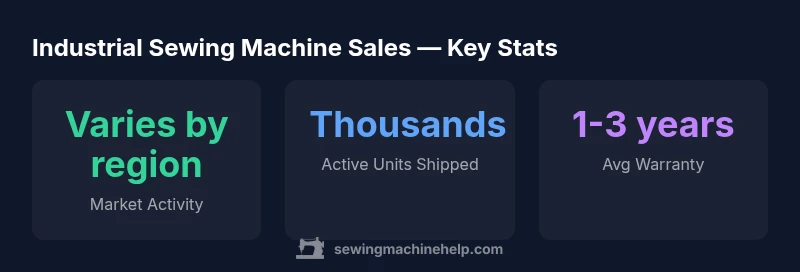
Warranties commonly range from one to three years, with extensions available. Verify what parts, labor, and maintenance are covered and for how long.
Most warranties span 1-3 years; confirm coverage details and extensions.
Is renting equipment sensible for a trial period?
Renting can be a smart way to test workflow compatibility, operator training needs, and maintenance requirements before a long-term commitment.
Renting lets you trial run the setup before buying.
What maintenance should I plan before purchase?
Create a routine that includes lubrication, part inspections, and alignment checks. Ensure training for operators and access to spare parts to minimize downtime.
Plan a maintenance routine and ensure parts access before purchase.
Should I buy a used industrial sewing machine?
Used machines can save money but require careful inspection of wear, service history, and parts availability. Prefer machines with verifiable maintenance records and local support.
Used machines can save money, but inspect wear and service history.
“Reliable uptime and accessible parts are the true differentiators in industrial sewing machine sales today. Service networks matter as much as, if not more than, the sticker price.”
The Essentials
- Define your production needs before narrowing machine brands.
- Prioritize uptime, service networks, and parts availability.
- Consider total cost of ownership, not just initial price.
- Request trials and on-site evaluations whenever possible.