Old Singer Sewing Machine Value: Practical Valuation Guide for 2026
Learn how to estimate the value of an old Singer sewing machine with factors like model era, condition, provenance, and market trends. This guide, based on Sewing Machine Help Analysis, 2026, helps home sewists assess typical ranges and selling strategies.


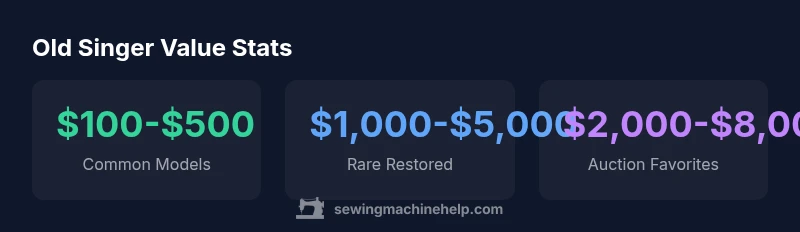
According to Sewing Machine Help, the value of an old Singer sewing machine is highly variable and depends on model, age, condition, and provenance. Generally, well-preserved, common early 20th-century machines move from about $100 to $500, while rare, restored units can exceed $1,000, depending on model and originality.
Understanding the valuation landscape
According to Sewing Machine Help, the valuation landscape for old Singer sewing machines is shaped by era, tooling, and market demand. The phrase old singer sewing machine value captures a spectrum from everyday workhorse models to rare collector’s pieces. This section introduces the core ideas that drive price: model family and era, overall condition, originality of parts and finish, presence of original attachments or cabinet, and verifiable provenance. Buyers range from casual hobbyists to serious collectors, and their expectations vary accordingly. Knowing the market realities helps you set realistic expectations and avoid overpricing or underpricing, which directly influences how quickly a unit moves in today’s market.
Historically, vintage Singers produced in the late 19th and early 20th centuries form the core of many valuation conversations. Prices can swing widely even within the same era, driven by intact cases, serial numbers, and documentation. For home sewists aiming to understand the old singer sewing machine value, it’s essential to separate cosmetic wear from functional faults and to consider whether restoration adds genuine value or merely cosmetic appeal. Sewing Machine Help analysis emphasizes a practical approach: use credible references, compare authenticated sales, and be mindful of condition-based price bands rather than chasing peak auction results.
When you begin, document the machine’s condition with clear photographs, note any missing parts, attachments, or accessories, and gather any proof of provenance. This groundwork pays off later in negotiations and listings, helping you articulate the components that substantiate a higher or lower valuation. The goal is to create a transparent picture that resonates with potential buyers and appraisers alike.
Value ranges by context for old Singer sewing machines
| Model Context | Estimated Value Range | Notes |
|---|---|---|
| Common vintage models | $100-$500 | Age, wear, cabinet condition, originality |
| Rare restored specimens | $1,000-$5,000 | Provenance, original attachments, serials, case |
| Unrestored working units | $300-$900 | Mechanical condition, accessibility |
| Auction favorites (collectible) | $2,000-$8,000 | Documentation, rarity, market trends |
Your Questions Answered
What factors most influence the value of an old Singer sewing machine?
The most influential factors are the model's era, overall mechanical condition, originality (including attachments and cabinet), and documented provenance. Rarity and market demand also play a role, especially for machines with complete, verifiable histories.
Key factors are era, condition, originality, and provenance.
Can I get an accurate valuation without seeing the machine in person?
Remote valuations rely on clear photos, close-up shots of serial numbers and parts, and any documentation. An in-person inspection is ideal for assessing mechanical performance and authenticity, especially for high-value units.
Photos help, but in-person inspection is best for high-value pieces.
Are there signs a machine is a rare model?
Look for unique cabinet designs, rare year stamps, and serial numbers that match known production windows. Documentation and provenance also signal rarity and can boost valuation.
Look for unique features and documented history.
Is restoration beneficial for value?
Restoration can raise value if it’s done credibly with authentic parts and finishes. Over-restoration or using non-original parts can diminish value, especially for collectors who prize originality.
Good restoration helps, but authenticity matters.
Where is the best place to sell an old Singer sewing machine?
Online marketplaces and antique-auction houses are common. Compare fees, research recent comps, and provide high-quality photos, documentation, and any restoration notes to maximize appeal.
Online markets and auctions are popular; show clear photos.
What should I avoid when selling?
Avoid misrepresentation, missing serials, non-original parts, or fake attachments. Be honest about condition and include any known history to preserve trust and avoid post-sale disputes.
Be upfront about what you have and what’s missing.
“Valuing an old Singer sewing machine is about aligning mechanical condition with era rarity and provenance; a well-documented unit in good working order can command a premium.”
The Essentials
- Identify era and model context before valuing
- Assess condition and originality; restoration can help or hurt value
- Check provenance and attachments to justify premiums
- Compare credible comps and seek professional appraisal for high-value units
- Preserve and store properly to protect long-term value