How Much Is a Singer Sewing Machine in 2026: A Practical Price Guide
Explore Singer sewing machine price ranges, what drives cost, and practical buying tips for beginners. A data-driven guide from Sewing Machine Help to help home sewists make informed choices.


Prices for a Singer sewing machine typically range from about $100 to $800 for entry-level and consumer models, with mid-range options commonly landing between $300 and $600, and higher-end computerized or specialty machines often reaching $1,000 or more. The exact price depends on model, features, build quality, warranty, and included accessories.
What Determines Singer Sewing Machine Price
When you ask how much is singer sewing machine, you’re really asking about a mix of baseline cost and value. According to Sewing Machine Help, price is driven by model type (entry-level, mid-range, or professional), the presence of computerized features, stitch variety, metal versus plastic frame construction, motor power, and the length of the warranty. Additional cost factors include bundled accessories (feet, hard cases, thread sets), aftermarket add-ons, and where you buy (retailer, dealer, or second-hand market). For new buyers, it helps to map your intended projects to the features you actually need rather than chasing every bell and whistle. A practical approach is to compare a few core models side-by-side and identify the features that deliver the best return on investment for your skill level. This is the kind of analysis the Sewing Machine Help team uses when evaluating price versus performance.
Price Tiers: Entry-Level, Mid-Range, and Premium
Singer offers a spectrum of machines that fit different budgets and projects. In general:
- Entry-level models focus on reliability and essential stitches, often priced toward the lower end of the spectrum. These are ideal for beginners who want a simple, straightforward machine to learn basics.
- Mid-range models add more stitch options, better threading systems, heavier frames, and sometimes computerized features that improve consistency and speed. They strike a balance between cost and capability for hobbyists.
- Premium or specialty machines introduce advanced features such as extensive stitch libraries, automatic thread cutting, needle threading aids, larger harp space, and enhanced durability for frequent, demanding projects. They command higher prices but deliver long-term versatility.
This tiered view helps answer how much is singer sewing machine by aligning price with the anticipated workload and skill progression. In 2026, the typical price band for these tiers is broad and model-dependent, so use it as a guide rather than a fixed rule.
New vs Used: Value, Warranty, and Risk
New Singer machines come with the strongest warranty, the latest features, and guaranteed factory calibration. They are the safest bet for beginners who want plug-and-play reliability. Used Singer machines can offer substantial savings but require careful evaluation to avoid hidden maintenance costs. When inspecting a used unit, check the needle plate, bobbin area, motor noise, stitch consistency, and whether the belt and feed dogs are worn. Always verify that critical parts like the pedal, foot control, and thread tension system are functional. Sewing Machine Help emphasizes conducting a test sew and verifying the machine’s operating consistency before purchase, especially when pricing is close to new.
How to Estimate Your Budget and Pick a Model
Start by listing your typical projects: garment hems, quilting, home decor, or crafts. Then map those needs to a feature set, noting which features truly add value for you. A practical budget allocation might look like this: reserve a portion for the base machine, set aside some for essential presser feet and accessories, and keep a contingency for potential maintenance in the first year. Use price ranges to anchor your decision—expect a modest jump in cost if you add automatic features or a longer warranty. Compare similar models from Singer’s lineup and read user reviews to gauge reliability and support. Remember, a reputable retailer can offer post-purchase service that adds long-term value beyond the sticker price.
Hidden Costs Beyond the Sticker Price
The sticker price is only part of the total cost of owning a Singer sewing machine. You’ll typically encounter ongoing costs for maintenance, thread, needles, bobbins, oil, and potential repairs. Some models require specific presser feet or specialty accessories that aren’t included in the basic kit. A durable machine may reduce long-term costs by requiring fewer repairs and delivering consistent results over time. Budget for routine maintenance, especially if you sew regularly, and consider buying from retailers that offer bundled maintenance plans or warranties that cover routine service.
Where to Buy: Retailers, Online Marketplaces, and Auctions
Buyers have several channels to consider. Authorized retailers offer full warranties, genuine parts, and reliable service. Online marketplaces can yield good deals, but verify seller reputation, return policies, and machine history. Auctions may present bargain opportunities but require careful inspection and a test run if possible. The key is to verify model numbers, year of manufacture, and overall condition before committing. For beginners, starting with a trusted local retailer or an established online dealer reduces risk and simplifies after-sale support.
How to Verify Model and Year Before You Buy
Before purchasing, identify the exact model number and confirm it matches the features you want. Cross-check with Singer’s official resources or retailer catalogs to confirm the year of manufacture and compatibility of accessories. A well-documented service history (for used machines) and a clean, operable bobbin area are good signs. If you’re shopping online, request high-resolution photos of the serial plate, motor, and presser feet. This diligence minimizes price regrets and ensures you’re buying a Singer machine that will perform as expected for your projects.
Budget Planning Checklist for Beginners
- Define your primary projects and the features you need.
- Set a target price range for entry-level, mid-range, and premium tiers.
- List essential accessories and confirm if they’re included.
- Check warranty length and retailer reputation.
- Plan for routine maintenance costs and future replacements (belts, needles, oil).
- Read customer reviews and compare a few models side-by-side.
A thoughtful budget plan helps you avoid overpaying while securing a machine that meets your needs. Sewing Machine Help’s budgeting framework emphasizes aligning price with intended use and anticipated project load.
Real-World Scenarios: Choosing Based on Projects
A straightforward way to translate price into practical choice is to map price tiers to project complexity. If you’re primarily doing simple garment hems and home decor, an entry-level Singer may suffice, with room to upgrade later. For quilting or frequent garment construction, mid-range models offer more stitch options and better feed system stability. For enthusiasts who require heavy-duty performance, specialized models deliver reliability at a higher cost. In all cases, buying from a reputable source with a clear return policy and service options helps protect your investment and ensures you can grow with your machine.
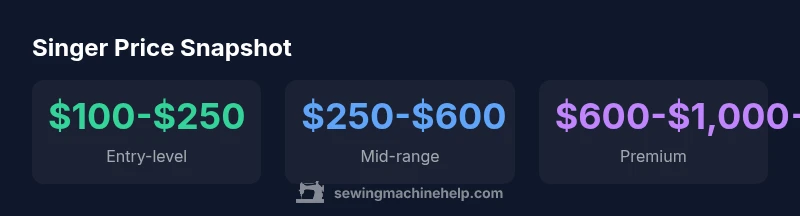
Singer model price ranges by tier
| Model Type | Typical Price Range | Notes |
|---|---|---|
| Entry-level Singer | $100-$250 | Great for beginners; basic stitches |
| Mid-range Singer | $250-$600 | More stitches; better durability |
| Premium/Advanced Singer | $600-$1000+ | Extensive features; long-term versatility |
Your Questions Answered
What factors influence Singer sewing machine price the most?
Model tier, feature set, build quality, and warranty are the main drivers. Computerized machines with extended warranties tend to cost more but may offer better long-term value for frequent users.
The main price drivers are model tier, features, build quality, and warranty. Computerized models with longer warranties usually cost more but can offer more value over time.
Is it better to buy a used Singer machine or a new one?
Used machines can save money but require careful checks of mechanical condition and history. If you sew often, a new or warranty-backed model reduces risk and offers modern features.
Used machines save money but come with more risk. For frequent sewing, a new machine with warranty is often a safer long-term choice.
Do Singer machines hold their value over time?
Value retention varies by model and market demand. Classics may retain value among hobbyists, while newer computerized models may depreciate as new tech arrives.
Value depends on model and demand; some classics hold value among enthusiasts, while newer tech often depreciates after release.
What price range should a beginner expect for a Singer?
Beginners can start with entry-level models in the lower price band, which still offer reliable stitches and basic features suitable for learning.
A beginner can expect to pay in the entry-level range for a reliable start.
Are there price differences across Singer models for the same features?
Yes. Branding, warranty terms, materials, and retailer promotions can create price variance even among similar feature sets.
Prices can vary even among similar features due to branding, warranty, and retailer deals.
Where is the safest place to buy a Singer machine?
Choose authorized retailers or well-known marketplaces with clear return policies and service options. This reduces risk and ensures access to genuine parts and support.
Buy from reputable retailers or major marketplaces with good returns and service options.
“Pricing for Singer sewing machines reflects a balance between reliability, features, and support. Buyers should align price with intended use to maximize value.”
The Essentials
- Define your project needs before shopping
- Match price tier to intended use and growth path
- Factor maintenance and accessories into the budget
- Choose reputable retailers for warranty and support