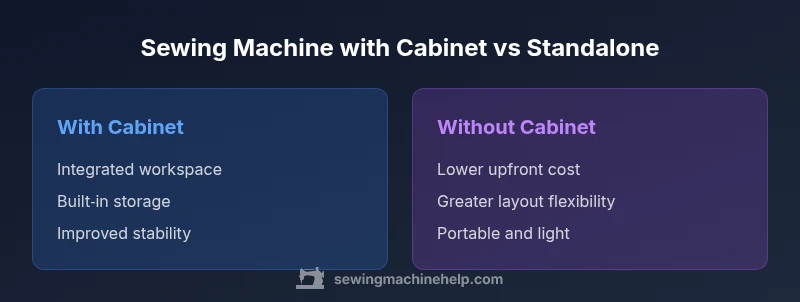
Sewing Machine and Cabinet: A Practical Comparison
Compare integrated sewing machine and cabinet setups with standalone options. This guide helps home sewists weigh ergonomics, space, and value to choose the best setup.


If you value a stable, organized workspace, a sewing machine and cabinet typically beat a standalone machine for home sewing. The cabinet adds a dedicated work surface and built-in storage, reducing clutter and improving posture during long sessions. This comparison highlights the key differences, costs, and real‑world trade‑offs to help you decide if the combination is worth the investment for your workspace.
What qualifies as a sewing machine and cabinet setup
A sewing machine and cabinet setup combines the sewing machine with a purpose-built cabinet that includes a work surface, storage, and often a mounting system. For many home sewists, this arrangement creates a dedicated sewing station with improved stability, dust protection, and a place to store feet, needles, and accessories. In this guide, we compare a sewing machine and cabinet against a standalone machine to help you understand the practical implications for space, cost, and daily use. When evaluating options, consider your typical projects, room layout, and how often you move your equipment. Sewing machine and cabinet systems are popular because they consolidate essential tools into one organized unit, reducing clutter and freeing up work surfaces for fabric cutting and pressing. According to Sewing Machine Help, a well-designed cabinet can also help promote a comfortable posture during longer sewing sessions. The focus is on real‑world usability: how you work, not just what you own.
Key differences between integrated cabinet setups and standalone machines
Integrated cabinet setups bundle the sewing machine with a built‑in work surface, drawers, and sometimes a mounting plate that keeps the machine aligned and stable. Standalone machines, by contrast, rely on a separate table or desk. The cabinet option typically offers better integration, fewer small parts to misplace, and a cleaner aesthetic. However, the cabinet can limit upgrade paths and may require a larger upfront investment. For a home workshop, the choice often boils down to balance between upfront cost and long‑term convenience. The Sewing Machine Help team notes that many crafters value the organized space more than the flexibility to swap out components frequently, especially for long projects or frequent quilting sessions.
Ergonomics and workflow: how you actually sew
Posture and reach distance are central to productive sewing sessions. A sewing machine and cabinet setup places the machine at a fixed height with a continuous, uninterrupted work surface, promoting a smoother workflow. The cabinet’s drawers keep tools, needles, and foot pedals within arm’s reach, minimizing trips away from the workstation. In contrast, a standalone machine on a separate table may force you to lean or twist to reach accessories, potentially causing fatigue over time. For beginners, a cabinet can be especially helpful by providing a clear, organized workspace that reduces the cognitive load of keeping track of multiple pieces of equipment.
Space planning: dimensions, weight, and placement
Before buying, map your room to accommodate the cabinet's footprint and weight. Cabinets are generally larger than a standard craft table, often requiring more floor space but offering a more focused sewing zone. When planning placement, consider doorways, ventilation, lighting, and power access. If you live in a small apartment, a compact cabinet with a drop‑front sewing surface can still deliver the benefits of integrated storage without overwhelming the room. Weight matters for routing cables and noise dampening, so look for sturdy construction and reinforced corners. The goal is a stable, organized zone that minimizes vibrations that can affect stitch quality.
Materials and build quality: what to look for
Choose a cabinet made from materials that resist warping and moisture, such as solid wood or high‑quality plywood with a durable veneer. Look for robust drawers with smooth slides, metal hinges, and full extension where possible. The mounting system should securely hold the machine and keep it aligned with the needle. Avoid cabinets with thin particleboard if you plan to sew heavy fabrics or do long sessions. In many cases, a well‑built cabinet will outlast the machine itself, providing consistent support through multiple upgrades.
Price ranges and long‑term value
Pricing for sewing machine and cabinet setups varies widely, driven by materials, brand, and included features. On the lower end, a basic cabinet with a compact domestic machine may fall into a mid‑range price, while premium, solid‑wood cabinets with integrated lighting and padded drawers can push higher. Standalone machines and separate tables typically offer lower upfront costs but may require additional accessories that add up over time. When evaluating value, consider longevity, potential resale, and how often you will use the space. Sewing Machine Help notes that the long‑term convenience of a cabinet often justifies the initial investment for frequent sewists.
Installation and mounting: steps and tips
Mounting a machine in a cabinet usually involves aligning the needle, securing the machine to a mounting plate, and ensuring proper needle clearance. Some cabinets are designed for quick mounting, while others require professional assembly. Cable routing for power and dust collection should be planned early to avoid clutter. A good cabinet will include a dust cover or integrated venting, reducing lint in the machine. If you already own a table, you can sometimes retrofit a basic cabinet, but ensure overall height and reach are comfortable for your posture and project range.
Maintenance and care for cabinet-integrated systems
Maintenance for a sewing machine and cabinet setup includes regular cleaning of the machine, dusting the cabinet interior, and lubricating moving parts as recommended by the machine’s manual. Keep lint and fabric fibers out of drawers and avoid moisture exposure to wooden components. Periodic tightening of screws and checking the cabinet’s hardware will prevent wobble and misalignment. Use felt pads on legs to minimize floor wear and reduce vibration. A well‑maintained cabinet stays level and stable, preserving stitch quality and extending the life of both the machine and the furniture.
Compatibility and accessories: pairing with your machine
Ensure the cabinet is compatible with your specific sewing machine model, including bed size, needle position, and feed system. Some cabinets support snap‑in levels or mounting brackets that accommodate a range of machines. Consider accessories like an integrated light, a dedicated foot pedal shelf, or a knee lift compatible with your model. If you use specialty attachments, verify there is adequate clearance and an accessible storage space for them. The right combination of machine and cabinet enhances ergonomics, accessibility, and workflow for your projects.
Design considerations: aesthetics, lighting, dust control
Aesthetics play a practical role: a cabinet that matches your room’s style can reduce visual clutter and encourage regular sewing practice. Integrated lighting improves visibility around the needle and presser foot, while dust control features like drawers with seals help protect your machine from lint. Materials and finishes should withstand heat, humidity, and sunlight exposure in your workspace. The goal is a cohesive, functional setup that blends with the room and supports long sewing sessions without becoming an obstacle.
Decision framework: a practical path to choosing
Start with a space assessment to define how much room you can dedicate, then compare the ergonomics of a sewing machine and cabinet vs a standalone setup. List must‑have features (storage, height, lighting) and nice‑to‑have upgrades (soft‑close drawers, integrated thread racks). Check compatibility with your current machine, planned projects, and maintenance plan. Finally, weigh upfront costs against long‑term convenience, resale value, and the potential for upgrades. This framework helps home sewists choose a path that balances space, cost, and workflow.
Comparison
| Feature | Sewing machine with cabinet | Sewing machine without cabinet |
|---|---|---|
| Workspace/working area | Dedicated built‑in surface | Separate table surface or none |
| Storage capacity | Built‑in drawers and compartments | No built‑in storage; requires separate organizers |
| Footprint and space | Larger footprint due to cabinet | Smaller footprint; portable option |
| Stability and vibration control | High stability from integrated design | Stability depends on separate table setup |
| Cost range | Mid-to-high upfront cost | Lower upfront cost, plus separate table |
| Aesthetics/room integration | Clean, cohesive look | More room for decor flexibility |
| Resale value | Typically higher resale with cabinet | Resale depends on table quality |
| Installation/assembly | Often needs professional assembly | Minimal setup; portable option |
Strengths
- Enhanced stability and vibration control due to cabinet construction
- Built-in storage reduces clutter and keeps essential tools accessible
- Ergonomic work surface promotes comfortable sewing posture
- Cleaner aesthetic and better room organization
- Potentially higher resale value with a cabinet included
Negatives
- Higher upfront cost compared with a standalone machine
- Less flexibility to upgrade the machine independently
- Requires more floor space and may complicate relocation
- Professional setup may be needed for installation
A sewing machine with a cabinet is generally the better choice for the typical home sewist seeking comfort and organization, when space and budget permit.
If you sew regularly or on longer sessions, the integrated setup offers significant ergonomic and storage benefits. Choose a standalone if you must save money, need portability, or want maximum upgrade flexibility.
Your Questions Answered
What is a sewing machine and cabinet, and what are the benefits of pairing them?
A sewing machine and cabinet is a combined setup that houses the machine within a purpose-built cabinet with a work surface, storage, and mounting options. The benefits include a stable sewing platform, integrated storage for accessories, and a cleaner work area that supports longer sessions.
A sewing machine and cabinet is a single, organized station with built‑in space for tools and a sturdy surface—great for comfort and efficiency.
Can any sewing machine be mounted into a cabinet?
Most cabinets are designed to fit a range of machines, but you should verify bed size, machine mounting points, and clearance. Some brands offer universal mounting kits to improve compatibility.
Check the machine’s bed size and mounting options before buying a cabinet.
How should I measure my space for a sewing machine and cabinet?
Measure length, width, and height of the intended area, including doorway clearance. Add extra space for chair movement and future projects. Consider ceiling height if you plan overhead lighting or dust covers.
Measure your room to ensure the cabinet fits with room to sew comfortably.
Is a cabinet necessary for beginners?
Not strictly necessary, but many beginners benefit from the organized workspace and built‑in storage. A cabinet can speed up learning by reducing setup clutter and helping you stay focused on stitches and techniques.
For beginners, a cabinet can be a helpful, organized starter setup.
What maintenance is required for cabinet furniture?
Keep the cabinet clean and dry, check hardware periodically, and protect wood surfaces from humidity. Use soft cloths and avoid harsh cleaners that could damage finishes.
Wipe it down regularly and check screws so the cabinet stays sturdy.
What is the typical price range for sewing machine and cabinet setups?
Prices vary by material and features. Expect a broad range from affordable basic options to premium, solid‑wood cabinets with integrated lighting and extra features.
Prices vary a lot; there are affordable basics and premium setups.
The Essentials
- Assess space and workflow before buying
- Prioritize solid cabinet construction and proper mounting
- Weigh long‑term value over upfront cost
- Check machine compatibility with the cabinet
- Plan for maintenance and dust control