Finding a Sewing Machine in Store Near Me: A Practical Guide
Learn how to locate a sewing machine in store near you, compare stock, test-drive options, and choose the right model with practical steps from Sewing Machine Help. Get ready to visit local retailers with confidence.


Finding a sewing machine in store near me starts with locating nearby retailers, then comparing stock, test-drive options, and in-person support. Look for authorized dealers, warranty coverage, and live demonstrations to judge fit. According to Sewing Machine Help, prioritize hands-on testing and in-store guidance to avoid buyer’s remorse and choose the right model.
Finding a sewing machine in store near me
Locating a sewing machine in a brick-and-mortar shop is often faster than ordering online, especially if you want to see the machine firsthand. For home sewists, the phrase sewing machine in store near me is a practical starting point: it directs you to nearby authorized retailers that can demonstrate models, explain features, and answer questions on the spot. In 2026, many stores publish live inventories and offer in-store pickup, making it easier to test-drive options and compare brands without waiting for shipping. The Sewing Machine Help team recommends combining a web search with a quick phone call to confirm stock before visiting. Bring fabric scraps or a familiar project to test stitches, adjustable tension, and thread compatibility on the models you’re considering. This hands-on approach helps you gauge noise, vibration, and ergonomics, which are hard to assess from photos alone.
- Test a variety of stitches on actual fabric
- Check noise level and vibration during operation
- Assess needle positioning and threading ease
Understanding store inventories and what to expect
Store inventories can vary widely by location, even within the same brand. When you search for a sewing machine in store near me, expect a curated mix of entry-level, mid-range, and occasionally professional models, plus a few sergers or overlock machines. Authorized dealers often provide live demonstrations, accessory availability, and repair options that purely online shops cannot mirror. You’ll also notice different warranty structures and return policies across retailers. In practice, the best in-store experiences come from shops that encourage hands-on testing and offer a clear path to service or parts. For home sewists, this combination helps you understand what you’re buying beyond the glossy photos online.
- Look for a dedicated demonstration area
- Check if staff can sew with fabrics you use
- Confirm accessory availability and compatibility
How to verify model availability and warranty options
Before visiting, verify which models are actually in stock at your nearby stores. Call ahead or use the retailer’s online inventory tool to confirm exact models and colors. When you arrive, ask about warranty options and how to register products, since in-store coverage can differ from online only policies. The best stores will offer extended warranty or service plans that cover routine maintenance, parts, and in-store repairs. If a model isn’t in stock, ask about holds, rain checks, or a demonstration on a comparable unit. This proactive approach helps you avoid wasted trips and ensures you walk away with a solid plan.
- Confirm model numbers and colors before you go
- Inquire about on-site warranty terms and service access
- Ask about local repair options and parts availability
What to ask the salesperson to avoid buyer’s remorse
To maximize value, prepare a concise list of questions before stepping into a store. Start with core capabilities: needle system compatibility, stitch options, presser-foot changes, feed-dog behavior, and thread path clarity. Also ask about maintenance requirements and oiling intervals. For reliability and long-term costs, request information on warranty terms, service routes, and return policies. In-person reps can demonstrate how easy it is to thread, wind a bobbin, and switch between functions. This is where a hands-on demo pays off, ensuring you’re choosing a model that fits your projects over the next few years.
- Ask to see the machine in action with a standard fabric
- Request a side-by-side comparison of features
- Confirm local service and parts support
In-store testing: assessing performance and features
A thorough test-drive is essential when you’re buying a sewing machine in store near me. Focus on stitch quality across fabrics, seam consistency, and tension continuity. Evaluate noise, vibration, foot pedal sensitivity, and the machine’s ability to handle thicker materials. Test essential features such as automatic buttonhole, zigzag options, variable speed control, and needle threading assistance. Bring a familiar fabric and a sample project to assess how the machine handles your typical workload. Also check accessibility: is the needle position easy to reach, and can you adjust presser foot height without fuss? These practical checks often reveal the true cost of ownership beyond the sticker price.
- Run a practical swatch test with multiple stitches
- Check ergonomic comfort for your height and reach
- Verify that accessory feet and manuals are included
Budgeting and negotiation tips in physical stores
If you’re shopping in-store near me, don’t assume the price is fixed. Many retailers have room to negotiate, especially when purchasing bundles or during special promotions. Ask for current promotions, bundled accessories, and service plan options that add long-term value. Compare the installed warranty, in-store support, and return window with online offers. If you have a preferred model but the price seems high, request a price match or a promotional add-on, such as an extra foot kit or extension table. Don’t hesitate to walk away if the terms don’t meet your needs—many stores will re-list the item after you show you’ve done your homework elsewhere.
- Ask for bundled accessories or extended warranties
- Compare in-store deals with online promotions
- Be prepared to walk away if terms aren’t favorable
After-sale support: maintenance, service, and parts
Post-purchase support is often the deciding factor between a good and great in-store experience. In many stores, service centers are located nearby or can arrange quick pickup for repairs. Confirm how parts are stocked or ordered, and whether the store offers maintenance classes or tutorials for owners. If you’re buying a sewing machine in store near me, you’ll also want to know oiling schedules, cleaning routines, and basic troubleshooting. The right retailer provides ongoing guidance, a clear service path, and easy access to replacement parts, so you can keep sewing with confidence for years to come.
- Clarify maintenance steps and schedules
- Confirm access to genuine replacement parts
- Seek opportunities for continued education or clinics
Making the choice: in-store vs online and final steps
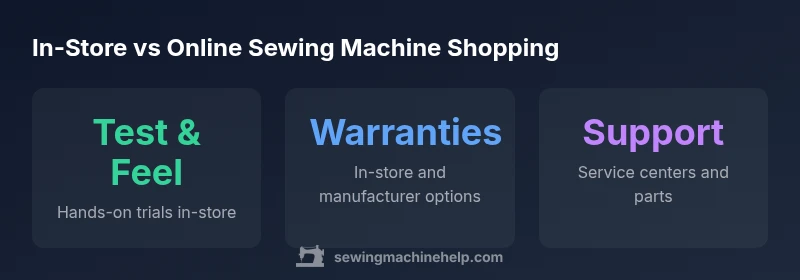
Choosing between an in-store purchase and online shopping comes down to hands-on experience, service options, and timing. In-store purchases excel for test-drives, immediate questions, and local warranty coverage. Online options often win on price and selection, but may require longer waits for testing and service. Use a blended approach: identify a few models online, then visit nearby stores to test-drive the finalists. By validating stock, performance, and service locally, you’ll make a confident choice—whether you buy today or reserve for pickup later.
- Shortlist models online, then test in-store
- Verify local service and warranty options
- Follow up with a purchase plan that fits your schedule and budget
In-store vs online shopping for sewing machines
| Aspect | In-Store Availability | Online Shopping |
|---|---|---|
| Selection breadth | Varies by location | Broad online catalogs |
| Expert help & demonstrations | Usually available during staffed hours | Often limited to product pages |
| Warranty options | In-store policies vary | Manufacturer warranties with online registration |
| Price negotiation | Often negotiable | Prices typically fixed |
| Test-drive availability | Usually possible in-store | N/A |
| After-sale service | Geography-dependent | Depends on manufacturer and retailer network |
Your Questions Answered
Why should I buy a sewing machine in-store near me rather than online?
In-store purchases let you touch and test the machine, evaluate noise and ergonomics, and discuss warranties with a knowledgeable staff member. You also gain access to local service options and immediate support should something go wrong.
Buying in-store gives you hands-on testing and local service support, which online shopping can’t match.
What should I bring when visiting a local sewing-machine store?
Bring model numbers you’re considering, fabric swatches, and a list of features you need. Also bring your budget and a method to compare quotes. This helps you compare apples to apples during your visit.
Bring fabric samples and a short feature list to compare models effectively.
How can I tell if a model is in stock at my local store?
Call ahead or use the store’s online inventory tool to confirm exact models. If possible, ask to reserve the unit for pickup or request a demo if it isn’t in stock.
Check stock first and consider reserving the model you want.
Are extended warranties worth it?
Compare the cost of the warranty against potential repair costs and the store’s service plan. For many hobbyists, a basic warranty plus a service plan provides solid value.
Weigh the cost against potential maintenance needs and service access.
What if I need a serger or specialty machine?
In-store staff can explain differences, demonstrate options, and help with accessory compatibility. If needed, order through the store with support and training options.
Ask for demos and compare accessory compatibility.
How soon can I expect after-sales service?
Service times vary by retailer and location; many stores offer in-house service or referral networks. Ask about typical turnaround and how parts are stocked.
Check the service timeline and parts availability.
“In-store testing and clear service terms are essential for long-term satisfaction with a sewing machine. The right retailer connects you with demonstrations, trusted guidance, and reliable maintenance.”
The Essentials
- Start with local stores to test machines hands-on
- Verify stock and warranty before visiting
- Ask focused questions to avoid buyer’s remorse
- Balance hands-on testing with online comparisons
- Check after-sale service and parts availability