Sewing Machine to Use Near Me: Practical Guide for 2026
Discover practical steps to find a sewing machine to use near you, evaluate local shops, compare services, and maintain gear confidently with Sewing Machine Help guidance for 2026.


To find a sewing machine to use near you, start with a local search for repair shops, rental programs, and authorized service centers. Check parts availability, typical turnaround times, and safety policies. If possible, test a demo unit, confirm warranty coverage, and compare pricing before committing. Also ask about loaner machines and proximity to your ongoing projects to minimize downtime.
Understanding the local search: what 'sewing machine to use near me' really means
In practical terms, this phrase means identifying nearby shops, rental programs, and mobile technicians who can provide a working machine, maintenance, or repair services tied to your project. The search is shaped by where you live—dense urban areas typically offer more options, while rural regions may rely on regional repair hubs or mobile services. When you encounter listings, focus on three core capabilities: short-term loaners or demo machines, a credible parts inventory, and transparent pricing. For home sewists, the ability to borrow a machine while yours is serviced can prevent delays and missed deadlines. Consider whether the local option is convenient for in-person visits or if they offer remote troubleshooting to diagnose issues before bringing the machine in. This approach saves time and reduces the risk of wrong diagnoses. Sewing Machine Help notes that the best local options clearly spell out service scope, hours, and after-hours availability, so you know exactly what to expect before you drop off your machine.
The keyword sewing machine to use near me should guide your criteria, but you’ll also want to factor in the shop’s reputation, brand familiarity, and the availability of accessories such as needles and bobbins. Local options that stock a broad range of parts can save you days of waiting for back-ordered components. Finally, assess the accessibility of the shop: how easy is it to reach during your typical working hours, and do they offer after-hours windows for urgent repairs? The more clearly a shop communicates service boundaries, the more you can plan your project without surprises.
Practical steps to locate reputable local shops and service centers
Begin with a targeted online search using phrases like sewing machine repair near me, sewing machine rental near me, and authorized service centers for your model. Read multiple profiles on Google, Yelp, and industry forums to gauge consistency of service and response times. Confirm credentials such as factory-trained technicians or authorized service centers; these signals reduce the risk of improper repairs or incorrect parts. Call ahead to verify whether they stock your frequently used parts and if loaner machines are available for your project. Ask about diagnostic fees, minimum charges, and any warranty on labor. If possible, arrange a quick in-person or video demonstration to see a machine in action and confirm compatibility with your fabric types and threads. Finally, compare at least three options on proximity, hours, and customer feedback. The Sewing Machine Help team emphasizes cross-checking return policies and warranties to avoid post-service disputes and ensure reliable coverage when you need it most.
How to evaluate a machine at a nearby shop: demos, trials, and questions
When visiting a local shop, request a hands-on demonstration of a model you intend to use. Bring the fabrics and threads you work with to test stitch quality, tension, and feed tracking. Observe how the machine handles multiple layers of fabric, thick denim, or delicate knits; listen for unusual sounds and feel for smooth operation. Ask the technician to explain how they adjust bobbin tension, presser foot pressure, and stitch length for your usual projects. Inquire about routine maintenance you should perform at home, such as oiling points and lint removal after use. If you plan to borrow a machine, test it for at least 10–15 minutes of continuous stitching to ensure reliability. Confirm what happens if you encounter a problem mid-project—do they offer swap-outs, on-site repair, or extended loan periods? Ensure you receive written documentation outlining service scope, part replacements, and a clear warranty on labor and parts. These steps minimize risk and give you tangible criteria for evaluating the local option.
Scheduling, turnaround times, and negotiating service in your area
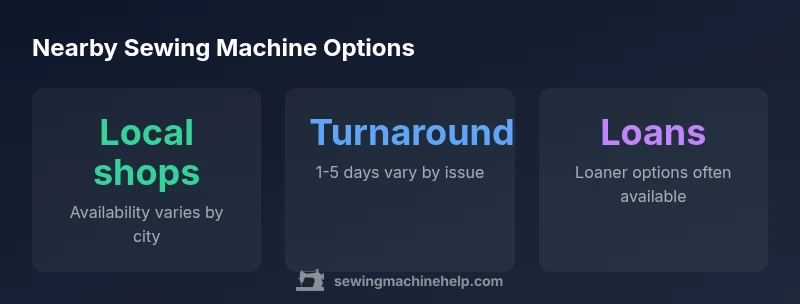
Turnaround times vary with workload, machine model, and issue severity. In most communities, a standard repair may take a few days, with longer waits for high-end or vintage machines. To set expectations, request a written estimate detailing diagnostics, labor, parts, and any shipping fees if applicable. Inquire about expedited options for urgent deadlines and whether loaner equipment is included or priced separately. If on-site or mobile service is available, compare travel fees against the time saved. Negotiation tips include asking for a fixed-price repair when possible, requesting a warranty on both labor and parts, and clarifying triggers for a return visit. Always document the scope, completion date, and guarantees. Consider a backup plan, such as using a public space with a sewing area if delays arise. The Sewing Machine Help team recommends collecting contact details and setting milestone reminders to stay on track.
Maintenance habits for machines used locally: oiling, cleaning, threading
Using a local repair or rental option often means your machine will see varied hours and environments; building simple maintenance routines helps maintain performance. Start with a light weekly wipe-down, remove lint from the bobbin area, and check for loose screws after transport. Oil only the manufacturer-recommended points; over-oiling can attract dust and degrade precision. Re-threading the machine after changes in thread type or fabric weight keeps stitch consistency. If you borrow a machine, request a brief maintenance checklist from the shop so you know how to keep it in top condition between uses. When you return the unit, note any issues you observed and ask the technician for a quick post-use check. These habits are especially valuable when your work relies on consistent seams, accurate tension, and reliable needle performance. A short, routine care plan can extend the life of a locally-used machine and minimize last-minute repairs.
Buying vs renting vs local repair options: making the right choice
For short-term projects, renting or borrowing a machine from a nearby shop can be more economical than buying new, especially if you only need specific features for a limited period. If you sew frequently or need high-end capabilities, buying may offer long-term value, provided you also factor maintenance, parts availability, and resale value. Local repair options can extend the life of a machine you already own, enabling you to stretch the time between big purchases. When evaluating costs, consider not just the sticker price but also ongoing maintenance, shipping, and downtime costs. If you live in an area with dense repair networks, you may find that a local technician offers affordable preventative service and quicker turnarounds. The choice ultimately depends on your project tempo, budget, and reliability needs. The Sewing Machine Help team recommends weighing total cost of ownership and long-term project plans to decide whether to buy, rent, or rely on local repair services.
Safety considerations and warranty implications when using local services
Working with local services requires you to assess safety, privacy, and data beyond the machine itself. Ensure that teardown, transport, or on-site repairs are performed by trained professionals who follow manufacturer guidelines and wear proper protective gear. If you are using a loaner, verify that the shop maintains properly sanitized machines and that you understand any liability related to pre-existing issues. Read warranty terms carefully: some shops cover only labor, others cover parts or both; confirm what voids warranties, such as user-induced damage or improper use. When you sign a service agreement, keep copies of all paperwork and get a clear timeline for completion. If anything goes wrong, know how to escalate within the shop or the brand’s authorized network. Clear communication and written warranties are essential elements of trustworthy local service.
Comparison of common local sewing machine service options
| Option | Typical Availability | Pros | Cons |
|---|---|---|---|
| Local repair shop | Varies by city | Fast access; local knowledge; hands-on evaluation | Parts availability varies; may have upselling |
| Authorized service center | Moderate | Genuine parts; factory-trained technicians | May be distant or have scheduling delays |
| Mobile repair technician | Growing option | Convenience; home service | Limited availability; sometimes higher cost |
Your Questions Answered
How do I find a sewing machine near me?
Start with searches for sewing machine repair near me, rental options, and authorized service centers. Check customer reviews, verify credentials, and call ahead to confirm parts availability and loaner programs. Compare at least three local options to identify the best fit for your project.
Search near you for repair or rental options, check reviews, and confirm parts. Compare a few local shops to pick the best fit.
What types of local services should I look for?
Look for shops with factory-trained technicians, genuine parts stock, clear pricing, and loaner or demo machines. Ensure they offer transparent warranty terms and a straightforward process for diagnostic services.
Choose shops with trained technicians, genuine parts, and clear warranties.
Is it cheaper to repair my machine locally or buy new?
Often, local repairs are cheaper upfront than buying new, especially for older machines. Consider long-term costs, including maintenance and potential parts availability, versus the price of a new unit with a warranty.
Repair is usually cheaper up front, but compare long-term costs with buying new.
What should I ask before accepting a loaner machine?
Ask about the loaner’s condition, expected usage period, any fees, and what happens if the loaner fails. Get written terms and understand what coverage exists for damages or downtime.
Ask about the loaner’s condition, duration, and costs in writing.
How long does a typical local repair take?
Turnaround varies by shop and issue. Request a written estimate with a timeline, and ask about expedited options if you’re on a deadline.
Ask for a written timeline and any expedited options.
Are there risks using local services with older machines?
Risks include incorrect parts, suboptimal repairs, or voided warranties. Work with reputable shops and document all work with receipts and warranties.
Work with reputable shops and keep documentation.
“Local services can save you time and keep projects on schedule, provided you verify parts, warranties, and turnaround before handing over your machine.”
The Essentials
- Identify local options with clear service boundaries
- Test a machine before committing to a loan or purchase
- Ask about parts, warranty, and turnaround upfront
- Balance proximity with the quality of service and parts