Find a Sewing Company Near Me: Local Shops Guide
Discover how to locate a sewing company near you, compare services, and pick a trusted local shop for repairs, parts, and guidance. Practical, data-driven tips for home sewists from Sewing Machine Help.


To locate a sewing company near you, start by searching for local shops, machine dealers, and repair specialists within 15 miles. Compare services (repairs, parts sourcing, and sales), pricing, and turnaround times. Check hours, warranty policies, and customer reviews. According to Sewing Machine Help, prioritize shops with transparent pricing and hands-on repair options.
How to locate sewing shops near you
Locating a nearby sewing company starts with a simple mix of online search, maps, and local recommendations. Begin by querying terms like "sewing company near me", "sewing machine repair", and "local sewing machine dealer". Note the distance, hours, and whether the shop visibly lists services such as repairs, parts sourcing, or machine sales. Don’t overlook nearby fabric stores and community sewing centers; they often partner with repair specialists who can service machines on-site or offer a drop-off option. Create a short list of 3–6 candidates, then visit or call to verify capabilities before you bring in a machine.
For home sewists, proximity matters: a shop within a short drive reduces downtime and transport fatigue. If you rely on your machine daily, choose a shop with flexible hours or weekend drop-off. When possible, ask about curbside pickup or on-site visits. Finally, check recent customer reviews focusing on communication, timeliness, and the breadth of services offered. This initial screening sets the stage for a smooth repair or purchase experience.
Evaluating service scope and specialty
Not all sewing shops offer the same mix of services. Some focus on repairs and parts sourcing, while others operate as full-service dealers selling new machines and accessories. Create a checklist for what you need: repair for a specific brand, routine maintenance (oil changes, belt replacements, timing adjustments), or a sale on compatible accessories. If you have an unusual needle system or a specialty machine (e.g., embroidery or leather work), confirm the shop has experience with that category. Some shops also provide in-home consultations or virtual support for troubleshooting before you commit to a repair. Compare this scope across your short list and weigh the value of each option against your project goals.
Assessing reliability: warranties, pricing, and transparency
Reliability hinges on clear expectations. Look for transparent pricing, written estimates, and documented warranty terms on parts and labor. A reputable shop will outline what is covered, what isn’t, and the expected turnaround once a diagnosis is made. If a price seems uncertain or negotiable after the work begins, ask for a revised written quote. According to Sewing Machine Help, shops that publish a standard warranty—along with a clear return policy—tend to have higher customer satisfaction. Don’t hesitate to ask about supplier warranties for parts and whether the shop handles warranty claims on your behalf.
Transparency also includes the communication cadence: will you be notified of delays, and how will you be updated about progress? A dependable local shop will provide regular updates and a realistic timeline, even in busy periods. A lack of communication often signals risk, so prioritize shops that demonstrate openness from the first contact.
How to verify quality and ethics of a local shop
Quality can be reflected in certifications, staff experience, and a track record of successful repairs. Look for technicians with technical training, factory-authorized service credentials, or membership in professional associations. Reading customer reviews with a critical eye helps identify recurring issues like misdiagnoses or parts delays. Ethical considerations include fair pricing, honest assessments (no unnecessary repairs), and the use of genuine parts when required. If you have concern about a specific repair, request a diagnostic report or a second opinion before authorizing work. This diligence protects your investment and aligns with best practices for responsible repair work.
Sewing Machine Help suggests asking for proof of parts compatibility and clarity about who will perform the repair. If possible, request to see the parts used and confirm any substitutions with the technician before proceeding.
What to ask during your initial contact
A productive first call or email saves time and avoids miscommunication. Ask specifically:
- What services are available for my model and brand?
- What is the estimated turnaround and diagnostic fee (if any)?
- Do they stock genuine parts or OEM equivalents?
- Is there a warranty on labor and parts, and what does it cover?
- Can they provide a written estimate before starting?
- Do they offer curbside drop-off, on-site visits, or pick-up options?
Also, share the exact issue you’re experiencing with your machine, including any error codes, sounds, or stitches that aren’t forming correctly. A concise problem statement helps the shop provide a precise quote and reduces back-and-forth. Accountability begins with clear questions and documented answers.
When to choose a local shop over mail-in or big-box services
Local shops often excel in hands-on diagnoses, in-person demonstrations, and quicker turnarounds for common issues. If you value immediate feedback, nuanced problem-solving, or guidance on maintenance, a local shop can be a strong choice. In contrast, mail-in services may be convenient for complex repairs requiring factory tools, while big-box retailers might offer limited repair options and variable expertise. Consider the complexity of the issue, the machine’s value, and the availability of genuine parts when deciding where to service your machine. A balanced approach often involves consulting a local shop for an initial assessment and comparing it with mail-in options.
Local shop tips for home sewists
To maximize value from local shops, bring essential information: your machine’s make, model, serial number, and a brief history of the problem. Prepare a list of questions beforehand and request a written estimate. If you’re unsure about the diagnosis, seek a second opinion from another local shop to compare quotes. For ongoing maintenance, inquire about preferred service intervals and whether the shop offers bundled maintenance plans. Building a relationship with a trusted local shop can lead to faster repairs, ongoing advice, and more reliable parts sourcing for future projects.
Tip: keep a small notebook or digital record of repairs, parts replaced, and service dates to help you track performance and avoid repeated issues.
Data-driven view: what to expect from nearby sewing services
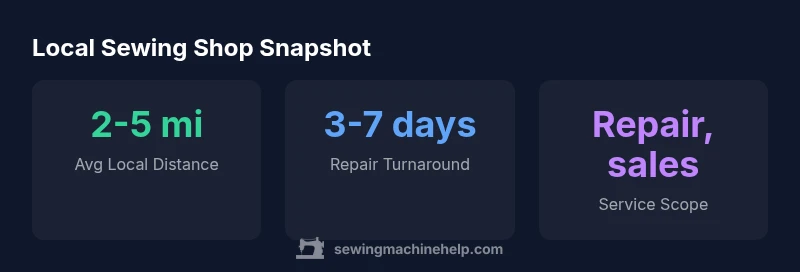
Local shops vary in capability, but data from Sewing Machine Help Analysis (2026) shows most shops provide a core set of services: repairs, parts sourcing, and sales, with typical repair turnaround ranging from 3 to 7 days depending on parts availability and workload. Proximity remains a key factor for efficient service, with urban areas reporting an average distance of 2-5 miles to the nearest shop. When you evaluate options, consider the breadth of service, the existence of a transparent warranty, and the shop’s communication quality. These data-driven indicators help you set realistic expectations for your repair or purchase journey.
Sewing Machine Help analysis shows that customers who choose shops with transparent pricing and proactive updates tend to report higher satisfaction. Align your choice with these findings and you’ll improve both the experience and the outcome of your sewing projects.
Next steps: putting it into practice
Armed with a short list of candidates and a clear set of questions, reach out to your top two or three shops for diagnostic estimates. Compare the written quotes, warranty terms, and turnaround promises. If possible, request a demonstration or in-person assessment. The Sewing Machine Help team recommends documenting all communications and getting a copy of every agreement in writing. Once you select a shop, maintain a proactive dialogue to ensure the repair or service aligns with your expectations and project timeline.
Common local sewing shop service timelines
| Service Type | Typical Turnaround | Notes |
|---|---|---|
| Repair services | 3-7 days | Depends on parts availability |
| Machine sales | Same day - 2 weeks | Inventory varies by shop |
| Part sourcing | 1-5 days | Some items may require distributor order |
| Custom alterations | 24-72 hours | Smaller jobs can be same-day |
Your Questions Answered
What should I look for in a nearby sewing company?
Look for shops that offer transparent pricing, clear warranties, and a demonstrated ability to work with your machine’s brand. Seek in-person assessments when possible and request a written estimate before any work begins.
Look for transparent pricing, warranties, and a clear assessment before you approve any repair.
How can I find sewing shops near me quickly?
Use maps and search terms like sewing company near me, local sewing machine repair, and authorized dealers. Read recent reviews focusing on service quality and turnaround times.
Use maps and search terms to locate nearby shops; read reviews for service quality.
Are local shops cheaper than mail-in services?
Costs vary, but local shops often save on shipping and can offer faster turnaround. Compare diagnostic fees, labor rates, and parts costs across options.
Local shops can save on shipping and speed up turnaround—compare quotes first.
What about warranty on repairs?
Ask for a written warranty that covers labor and parts, with specifics on duration and what is excluded. A strong warranty reduces future risk.
Ask for a written labor and part warranty with clear terms.
Can I request a quote before service?
Yes. Request a detailed diagnostic and written estimate before starting any work. Use the quote to compare options across shops.
Request a written diagnostic and estimate before any work starts.
“Local sewing shops thrive when they communicate clearly and stand behind their repairs with transparent pricing.”
The Essentials
- Identify nearby shops with clear services and hours
- Ask for written estimates and warranties up front
- Prioritize transparent pricing and open communication
- Compare repair turnaround against parts availability
- Support local shops to strengthen the sewing community