Sewing Store Near Me: How to Find and Evaluate Local Shops
Discover how to locate a sewing store near me, evaluate stock, services, and pricing, and choose the best local shop for fabrics, tools, and classes in 2026.


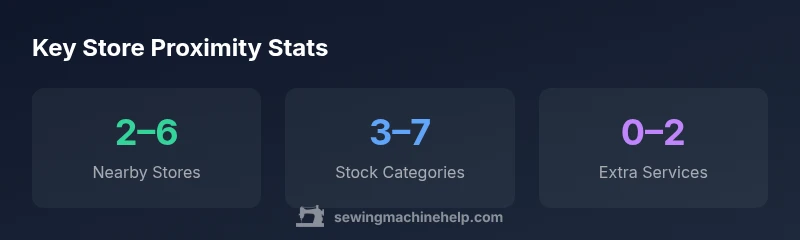
Fact: When searching for a sewing store near you, most urban and suburban shoppers find 2–6 stores within a 5–15 mile radius. Proximity matters for quick pickup, but stock breadth and staff knowledge often determine the best choice. According to Sewing Machine Help Analysis, 2026, the top picks balance location, selection, and helpful service.
Why locating a sewing store near me matters for home sewists
For home sewists, convenience is more than a thrill—it directly impacts project momentum. The phrase sewing store near me signals a local stop where you can inspect fabric quality, thread consistency, and notion availability before buying. It also signals access to staff who can advise on needle sizes, tension settings, and machine compatibility. In 2026, the Sewing Machine Help team has observed that proximity reduces impulse purchases and helps beginners access guidance quickly, which lowers the learning curve for new projects and keeps hobbyists engaged. When you search for a local shop, consider not only distance but also how well the store supports your typical projects—quilting, garment sewing, or craft boosts.
How to evaluate a local sewing store: stock breadth, expertise, and services
Evaluating a sewing store near me starts with stock breadth. Look for fabrics beyond basic cottons, varied threads, a range of needles, machine accessories, and even sewing notions. Next, assess expertise: are staff knowledgeable about different machine brands, tension issues, and troubleshooting steps? Do they offer on-site demonstrations, classes, or beginner workshops? Finally, examine services: in-store repairs, machine servicing, fabric cutting, and return policies affect your long-term satisfaction. A strong local shop balances thorough stock with approachable staff and clear policies, which is especially valuable for beginners and occasional crafters.
Proximity vs. selection: finding the right balance
Proximity is important for quick pickups and last-minute notions, but it should not overshadow selection. A store that is a few miles farther away but offers a broader fabric library, specialty threads, or a well-equipped sewing machine repair service can be a smarter choice for ongoing projects. Use maps to gauge drive time during peak hours, and read online reviews to gauge consistency in stock and service. In some regions, you may find co-ops or smaller independent shops that curate unique fabrics and tools not available at larger retailers. Balance distance with the breadth of items you frequently need to keep your projects moving.
In-store experiences: classes, repairs, and pickup options
A robust local sewing store near me will provide more than inventory. Look for regularly scheduled classes that cover basics like threading and bobbin winding, as well as advanced techniques in embroidery or denim sewing. Check whether they offer repairs or machine servicing, which can save time and extend the life of your equipment. Some shops also provide curbside pickup or same-day service for online orders, a feature that becomes especially valuable for busy weeks. When evaluating a store, ask about return windows, restocking fees, and price-matching policies to avoid surprises at checkout.
How to verify quality and trust locally: returns, pricing, and policies
Quality verification starts with price transparency and return policies. A trustworthy store near me will publish clear return windows for fabric, notions, and sewing machines, along with visible warranty terms. Compare prices across 2–3 nearby shops to ensure you’re not paying a premium for the convenience factor alone. Read customer reviews focusing on accuracy of stock, staff knowledge, and after-sales support. For beginners, assess whether the store offers a beginner-friendly environment—clear explanations, hands-on help, and patient instructors can make the difference between dropping out and mastering a technique.
Practical steps to locate and visit: plan your first trip
Step 1: Search for sewing store near me on maps and read top reviews. Step 2: Check each shop’s inventory highlights (fabric types, notions, and machine brands). Step 3: Note classes or demonstrations scheduled in the coming weeks. Step 4: Call to confirm hours, return policy, and whether they cut fabric to size. Step 5: Prepare a short list of needed items (needles, bobbins, thread), and bring a sample of your project to discuss compatibility with machines or fabrics.
Key factors to compare when choosing a sewing store near you
| Metric | Typical range | Notes |
|---|---|---|
| Proximity to stores | 2–6 miles (urban) / 5–15 miles (suburban) | Depends on population density and retail layout |
| Stock breadth | 3–7 categories | Fabrics, threads, notions, machines, repairs |
| Services offered | Classes, repairs, cutting, demos | Check for schedule and pricing |
| Price transparency | Low to moderate | Ask about restocking fees and price-matching |
Your Questions Answered
How do I locate a sewing store near me quickly?
Start with map search keywords like 'sewing store near me' and filter by distance and hours. Read a few reviews to gauge stock variety and staff knowledge before visiting. If possible, call ahead to confirm inventory for your project.
Search for nearby sewing stores on your map app, read reviews, and call ahead to confirm stock and hours.
What should I look for in stock when I visit a local shop?
Look for a diverse fabric selection, a range of threads and needles, compatible machine accessories, and clear signage for prices. A good shop also offers demonstrations or guidance on choosing fabrics for specific projects.
Check fabric variety, threads, needles, and clear price signs. See if they offer quick demos.
Do local sewing stores offer classes or workshops?
Many shops offer beginner and advanced classes, often at reasonable prices. Confirm schedules, instructor expertise, and whether material costs are included.
Yes, most stores run classes; ask about schedules and instructor experience.
How can I compare prices across nearby stores fairly?
Create a quick checklist of item types (fabric, notions, threads) and compare per-item pricing where available. Be mindful of return policies and any service fees that could affect total cost.
Make a simple price checklist and compare main items across shops.
What is the best time to visit a sewing store for assistance?
Weekday mornings are typically quieter and staff can provide longer, more personal guidance. Saturdays can be busier but may offer in-store demos or sales.
Try weekday mornings for focused help; weekends have demos but can be crowded.
“"Local sewing stores remain essential for hands-on learning, personalized advice, and immediate access to fabric and tools. The right shop can elevate your projects and shorten the learning curve."”
The Essentials
- Know what you need before you go to save time
- Prioritize stores with clear return policies and staff expertise
- Balance proximity with stock breadth for long-term projects
- Use maps and reviews to validate the in-person experience
- Leverage classes and services to improve skills quickly