Sewing Machine Near Me Second Hand: Practical Buying Guide
A practical guide to finding a second-hand sewing machine nearby, evaluating condition, testing stitches, and negotiating a fair price with confidence for home sewists.


To find a sewing machine near you second hand, start with local marketplaces, thrift stores, and repair shops within a reasonable radius. Test the machine’s stitching, run it at multiple speeds, and listen for unusual noises. Check for missing parts, the belt, and the power cord, and confirm a fair return policy before buying.
Why buying a used sewing machine near you makes sense
According to Sewing Machine Help, buying a locally available second-hand sewing machine offers immediate hands-on testing, easier negotiations, and reduced risk from shipping damage. For home sewists, a nearby purchase minimizes downtime and lets you verify basic functionality in person. A well-chosen used machine can deliver reliable performance for hobby projects, small alterations, and learning new techniques. When you shop locally, you can inspect the exterior, test essential stitches, and evaluate how the machine feels in operation. This approach also supports community sustainability by extending the life of durable tools that might otherwise sit unused in storage.
How to locate 'sewing machine near me second hand' listings
Finding second-hand machines starts with a few targeted searches and a couple of trusted sources:
- Local online marketplaces and classifieds (filter by distance and model type).
- Reputable repair shops and sewing centers that sell refurbished units.
- Thrift stores and community centers that occasionally stock sewing machines.
- Community groups or fabric/fashion clubs that buy, sell, or trade equipment.
Tips:
- Use keywords like "used sewing machine" and include your city or neighborhood.
- Check seller ratings and photos, request a quick video test if in doubt.
- Set a price range before messaging to avoid lowballers and scams.
What to inspect in a second-hand sewing machine
Before buying, perform a thorough visual and functional inspection. Focus on:
- Exterior condition: scratches, rust, and signs of moisture.
- Model and age: note the model number, check if the machine matches common parts lists.
- Belt and drive system: look for cracks or looseness; ensure the belt spins smoothly.
- Needle plate, feed dogs, and tension: check for uneven stitches or skipped stitches during a test run.
- Motor and wiring: listen for loud grinding, humming, or irregular stops.
- Accessories: bobbins, feet, screws, and manual; missing pieces raise overall cost risk.
- Spares and service history: ask any available maintenance records or prior professional service summaries.
Testing the machine: stitches, speed, and sound
A structured test run helps separate solid buys from lemons. Steps:
- Thread the machine correctly and test with multiple fabrics.
- Run at slow and medium speeds, checking stitch length, consistency, and tension.
- Do a zigzag or decorative stitch to assess versatility.
- Feed fabric under the presser foot to confirm smooth movement.
- Listen for unusual noises or binding; power up and down to gauge start/stop response.
- Check the bobbin winding, thread path, and take-up lever action. If possible, perform a quick buttonhole and zigzag test to gauge overall performance.
Negotiating price and buying safely
Negotiation should be polite and data-driven. Start with a reasonable price based on model, age, and condition, then explain any observed wear or missing parts to justify a lower offer. If you intend to haggle, propose a bundle deal for accessories or a local service credit (e.g., a quick tune-up). Always request a simple, written return policy and keep payment traceable. If a seller insists on cash only or refuses to test, consider walking away and revisiting other listings.
Where to buy: local classifieds, repair shops, and community groups
Local avenues often offer more buyer protection than anonymous online marketplaces. Repair shops and sewing studios frequently refurbish machines and provide limited warranties. Classifieds at libraries or community centers can yield surprisingly good finds with minimal risk when you inspect on site. Community groups and fabric stores sometimes host swap events that permit face-to-face testing and negotiation in a low-pressure setting. When possible, request a demonstration in-store or at the seller’s home to observe real-world operation.
Caring for a used machine: maintenance tips
After purchase, establish a basic maintenance routine to extend life. Wipe away lint, oil as per the user manual, and replace worn needles promptly to prevent fabric damage. Store the machine in a dry, dust-free environment and cover it with a breathable cover. Create a simple tune-up schedule—cleaning every 6-12 months and oiling according to the manufacturer’s guidance. Periodically check belt tension and needle-type compatibility with projects. A gently used machine can perform reliably with consistent, minimal care.
Overview of used sewing machine buying considerations
| Aspect | Estimated Range | Notes |
|---|---|---|
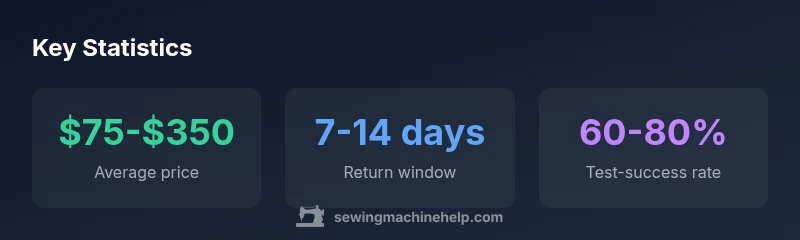
| Price range | $75-$350 | Varies by model and condition |
| Depreciation window | 20%-50% first year | Depends on demand |
| Common issues | Bobbin tension, feed dogs | Test during operation |
| Parts availability | Good for most brands | Important for older models |
Your Questions Answered
What should I check before buying a used sewing machine?
Always inspect the exterior for wear, test stitch quality on multiple fabrics, verify the motor runs smoothly across speeds, and ensure the bobbin and needle plate function properly. Confirm accessories and a clear return policy before purchase.
Inspect the exterior, test stitches on different fabrics, and ensure the motor runs smoothly across speeds. Make sure accessories are complete and a return policy exists.
Is it safer to buy from a repair shop or a private seller?
Repair shops often refurbish machines and provide limited warranties, making them safer for beginners. Private sellers can offer lower prices but carry higher risk without testing or documentation.
Repair shops are generally safer for beginners due to refurbishments and warranties, while private sellers may be cheaper but riskier.
How can I verify model compatibility and parts availability?
Note the exact model number, research its parts list, and confirm online that spare parts are still available. If the model is older, ask about compatibility with common presser feet and bobbin types.
Check the exact model number and research parts availability to ensure future repairs are feasible.
What are typical prices for used machines?
Used machine prices vary by brand, age, and condition. Expect a broad range; compare multiple listings to determine a fair market value for the specific model you want.
Prices vary widely by model and condition; compare several listings to understand a fair value.
Should I consider warranties or return policies on used machines?
Yes. Prefer machines with a short return window and, if possible, a light warranty or service offer. Documentation or a written note from the seller adds confidence.
Always prefer a return window and any warranty or service offer when buying used.
“Used sewing machines can offer solid performance when chosen with care and proper maintenance.”
The Essentials
- Test before you buy a used machine
- Inspect motor, belt, and electrical cord
- Check return policy and receipts
- Compare nearby listings to gauge market value
- Ask for provenance or service history