Sewing Machine Retail Near Me: A Practical Guide for Shoppers
Discover how to locate reliable sewing machine retailers near you, compare in-store inventories, test machines hands-on, and choose with confidence using tips from Sewing Machine Help.


Definition: 'sewing machine retail near me' refers to physical stores in your locality that sell sewing machines, provide demonstrations, and offer in-store service and warranty options. For home sewists, starting with a local search helps you test drive machines, compare brands, and access after-sales support. This guide outlines how to locate dependable retailers and maximize your in-store visits.
Why local sewing machine retail near me matters
For many home sewists, the journey to a satisfying machine begins with a hands-on test and a trusted local source. Local retailers offer immediate access to demonstrations, a chance to compare brands side-by-side, and in-person conversations that reveal real-world performance. Hands-on testing helps you evaluate stitch quality, noise, and ease of use, while nearby service centers simplify maintenance and warranty support. According to Sewing Machine Help, proximity also means quicker issue resolution if something goes wrong, and you can build a relationship with staff who understand your projects and skill level. When you search for sewing machine retail near me, you’re not just buying a machine—you’re investing in ongoing support for your projects, from beginner alterations to advanced quilting.
In-store visits also let you assess the surrounding ecosystem: accessibility of parts, availability of accessories, and whether the store carries your preferred brands. Local retailers tend to stock dedicated feet and presser feet kits, bobbins, needles, and specialty fabrics that fit your current projects. Additionally, working with a nearby shop can shorten turnaround times for repairs, calibrations, and tune-ups, which is especially valuable if you rely on your machine for deadlines or recurring projects.
How to evaluate local retailers
When you search for sewing machine retail near me, you’ll find a mix of small independent shops and larger retail venues. To choose wisely, assess the following: (1) Brand variety: Does the store carry the brands you trust and want to try? (2) Staff expertise: Are there experienced employees who can explain features without pressure? (3) In-store services: Do they offer on-site demonstrations, setup assistance, and basic repairs? (4) Warranty options: Can you transfer or validate manufacturer warranties through the retailer, and what’s the return policy after you test a model? (5) Access and hours: Are the location and hours convenient for regular visits? A balanced mix of these factors often correlates with higher customer satisfaction. Sewing Machine Help’s approach emphasizes stores that combine knowledgeable staff with hands-on demonstrations and solid after-sales support.
Hands-on testing: what to test on a machine
When you sit at a sewing machine in-store, run through a quick checklist to gauge usability and performance. Test several stitches (straight, zigzag, decorative), thread tension, automatic buttonholes, feed dog grip, and presser foot stability. Pay attention to noise, vibration, and smoothness of operation at different speeds. If the store offers warranty-backed display units, test them for at least 10-15 minutes to simulate real work sessions. Don’t hesitate to request a brief project run-through (like a small hem or seam) to see how the machine handles your typical fabric types. If you have specific materials (denim, jersey, leather), bring a sample to the test so you can assess compatibility directly.
Service, warranty, and repair options
Local retailers often provide more than just machines: they may offer setup, ongoing maintenance, and in-house repair services or preferred partners. Clarify whether the store supports warranty transfer or if you must go directly through the brand. Ask about part availability and expected turnaround times for common repairs. A retailer with a robust service pipeline can save you time and money over the life of the machine. If service is primarily outsourced, verify who handles repairs and what the warranty implications are. The right local partner makes future maintenance predictable and affordable.
Price, promotions, and bundling tips
Pricing at local shops can vary widely, but you gain advantages through demonstrations, bundled accessories, and trade-in opportunities. Look for bundled deals that include essential items like extra bobbins, specialty needles, and a basic foot kit. Request a side-by-side comparison with similar online options to evaluate total value, not just sticker price. In-person negotiation can yield favorable terms, especially when purchasing additional items such as fabric, notions, or a sewing cabinet. Always confirm the exact model, inclusions, and any limits on returns before finalizing a sale.
Balancing online and local shopping
Online options complement local retailers by widening brand availability and enabling easy price comparisons. Use the online listings to identify candidate machines, then verify real-world performance in-store. Local stores often price match or offer exclusive in-store promotions, extra warranties, or free setup. The best approach combines the accuracy and convenience of online research with the confidence of test-driven in-store purchases. Sewing Machine Help recommends a hybrid strategy: shortlist machines online, then schedule hands-on testing at nearby shops to confirm fit before buying.
A practical 6-step method to locate stores
- Define your needs: fabric types, projects, and skill level.
- Search locally for sewing machine retailers and filter by brands you want to test.
- Check store websites for in-store demos, hours, and service options.
- Call ahead to confirm demonstration machines exist and are ready for testing.
- Visit multiple shops to compare inventory and staff expertise.
- Decide based on test results, service options, and total value—not just price.
Sewing Machine Help's practical recommendations
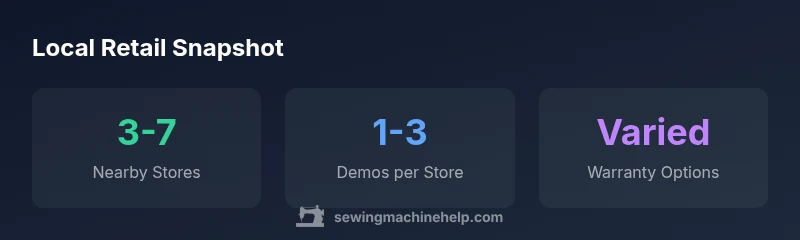
The Sewing Machine Help team emphasizes choosing a local retailer with hands-on testing, transparent warranty policies, and accessible repair services. Local shops that balance a broad brand mix with patient, knowledgeable staff tend to deliver the best long-term value for home sewists. If your map shows limited nearby options, broaden your search radius slightly and call ahead to session-test machines you’re interested in. A proactive approach reduces the risk of buyer’s remorse and helps you build a reliable support network.
Comparison of local retail options
| Store Type | Inventory Variety | In-Store Testing | Warranty Options |
|---|---|---|---|
| Local Retailer | Wide brand mix | Yes (live demos) | In-store warranty options vary by brand |
| Big-Box Outlet | Large selection across brands | Limited hands-on demos | Store warranty often tied to manufacturer |
| Online Retailer (local pickup) | Broad catalog, may require test at home | Limited testing on purchase | Warranty usually handled online |
Your Questions Answered
What qualifies as a local sewing machine retailer?
A physical store within your area that carries sewing machines, offers demonstrations, and provides after-sales support and warranty help. Local retailers often deliver personalized guidance and quicker service than online-only options.
A local retailer is a brick-and-mortar shop nearby that sells machines, demonstrates features, and offers service and warranty support.
Should I negotiate prices in-store?
Yes, many local shops have room to negotiate on bundles, accessories, or service packages. Compare offers across several stores and ask about current promotions or loyalty discounts. Always verify what is included in the deal.
You can often negotiate bundles or accessories in-store, especially if you’re buying more than one item.
Is it worth buying refurbished machines locally?
Refurbished machines can offer good value if they come with a warranty and after-sales support. Check the refurbisher’s policy, battery of tests performed, and whether parts are replaced. Ensure you have a clear return window.
Refurbished machines can be a good deal if they include a warranty and clear testing.
How can I verify warranty transfer when buying locally?
Ask the salesperson to document the transfer of the warranty, provide a receipt, and confirm any registration steps with the manufacturer. Keep copies of all documentation for future service.
Make sure the warranty is properly transferred and you have documentation for future service.
How do I compare prices locally vs online fairly?
Compare sticker prices plus what you get in-store, such as demonstrations, setup, and service. Include shipping, if buying online, and factor in convenience and potential in-person support.
Compare total value—price plus in-store support and test opportunities.
“Hands-on testing helps you select a machine that fits your projects and budget, while dependable local service ensures long-term success.”
The Essentials
- Test multiple stores to compare stock and service
- Prioritize hands-on demos and staff expertise
- Ask about warranty transfer and service options
- Balance price with total value and support
- Combine online research with in-store testing