How to Choose a Sewing Machine to Make Clothes at Home
Learn how to select a garment-ready sewing machine, set up for woven and knit fabrics, and complete your first clothing project with practical, beginner-friendly steps and troubleshooting tips.


If you want to sew clothes at home, you need a sewing machine to make clothes that handles woven and knit fabrics with control and reliability. This quick guide shows how to pick a garment-ready machine, set it up for different fabrics, and avoid common stitching mistakes so you can finish projects confidently. According to Sewing Machine Help, prioritize stitch versatility, easy threading, and dependable feed for long-term garment projects.
Why a garment-focused sewing machine matters
For home sewists who want to make clothes, choosing a sewing machine designed with garment construction in mind makes a big difference in speed, accuracy, and finish. A garment-ready machine offers features like adjustable presser-foot pressure, stable feed for multiple fabric types, and reliable stitch quality across woven and knit fabrics. It reduces fabric puckering, helps maintain consistent seam allowances, and supports common garment techniques such as zipper insertion, edge finishing, and topstitching. According to Sewing Machine Help, prioritizing reliability, ease of threading, and flexible stitch options is the foundation for successful clothing projects. This machine will translate into real-world results, from fitting a shirt to finishing a pair of trousers. When you start, focus on the core capabilities that reduce frustration: a strong motor (not a toy-level one), good visibility on the tension disc, and a layout that lets you switch feet without losing time. The right machine helps you stay motivated, especially when tackling multiple garments in a season.
Core features that support garment making
A garment-focused machine should cover both stability and versatility. Look for a solid feed mechanism that handles multiple layers without shifting, plus a selection of stitches beyond a straight stitch: a zigzag for finishing edges, a stretch stitch for knits, and a reliable topstitch option for visible seams. A walking foot is particularly helpful for slippery fabrics like silk or satin, while an adjustable presser-foot pressure helps you dial in how fabric feeds under the needle. Ensure the machine supports standard and specialized feet (zipper, buttonhole, blind hem) and offers a convenient thread path that minimizes tangles. For beginners, a machine with clear threading guides and a straightforward bobbin system reduces common mistakes. While you don’t need a high-end model to start, a garment-ready setup should feel intuitive and forgiving as you learn.
Mechanical vs. computerized: which path suits garment clothes
Mechanical machines are often praised for simplicity and reliability, while computerized models offer a wider stitch library and automated features. For many home sewists starting with clothes, a reliable mechanical machine with adjustable stitch length and width paired with at least a general-purpose zigzag foot is enough to build confidence. If you anticipate frequent topstitching, decorative stitching for garments, or complicated buttonholes, a mid-range computerized model can be a worthwhile investment. The key is to balance features with your current skill level and future goals. Avoid overpaying for features you won’t use in the first year, but do ensure your machine supports a range of fabrics and foot types you’ll encounter in garment projects.
Workspace setup and fabric prep for garment sewing
A clean, well-lit workspace helps you focus on precise seams. Reserve a sturdy table, an adjustable chair, and a quiet moment for pattern-reading and cutting. Prepare fabrics by washing and preshrinking when appropriate, then press and lay out patterns with a grain line parallel to the table edge. Organize your tools: scissors, pins, tailor chalk, measuring tape, and a seam ripper close at hand. Pre-thread a few bobbins with the most common thread types you’ll use (polyester for durability, cotton for natural fibers) and keep extra needles sized for both woven and knit fabrics. When you take fabric to the machine, test a short seam on scrap fabric to verify stitch density and tension before committing to your garment.
Stitching strategies for woven vs knit fabrics
Wovens require a balanced tension and stable straight seams, with a smaller zigzag as a safeguard for edge finishing.Knits benefit from a stretch or narrower zigzag stitch to allow fabric to relax without distorting. Use a ballpoint or stretch needle for knits to minimize skipped stitches and runs. Adjust the presser-foot pressure and stitch length according to fabric weight: finer fabrics respond to lighter pressure and shorter stitches, while heavier fabrics benefit from a moderate feed and longer stitches. Always test on a scrap piece before sewing the actual garment, and consider stabilizers for delicate fabrics to prevent stretching while sewing. These practices help ensure consistent seams, crisp hems, and a professional finish.
Pattern planning and fabric selection for garments
Successful garment sewing begins with careful planning. Read the pattern envelope to determine fabric recommendations, notions, and notions. Check the fiber content and stretch properties to assign the right needle type and sewing machine settings. Align pattern pieces with the fabric grain to avoid twisting at seams, and use a fabric that matches your pattern instructions for the best drape and performance. A simple muslin test garment can reveal fit issues before you commit to your fashion fabric, saving time and money in the long run.
Basic maintenance and care to extend machine life
Regular maintenance keeps your sewing machine performing well over many projects. Clean lint from bobbin area and feed dogs after sessions, oil moving parts per the user manual, and change needles regularly—especially when switching fabric types. Store threads and needles separately to prevent corrosion or rust, and always unplug the machine before performing any maintenance. A quick wipe-down after each use prevents dust buildup and prolongs the life of the foot pedal and electrical components. Keep the machine in a dry environment away from direct sunlight to minimize belt wear and plastic brittleness over time.
Tools & Materials
- Sewing machine with garment-ready features(Prefer adjustable presser-foot pressure and a selection of feet (zipper, walking, narrow hem).)
- Power cord and foot pedal(Essential for normal operation and speed control.)
- Presser feet set(Include standard, zipper, walking, and blind-hem feet.)
- Needles (universal, ballpoint for knits, and sharps for wovens)(Carry sizes for woven (e.g., 70/10, 80/12) and knit fabrics (ballpoint). Replace regularly.)
- Bobbin(s) and bobbin winder(Use appropriate thread weight; keep spares.)
- Thread assortments (polyester for durability, cotton for natural fibers)(Select fibers matching fabric content.)
- Scissors for fabric and for paper patterns(Dedicated fabric scissors stay sharp longer.)
- Pins, clips, and tailor chalk(Use glass-headed pins for easy removal; clips for bulky fabrics.)
- Measuring tape and rotary cutter (optional)(Helps with pattern alignment and cutting accuracy.)
- Iron and ironing board(Pressing is crucial for garment finish.)
- Seam ripper(For quick corrections without damaging fabric.)
- Fabric stabilizers or interfacings(Useful for collars, cuffs, and button plackets.)
- Sewing machine oil (if applicable)(Follow manual; not all models require oiling.)
Steps
Estimated time: 2-4 hours
- 1
Choose and test the garment-ready machine
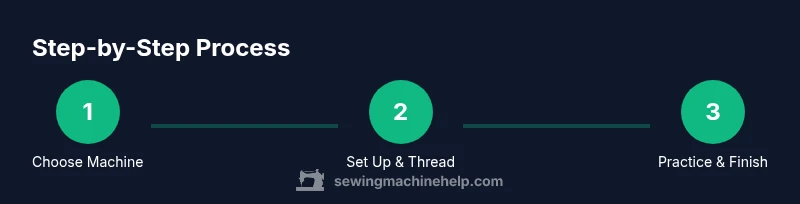
Identify a machine with diverse stitches, stable feed, and good support for both woven and knit fabrics. Test stitch quality on scraps, switch feet, and confirm easy threading. Take notes on how the machine handles multiple layers and different fabric weights.
Tip: Ask to sew a short seam at various speeds to gauge smoothness and thread tension. - 2
Set up and thread
Wind a bobbin, thread the upper path, and thread the needle with a scrap of fabric in mind. Use the manual to confirm threading order and ensure the bobbin is wound evenly with no loose threads. Practice quick stops and starts to verify stability.
Tip: Always pull threads to the back after threading to avoid knots. - 3
Practice stitches on scrap fabric
Sew straight stitches on a scrap, then switch to a zigzag or stretch stitch if available. Test on woven and knit scraps to observe how the machine handles different fabrics. Adjust stitch length and width as needed.
Tip: Keep scrap edges aligned to avoid skewing seams. - 4
Prepare a simple garment sampler
Cut a small muslin test panel with basic seams (center front, side seam, and a hem). This provides a risk-free project to practice precise seam allowances and pressing techniques before working on your actual garment fabric.
Tip: Use a lighter muslin to learn and then switch to fashion fabric with confidence. - 5
Sew a basic seam on fashion fabric
Lay pieces with right sides together and sew a straight seam at a standard 5/8 inch/1.5 cm allowance. Use pins to hold, press the seam, and check for even spacing, then finish the edge with a zigzag or serger if available.
Tip: Take your time on corners and pivot points; slow down at seams to maintain alignment. - 6
Finish hems and press thoroughly
Choose a suitable hem finish for the fabric (blind hem, narrow hem, or using a cover stitch if available). Press each seam to set and shape the garment. Check fit on a dress form or yourself.
Tip: Press from the wrong side first to avoid shine on delicate fabrics. - 7
Assess fit and adjust tension
Test the garment mock-up on real fabric, evaluate seam placement, and adjust tension or needle type if needed. Re-sew any areas with issues, and repeat the test until the result matches your expectation.
Tip: Document changes to mirror settings for future projects.
Your Questions Answered
What features should I look for in a sewing machine to make clothes?
Look for adjustable stitch length and width, reliable feed, multiple presser feet, and a balance of power and control. A walking foot and stretch stitch options are especially helpful for garment work. Choose a model that feels comfortable to use during longer sewing sessions.
Key features include adjustable stitch length, reliable feed, and a walking foot for slippery fabrics. Pick a model that feels comfortable for long sewing sessions.
Can a beginner sew garments on a basic mechanical machine?
Yes. A basic mechanical machine with essential stitches and a straightforward threading path is often enough to start garment sewing. As you gain experience, you can expand to more stitches or a few computerized features if desired.
Absolutely. A simple mechanical machine can handle beginner garment projects, and you can upgrade later if you need more features.
Do I need an overlock/serger to finish garments?
A serger isn’t strictly required for home garment sewing. Finishing edges with a zigzag stitch or a narrow overcast stitch on your regular machine can yield clean results. A serger is helpful for professional-looking edges on knit fabrics.
Not required, but handy for a clean edge on knits and quick finishing.
What needles are essential for garment sewing?
Carry universal, ballpoint for knits, and sharp needles for woven fabrics. Changing needles frequently—especially after a project change—helps prevent skipped stitches and fabric snags.
Have universal, ballpoint for knits, and sharp needles for woven fabrics; change regularly.
Is a computerized model necessary for home garment making?
A computerized model isn’t strictly necessary for most home garment projects. It can offer convenience and a wider stitch library, but beginners often benefit more from a solid mechanical machine with dependable stitching.
Not essential; a good mechanical machine works well for most beginners.
How often should I service my sewing machine?
Regular cleaning after projects and periodic servicing as recommended by the manufacturer help maintain performance. Wipe lint, oil moving parts if required, and keep the area around the bobbin clean.
Clean and service according to the manual, especially after heavy use.
Watch Video
The Essentials
- Choose a garment-ready machine with versatile stitches.
- Practice on scraps before working on your project.
- Match fabric type with needle and foot choice for best results.
- Press as you sew to achieve clean finishes.
- Maintain the machine to extend its life and reliability.