Used Long Arm Quilting Machines for Sale: Buyer’s Guide 2026
Explore practical guidance for buying used long arm quilting machines for sale in 2026. Learn how to evaluate condition, price ranges, maintenance history, and warranty options to make a smart purchase.


Used long arm quilting machines for sale offer cost-effective access to professional quilting capability, but buyers should verify frame size, machine type, and maintenance history. Look for a solid motor, smooth fabric feed, clean rails, and a complete accessory bundle. With careful inspection, a used long arm can deliver dependable performance at a fraction of new-machine prices.
What is a long-arm quilting machine and why buy used?
Long-arm quilting machines are designed to handle large quilts with a dedicated frame, allowing the needle to move while the fabric is fed through the machine on a supporting system. They come in two primary configurations: sit-down models that sit atop a sturdy stand, and full-frame systems that require a fixed frame. This distinction matters when you are evaluating used long arm quilting machines for sale, because each setup has different space, maintenance, and accessibility requirements. For home studios, a compact sit-down model may suffice, while serious quilters often need a full-frame system to maximize throat space and uninterrupted flow. Buying used long arm quilting machines for sale offers cost savings and immediate access to professional features such as variable speed control, stitch regulation, and enhanced thread management. However, price alone doesn’t determine value; condition, mechanical wear, and the availability of parts and service will ultimately define long-term performance. Start by clarifying your quilting goals: which sizes you plan to tackle, how frequently you’ll work, and what level of automation you require. This context guides frame size, motor type, and accessory bundles. In the Sewing Machine Help analysis, buyers who plan to quilt large projects often prioritize frame stability and a robust accessory kit.
Pricing and value ranges for used long arm quilting machines for sale
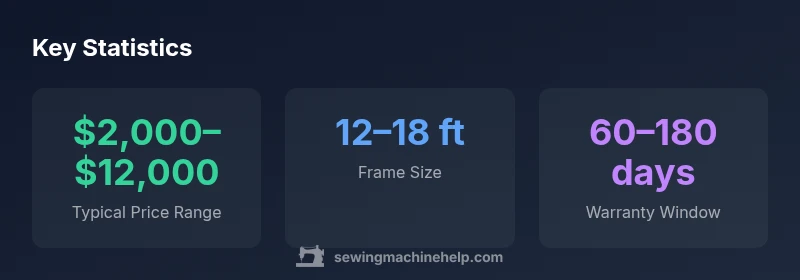
Pricing for used long arm quilting machines for sale spans a broad range, reflecting frame type, size, condition, and bundled accessories. Basic sit-down units with modest frame work typically start around two thousand dollars, while heavier stand-alone long arms with larger frames can push toward six thousand dollars. More substantial frame-based systems with robust stitch regulation and integrated tables often land in the four to ten thousand dollar territory, and exceptionally well-maintained machines with complete software and upgrades may approach twelve thousand. These ranges assume a typical second-hand market where the machine has been serviced and comes with reasonable parts availability. When evaluating price, consider potential upgrades you might need, such as updated table tops, improved lighting, or new tensioning components. In addition to price, assess whether a seller offers a short-term warranty or a return window. According to Sewing Machine Help Analysis, 2026, buyers who negotiate from a clear price baseline and verify maintenance history tend to secure better overall value. The keyword used long arm quilting machines for sale appears repeatedly across buyer guides to emphasize scope and expectations.
Key features to inspect in a used long arm quilting machine for sale
When assessing any used long arm quilting machine for sale, prioritize features that affect reliability and ease of use. Check the frame for stiffness and smooth travel, confirm the needle bar moves straight, and verify the stitch regulator functions across the stitch spectrum. Examine the thread path, bobbin case, tension assemblies, and needle plates for wear or misalignment. Inspect the rails and carriage for smooth motion without binding or wobble. If the machine includes computerized controls, test the menu, firmware version, and compatibility with available software. Ensure that essential accessories—leaders, clamps, rulers, manuals—are included. Review any service records for prior tension and take-up lever adjustments. A thorough feature check helps you compare used long arm quilting machines for sale on an apples-to-apples basis.
Frame integrity: testing rails and carriage
Frame integrity is essential for accurate quilting outcomes. Examine rails for straightness, parallelism, and secure joints. Run the carriage along the entire length of the rails in both directions, listening for squeaks or resistance. Apply gentle pressure at the frame corners to detect any looseness that could indicate fatigue or worn brackets. Check for visible cracks or signs of prior repairs. If possible, perform a live test with a quilt sandwich to see how fabric feeds and whether any drift occurs. Align the needle with the frame centerline to ensure stitches remain balanced across the quilt. If frame issues are detected, factor in professional alignment costs when calculating value for used long arm machines for sale.
Mechanical health: motors, gears, and drive system
Assess the drive system components: motor condition, belt wear, and gear train integrity. Listen for unusual noises during slow and fast travel and confirm smooth speed transitions. Inspect belts for glazing or fraying and verify pulley alignment. In frame-based systems, check head alignment with a ruler to detect tilt that could affect stitch consistency. For servo or variable-speed motors, confirm service history and the availability of replacement parts. Ensure lubrication is present and clean, as dry bearings accelerate wear. A comprehensive mechanical health check reduces the risk of surprises and supports long-term reliability for used long arm quilting machines for sale.
Buying options: dealers vs private sale
Decide whether to purchase from a reputable dealer, an auction, or a private seller. Dealers often provide inspection services, limited warranties, and brief return periods, reducing risk for buyers of used long arm quilting machines for sale. Auctions can offer lower prices but come with higher risk due to incomplete disclosures and uncertain maintenance history. Private sales may yield favorable prices but require careful verification of ownership, service logs, and a hands-on test. Regardless of channel, request a complete history, including parts replaced, service visits, and any recalls or firmware updates. If possible, arrange a demonstration or test run on a practice quilt. Confirm the availability of replacement parts and local technicians who can service the model you choose.
Maintenance history and parts availability
Maintenance history is a strong predictor of future reliability. Request service logs, prior owners, and records of tension adjustments, needle plate servicing, and feed system care. Verify critical components such as the needle bar, take-up lever, and thread path have not been modified in ways that compromise performance. Check parts availability by model and era; older machines may require specialized components with longer lead times. Ensure manuals, service notes, and original documentation are included, as a complete library saves time during troubleshooting. Identify local technicians or authorized service centers who can source belts, gears, and needle kits. The more complete the documentation, the greater your confidence in the used long arm quilting machines for sale.
Test run and troubleshooting before purchase
Always test run the machine before finalizing the purchase. Load a practice quilt onto the frame and run a range of stitches: straight, zigzag, and any decorative patterns available. Check thread tension top and bottom, and verify consistent stitch length across slow and fast speeds. Observe how the machine handles rapid speed changes and whether there is any hesitation. Note bobbin tension, thread breaks, and performance of the bobbin winder if present. If the controller is digital, test menu navigation and responsiveness. Bring a technician if possible. A thorough test run often reveals issues that photos or descriptions miss, giving you confidence in your decision.
Warranties, returns, and getting value
Before completing a purchase, confirm whether the seller offers a warranty, return window, or service guarantee and read the terms carefully. Warranties on used long arm quilting machines for sale may cover mechanical failures but exclude normal wear or cosmetic flaws. If a warranty is offered, verify which components are covered, the duration, and whether professional servicing is required. A favorable policy reduces risk—ideally with a short-term warranty and a reasonable return period. In addition to warranties, consider long-term value: the cost of upgrades, parts availability, and the local service network. With careful due diligence, a well-chosen used long arm quilting machine can deliver years of productive quilting at a fraction of the cost of a new unit.
Common price ranges for used long arm quilting machines
| Model Type | Typical Price Range | Notes |
|---|---|---|
| Used stand-alone long arm | $2,000–$6,000 | Portable, fast setup for small to mid quilts |
| Used sit-down long arm | $3,000–$8,000 | Space-saving, suitable for home studios |
| Used long-arm frame system | $4,000–$12,000 | Best for frequent, larger quilts |
Your Questions Answered
What should I inspect first on a used long arm quilting machine for sale?
Start with the frame and rails to ensure smooth movement. Check for play or any binding in the carriage. Listen for unusual noises during a test run, and verify the machine stitches evenly across a sample quilt.
Check the frame and rails for smooth motion first, then test a stitch on a sample quilt.
Are there reliable brands or models to look for in the used market?
Look for models with widely available parts and solid dealer support. Avoid obscure or poorly supported versions that lack a service network.
Choose models with good parts availability and known dealer support.
Is it worth buying a used long arm with a broken part?
Generally not, unless the seller covers parts and repair costs and provides a verified repair history. Factor in repair time and costs when calculating value.
Broken parts can be a red flag unless the seller offers full repair records.
How can I verify a machine's maintenance history?
Ask for service logs, parts replaced, and prior owners. If unavailable, request a local technician assessment before purchase.
Ask for service logs and previous repair records before you buy.
What about warranties and return policies on used machines?
Prefer sellers offering a short-term warranty or return option and document quoted terms. Read the fine print for exclusions.
Look for a warranty or return option and read the terms carefully.
“Proper inspection and a clear maintenance history are keys to safely buying used long arm quilting machines for sale.”
The Essentials
- Inspect condition before buying
- Compare frame sizes to workspace
- Verify maintenance history
- Budget for accessories and service
- Choose dealers with clear warranties