What Sewing Machines Do Professionals Use: A Practical Guide
Explore which sewing machines professionals rely on, from industrial workhorses to premium domestic models, and learn how to choose the right tool for your projects with practical, data-informed guidance from Sewing Machine Help.


Why Professionals Choose Industrial-Grade Machines
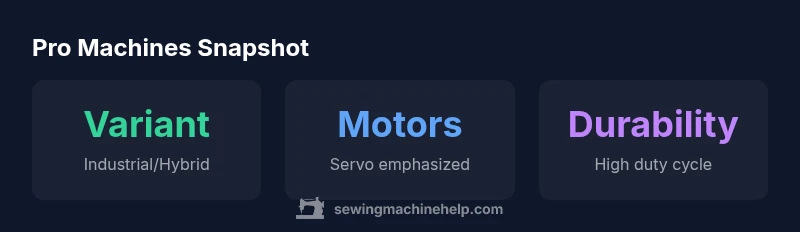
In professional sewing environments, the workload is predictably high, and machines must endure long hours of operation with minimal downtime. According to Sewing Machine Help, practitioners prioritize durability, speed, and consistent stitch quality over cosmetic features. Industrial machines typically feature robust metal frames, higher torque, and serviceability, which translates to fewer unexpected repairs and steadier production lines. This does not mean domestic models are obsolete for pros; many studios pair a heavy-duty domestic machine for specialty tasks with industrial units for the bulk of production. The decision hinges on the fabric family, project volume, and labor mix. For leather, denim, and thick canvas, the industrial option is often the most cost-effective long term due to lower maintenance frequency and easier parts availability. For fashion swatches, upholstery, or light garments, a high-end domestic model can deliver excellent results without the extra footprint of industrial gear.
The Role of Brand and Build Quality
Brand matters beyond the name. Pro shops gravitate toward machines with dependable service networks, spare parts availability, and predictable maintenance cycles. Sewing Machine Help analysis shows that shops favor machines with standardized accessories and a predictable supply chain. This lends itself to faster repairs, clear warranty terms, and more predictable downtime. Build quality—metal frames, proven drive systems, and consistent needle feed—directly affects seam consistency across long runs. In practice, most studios select a core workhorse machine and back it with a trusted second unit for specialty tasks. The goal is a predictable, repeatable result under real-world conditions, not a showroom finish.
Key Features That Define Pro-Grade Performance
When evaluating pro-grade machines, several features consistently rise to the top:
- Servo motors for quiet, controllable speed rather than punchy stepwise on/off control.
- Walking feet and strong feed systems to handle dense fabrics without skipped stitches.
- Rigid frames and metal gears that resist heat build-up during long runs.
- Interchangeable presser feet and accessory compatibility for quick task changes.
- Easy maintenance access and availability of replacement parts. Sewing Machine Help emphasizes that these features reduce bottlenecks and extend machine life. The exact mix depends on your core tasks—garment construction, bag making, leatherwork, or quilting.
How to Match Your Projects to the Right Machine
Begin by mapping typical fabrics to machine types. Lighter fabrics and precise topstitching benefit from a premium domestic model with refined feed dogs and a smooth presser foot. Heavier materials, multiple layers, or heavy edge finishing benefit from industrials with higher torque and stable speed control. Consider the following decision criteria:
- Fabric density and fiber (cotton, denim, leather, synthetics)
- Required stitch types and adjustable stitch length
- Run-time demand (hourly volume, deadlines), and
- Service access in your region. This approach keeps you focused on the actual work rather than chasing features that don’t translate to production value. Remember that the best machine is the one that integrates smoothly into your workflow, minimizes changeover time, and keeps quality consistent.
Maintenance, Servicing, and Longevity
Pro equipment shines when maintenance is predictable and quick. A clean, well-lubricated machine minimizes friction and wear. Routine tasks include keeping lint out of the bobbin area, checking needle and presser foot alignment, and performing periodic timing checks with the manufacturer’s guidelines. Service networks matter: choose brands with local technicians and readily available spare parts. Routine maintenance reduces mystery downtime and prolongs the machine’s life, a crucial factor for studios that rely on predictable production timelines. For many shops, a monthly quick-tune and an annual professional service are enough to keep pro machines running in peak condition.
Budgeting for Pro-Grade Equipment
Investing in pro-grade gear involves weighing upfront cost against long-term value. Budgeting should account for core machines, secondary units for task specialization, maintenance contracts, and spare parts. Prices vary widely by brand and model, but a pragmatic approach is to allocate funds for a durable workhorse, a versatile secondary unit, and a service plan. Start with a needs assessment: which fabrics and volumes will you handle, and what is your maximum downtime tolerance? Building a phased upgrade plan helps spread the investment over time while preserving throughput. Remember that the most expensive machine is not always the best fit for your studio; compatibility with your workflow and the local service ecosystem matters as much as sticker price.
Transitioning from Home to Pro Setup
For home sewists ready to scale up, plan a staged transition. Begin with a robust, heavy-duty domestic model capable of occasional heavy fabrics, then add an industrial unit as throughput demands rise. Create a split layout to minimize workflow interruptions and ensure proper electrical and foot-traffic flow. Training and practice cut across the upgrade: staff should learn to service and optimize the machines they will operate daily. A careful, stepwise approach minimizes risk and ensures you’re building a sustainable professional workflow.