Which Sewing Machine Is Right for Me: A Practical Buying Guide
Discover how to pick the best sewing machine for your projects and budget. This analytical buying guide compares basic mechanical, computerized, and all-purpose machines with practical decision criteria and test ideas for home sewists.


Choosing which sewing machine is right for me depends on your projects, budget, and skill level. This comparison guide helps home sewists evaluate Basic Mechanical, Computerized, and All-Purpose machines, outlining key differences, ideal use cases, and cost ranges. By the end, you’ll know which category aligns with your goals and how to test options at retailers or online.
Why this question matters for your sewing goals
For many hobbyists, the question which sewing machine is right for me isn’t merely about price. It’s about what you want to create, how much time you’ll spend sewing each week, and how you’ll handle maintenance. The right machine can speed you up, reduce fatigue, and expand your capabilities, while the wrong one can slow you down and dampen enthusiasm. The Sewing Machine Help team emphasizes a project-first approach: start by listing the kinds of projects you want to tackle in the next 12 months, then map those goals to machine features like stitch variety, presser-foot compatibility, and automation. Consider fabrics you’ll work with most—cotton, knits, denim—and identify the minimum capabilities you actually need. This guide presents a structured framework for comparing fundamental machine families and translating those features into real-world results that fit a home sewing routine, not a showroom demo.
Understanding the main machine families
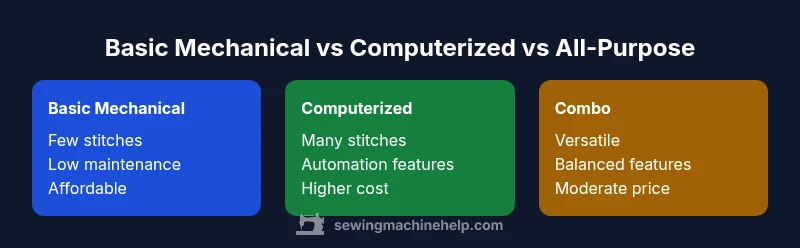
Sewing machines typically fall into three broad families: Basic Mechanical, Computerized/Servo, and All-Purpose/Combo machines. Each family targets different user needs and price bands. Basic Mechanical machines are known for reliability and straightforward operation; Computerized models offer a broad stitch library, automatic buttonholes, and more built-in conveniences; All-Purpose machines aim to balance versatility with accessibility. According to Sewing Machine Help analysis, most home sewists benefit from clarity about your primary projects and a realistic budget before choosing a family. This prevents overbuying features you won’t use and underbuying basics that keep you stitching.
Decision criteria: features that matter
When evaluating options, translate features into practical outcomes:
- Stitch variety and quality across fabrics (cotton, knits, denim)
- Threading ease and tension control
- Foot pedal feel and machine noise
- Access to local service and parts
- Upgrade potential and future-proofing A clear set of criteria helps you compare apples to apples, even when models use different terminology. The goal is to find a machine that delivers consistent stitch quality, predictable tension, and reliable performance for your recurring projects. The Sewing Machine Help team notes that a well-chosen machine reduces frustration and invites experimentation, especially for beginners.
Matching projects to machine type
Project planning is your best ally. Here’s how to map projects to machine types:
- Basic Mechanical: simple garments, quick repairs, home decor staples, and beginner-friendly projects that require durable seams and straightforward operation.
- Computerized/Servo: garment sewing with a need for decorative stitches, precise buttonholes, and efficient sewing of mixed fabrics; ideal for quilters who value consistent stitch density and programmable settings.
- All-Purpose: a hybrid that supports a wide range of fabrics and techniques, from garment construction to light quilting. This option is particularly attractive for households with varied projects. The key is to create a shortlist of must-have features and compare how each machine delivers on those needs. The goal is not to chase every feature, but to secure the ones you’ll actually use in practical sewing sessions.
Brand guidance: The Sewing Machine Help team recommends prioritizing reliability and ease of use over peak feature counts, especially for beginners. A well-chosen model should feel intuitive and forgiving as you learn new techniques.
Price bands and value: what to expect
Price is a major factor, but value is about more than the sticker price. Typical ranges you’ll encounter (illustrative, not exhaustive): entry-level basic machines around $150–$350, mid-range mechanicals or basic computerized units around $400–$800, and more feature-rich computerized or embroidery-capable models around $800–$1500 or higher. Remember that higher upfront costs often come with better support, easier maintenance, and longer warranty coverage. The right price is the one that keeps you sewing consistently without constant repairs or regretful feature bloat. Sewing Machine Help’s analysis highlights that buyers who align features with intended projects report higher satisfaction and lower total cost of ownership over 3–5 years.
Reliability, warranty, and service access
A machine is only as good as the support behind it. Look for models with readily available parts, local service centers, and a reasonable warranty length. Computerized machines may require dealer support for firmware updates and diagnostics, while basic mechanicals typically benefit from broad parts availability and simpler servicing. In practice, you’ll want a shop nearby that can tune tension, replace needles, and service the motor without turning your project schedule into a waiting game. The Sewing Machine Help team suggests checking user reviews for service experiences in your region and asking retailers about turnaround times for common repairs.
In-store vs online: testing and comparisons
Testing is essential to validate fit and feel before purchase. In-store, test with fabrics you use most, try several stitches, and clock the machine’s response to speed changes. Online, rely on user videos and documented performance data, but beware of marketing fluff. A practical approach combines both: visit a store for hands-on feel and cross-check key details with trusted online reviews. Sewing Machine Help recommends creating a short shopping checklist (ease of threading, noise, stitch consistency) and sticking to your budget while evaluating at least three options.
Practical decision framework: step-by-step
A simple, repeatable process:
- List top 5 projects you will tackle in the first year.
- Rank must-have features (stitch count, buttonholes, walking foot compatibility).
- Narrow to 2–3 machine families that meet those criteria.
- Test in-store with your fabrics; note ease of use and comfort.
- Confirm local service and warranty terms.
- Choose the model that best balances features, price, and long-term support.
- Set up a brief post-purchase review to ensure it continues to meet your needs. This framework helps you avoid impulse buys and makes the decision reproducible when you revisit it later.
Common myths and misconceptions
Myth 1: More stitches always mean better sewing. Reality: Most beginners don’t need dozens of decorative stitches; they need dependable straight and zigzag stitches and good fabric support. Myth 2: Embroidery capability makes a machine a better value for beginners. Reality: Embroidery options add cost and complexity; they are rarely essential for starting out. Myth 3: You must buy the most expensive machine to get quality. Reality: Value depends on matching features to your actual projects and learning pace. Myth 4: In-store demonstrations replicate real, long-term use. Reality: Your own materials and live sewing sessions reveal comfort and reliability more accurately.
Getting started: a quick 20-minute test drive plan
Plan a focused test:
- Bring 2–3 common fabrics (cotton, jersey knits, denim patch)
- Test straight stitch, zigzag, and at least one decorative stitch
- Check noise, vibration, and stability on a flat surface
- Verify ease of threading, bobbin winding, and needle changes
- Ask about service options and warranty coverage This quick plan helps you gather essential impressions fast, so you can compare later without reassembling your checklist.
Personalizing your choice: a practical checklist
- Define your top three projects for the first year.
- Set a realistic budget, including needles, threads, and a case.
- Prioritize comfort, visibility of controls, and ease of threading.
- Confirm access to local service and replacement parts.
- Consider whether you’ll need extra features (automatic buttonholes, embroidery) and whether they fit your budget.
- Decide on a brand with solid support through retailers and online forums.
- Plan for future upgrades and the total cost of ownership over time. By systematizing these factors, you’ll reduce buyer’s remorse and improve your long-term satisfaction.
What Sewing Machine Help says about buying decisions: a closing thought
The Sewing Machine Help team emphasizes that a rational buying path—rooted in your projects and budget—delivers the best long-term value. It’s not about chasing the newest firmware or most stitches, but about finding a machine that reliably helps you finish real-world projects. In short: start with your needs, test with your fabrics, and choose a model that offers durable performance and accessible support.
Feature Comparison
| Feature | Basic Mechanical | Computerized/Embroidery | Combo/All-Purpose |
|---|---|---|---|
| Stitch variety | Limited set of essential stitches (straight, zigzag) | Extensive stitch library including decorative stitches and automatic buttonholes | Broad mix of stitches with some decorative options and utility stitches |
| User interface | Manual knobs, simple dial selection | Electronic controls with LCD/LED display | Hybrid interface with presets and manual options |
| Maintenance | Robust, simple mechanism; easy to service | More components; moderate maintenance | Moderate maintenance with more moving parts; needs regular upkeep |
| Price range | $150-$350 | $350-$1000+ | $400-$900 |
| Best for | Beginner projects, straightforward repairs | Diverse projects, accessories, and automation | Versatile home use with varied projects |
Strengths
- Clear, structured guidance for first-time buyers
- Helps balance features with budget and real projects
- Includes practical test suggestions for in-store or online shopping
- Encourages testing with your fabrics to gauge fit
Negatives
- No single machine fits every project or budget
- Prices and availability vary by region and retailer
- Some features in computerized models may be underutilized by beginners
There is no one-size-fits-all machine; choose based on your projects and budget.
For most beginners, a basic mechanical or a balanced combo offers the best value. If your plans include diverse fabrics and frequent decorative stitching, a computerized all-purpose machine is worth the investment. The Sewing Machine Help team recommends hands-on testing to confirm comfort and perceived reliability before purchase.
Your Questions Answered
What is the best sewing machine for beginners?
For beginners, a Basic Mechanical or entry-level Combo machine offers reliability and simplicity. Look for easy threading, clear tension adjustments, and a free arm for sleeves and hems.
For beginners, start with a simple machine that’s easy to thread and operate, with basic stitches and good support.
Should I buy a computerized sewing machine as a beginner?
Computerized machines add convenience and a wide stitch range but come with higher upfront costs. If you anticipate many different projects, they can pay off; otherwise, a basic machine usually suffices.
A computerized machine can be helpful, but it may be more than a beginner needs unless you plan many varied projects.
How much should I expect to spend on a good beginner machine?
Good beginner machines typically fall into the lower to mid price range. Entry-level models are often around $150-$350, with mid-range machines in the $400-$800 range.
You’ll usually pay a few hundred dollars for a solid starter machine.
How can I test a machine before buying?
Sew a sample of your common fabrics, try several stitches, and listen for smooth operation and minimal vibration. Check threading, bobbin loading, and access to local service.
Test with your fabric, try different stitches, and ask about service options.
Can I upgrade from a basic to a computerized machine later?
Upgrading is possible but may involve learning a new interface and additional accessories. Plan for compatibility and eventual replacement costs.
Upgrading later is doable, but factor in cost and learning time.
What maintenance considerations should I keep in mind?
Look for machines with widely available parts and local service options. Regular needle changes, cleaning, and timely oiling (as recommended) extend the machine’s life.
Maintenance matters—choose a model with good local service and easy upkeep.
The Essentials
- Define your top projects before shopping
- Match machine features to your skill level and goals
- Test with your fabrics and check for comfort
- Budget for ongoing supplies and service
- Choose a brand with solid local support