Stitch in the Ditch Quilting: A Practical Guide
Learn stitch in the ditch quilting with practical, beginner-friendly steps, tips, and troubleshooting. This Sewing Machine Help guide covers tools, techniques, and common questions to help you create clean, durable quilters.


Goal: master stitch in the ditch quilting to secure the quilt layers and create clean, invisible lines along seam intersections. By aligning your needle to existing seams, using a walking foot, and sewing straight ditch lines, you’ll achieve durable, professional results. Essential setup includes fabric, batting, thread, and a proper foot.
What stitch in the ditch quilting is and when to use it
Stitch in the ditch quilting is a straightforward machine-stitching method that runs a line of thread precisely along the seam line of a quilt. By stitching close to the seam line, you lock the multiple layers—top fabric, batting, and backing—while creating a crisp, uninterrupted grid of texture. This technique is ideal for traditional patchwork, sashed blocks, and long seams where you want to emphasize the design rather than add heavy texture. For beginners, start with a simple straight line run parallel to a seam and gradually build confidence as you align more lines with seam creases. The density of stitches can vary; an even, medium length (around 2.0-2.5 mm) keeps the lines tight without puckering. When executed well, stitch in the ditch quilting hides in plain sight, letting the fabric pattern show through while keeping the layers secure. As you practice, you’ll notice how keeping your fabric flat and your shoulders relaxed helps prevent skipped stitches. Remember: consistent pace is more important than perfect needle placement every time.
Why it works: aligned seams and dense quilting
The strength and appearance of stitch in the ditch quilting come from aligning the thread lines with existing seams. When you follow seam lines rather than randomly stitching across the surface, the quilt gains stability and a tidy silhouette. This approach distributes tension evenly across the quilt, reducing shifting between layers. Dense ditch lines can also create a subtle grid that guides further quilting or final binding. For many projects, this technique is a reliable backbone that preserves the fabric’s pattern and maintains a crisp, professional finish. Beginners should focus on consistent seam alignment, gentle guiding, and regular practice to improve line straightness. The result is a quilt that feels sturdy and looks polished, even when the top fabric features complex prints.
A common benefit is improved fabric control during washing and handling; ditched lines help the quilt retain shape and reduce bulk at the seams.
Tools and fabrics you need
Before you begin, assemble the essential tools and materials. Primary items include a sewing machine with quilting capability, a walking foot, appropriate needles, and quilting thread. You’ll also want a bonded batting or cotton batting for even layers, sharp scissors, and pins or basting spray to hold the sandwich steady. Marking tools (chalk, washable pen, or erasable marker) help you identify the exact ditch lines. Keep a scrap fabric sandwich handy for test runs of your stitch length and tension. When choosing fabrics, ensure the top, batting, and backing are compatible in weight to prevent puckering. Lighter fabrics with dense stitching require careful tension adjustments, while heavier fabrics tolerate slightly longer stitch lengths for steady feed. Your goal is a smooth feed where the fabric doesn’t shift or stretch as you guide it along the ditch lines.
Preparing your fabric and batting
Preparation is key to successful stitch in the ditch quilting. Start with a clean, evenly squared quilt sandwich: back fabric face down, batting in the middle, and top fabric right side up. Baste or pin the layers to prevent shifting during stitching. Press the fabric edges flat to minimize movement at the seams. If you’re working with a pre-cut quilt top, ensure all seams are pressed open or to one side as preferred. Mark the ditch lines along the seams you want to follow. For accuracy, use a light marking pen and a clear ruler, then double-check alignment before you begin stitching. Finally, test your stitch length and tension on a scrap sandwich to confirm the lines stay straight and even under your machine.
Step-by-step overview: aligning lines with seams
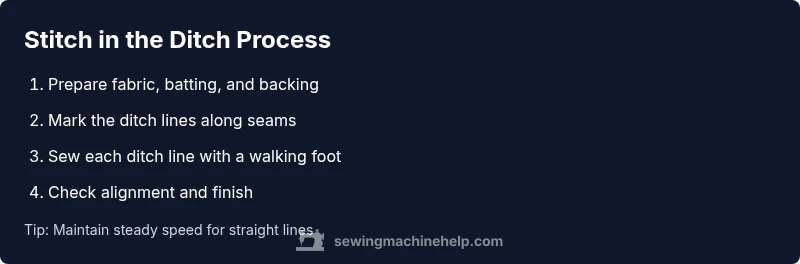
A successful ditch line starts with precise alignment. Place the quilt so the seam line you intend to follow is directly under the needle. Set your stitch length to a medium value—enough to secure the layers without creating a heavy line. Use a walking foot or dual-feed foot to minimize fabric shift. Begin stitching exactly on or just beside the seam line, keeping your hands steady and guiding the fabric with gentle, even pressure. After completing a line, lift the needle, reposition to the next ditch line, and continue. Backstitch at the start and end to anchor the threads. Periodically pause to check that the top, batting, and backing remain flat and aligned. With practice, your ditch lines become smoother and more uniform.
Variations: parallel lines vs grid, ruler-guided options
Stitch in the ditch quilting offers several variations. The classic method sews straight, parallel lines along seams. A grid pattern involves stitching multiple parallel lines to create a quilted texture without overwhelming the fabric. For more control, use a ruler or templates to guide long, straight lines, especially on larger quilts. You can also vary line spacing for visual interest—closer lines for denser textures or wider spacing for a subtler look. Free-motion ditching is possible, but it requires more experience to maintain exact alignment and prevent drift. Ruler-guided approaches are ideal when precise geometry matters, while freehand ditching suits traditional, homespun quilts where organic lines add character.
Common mistakes and how to fix them
Common issues include fabric shifting, uneven stitches, and puckering along the ditch line. To fix shifting, double-check your marking alignment and secure the layers with additional basting. If stitches appear uneven, recheck your needle size and thread tension; test on scraps and adjust accordingly. Puckering can be caused by too-short stitch length or overly tight tension; loosen tension slightly and lengthen the stitch if needed. Always ensure your walking foot is properly attached and that you’re not pulling the quilt along with your hands. Regularly check your area for fabric snags or lint that could affect feeding. Taking time to test and adjust before each long line saves time and prevents frustration on the actual quilt.
Finish, care, and maintenance after stitching
Once you’ve completed the ditch lines, trim and secure threads. Give the entire quilt a light press (avoid steam directly on batting). Check that all lines sit flat; if any sections appear raised, re-press from the backing side using a pressing cloth. If you plan to wash the quilt, use a gentle cycle with mild detergent to preserve the stitching. Inspect the quilt after washing for any loose threads or puckering and fix as needed. Store the quilt in a clean, dry place to prevent moisture buildup that could affect the threads. Regular maintenance includes cleaning the machine’s bobbin area and changing the needle if you notice skipped stitches during long quilting sessions.
Practice plan and project ideas for beginners
Begin with a small practice sandwich, such as a baby quilt or a practice block, to build muscle memory for stitch in the ditch quilting. Set achievable goals: practice straight lines along a single seam, then gradually add more lines and spacing. As you gain confidence, try a simple grid pattern on a larger test quilt. Keep a notebook of stitch lengths, foot settings, and pressure you used so you can repeat the best results. Practical project ideas include a lap quilt with straightforward seam lines, a baby blanket with a few planned ditch lines, or a wall hanging that highlights a few bold ditched lines. Consistent practice will develop your rhythm and accuracy.
Tools & Materials
- Sewing machine with quilting capability(Ensure it supports walking feet and straight-stitch options)
- Walking foot / feed-dog compatible foot(Crucial for even fabric feeding)
- Quilting needle (size 80/12 or 90/14)(Choose based on fabric weight)
- Quilting thread (cotton or polyester)(Low-luzz or high-sheen options depending on preference)
- Top fabric, batting, backing fabric(Select compatible weights)
- Rotary cutter, mat, and ruler(For marking and cutting straight edges)
- Pins or spray baste(Secure layers during stitching)
- Marking tools (washable pen or chalk)(Mark the ditch lines before stitching)
- Scissors and seam ripper(Trim threads and fix mistakes)
- Pressing iron and ironing board(Press seams flat before quilting)
Steps
Estimated time: 60-90 minutes
- 1
Attach walking foot and set stitch length
Install the walking foot securely and choose a medium stitch length (about 2.0–2.5 mm). This helps prevent feed dogs from dragging fabric and reduces shifting. Do a quick test on scrap sandwich to confirm even feed.
Tip: Test on scrap to confirm no fabric drift; adjust tension if stitches look loose. - 2
Mark ditch lines along seams
Using a marking tool and ruler, identify the exact seam lines you will follow. Mark only the lines you intend to stitch; this keeps your focus sharp and reduces wandering off the seam.
Tip: Mark lightly; you should be able to erase or wash away the marks after stitching. - 3
Place sandwich and align the first ditch
Lay the quilt top, batting, and backing together. Align the needle with the first ditch line so the needle sits exactly on the seam or just beside it. Begin stitching with steady hands.
Tip: Keep the work flat; avoid pulling the fabric through the machine. - 4
Sew the first ditch line
Sew slowly along the line, maintaining consistent speed and pressure. Stop with the needle in the fabric and backstitch at the start and end to lock threads.
Tip: Use the edge of the walking foot as a visual guide for straight lines. - 5
Move to the next line and repeat
Lift the needle, reposition to the next ditch line, and continue. Check alignment frequently to prevent drift.
Tip: Pause to realign if the fabric shifts; a quick recheck prevents skewed lines. - 6
Finish, secure, and press
Backstitch at the end of the final line, trim threads, and press the quilt gently. Inspect for skipped stitches and fix if needed.
Tip: Avoid heavy steam on finished quilt; press with a cloth if needed.
Your Questions Answered
What exactly is stitch in the ditch quilting?
Stitch in the ditch quilting is a technique where lines are sewn along the seam lines of a quilt to lock layers and add a subtle texture. It’s often used to secure the quilt sandwich without adding heavy quilting detail.
Stitch in the ditch quilting is when you sew along the seam lines to lock layers and add a subtle look. It’s a simple, effective technique to secure your quilt.
Is this technique suitable for beginners?
Yes. With a walking foot, proper marking, and steady hands, beginners can achieve clean, straight lines. Start with one line per seam and gradually add more lines as confidence grows.
Absolutely—start with a single line along a seam and build up as you gain confidence.
What equipment do I need?
You need a sewing machine with quilting capability, a walking foot, appropriate needles and thread, batting, fabric, marking tools, pins, and a ruler for accuracy.
You’ll need a walking foot, the right needles and thread, batting, fabric, and marking tools.
How do I keep lines straight?
Use a stable guide, such as the edge of the walking foot or a ruler for marking, and sew slowly with consistent pace to reduce drift.
Guided lines and slow, steady stitching help keep lines straight.
Can I use stitch in the ditch on all quilt types?
Most quilts can benefit from ditch quilting, but very thick or bulky fabrics may require adjustments in stitch length or the use of a longer stitch. Evaluate the sandwich first.
Most quilts work fine, but test on scraps if you’re unsure.
How do I fix skipped stitches during ditch quilting?
Pause, recheck thread tension, and test on a scrap. If the line continues to skip, re-thread the machine and inspect the needle for burrs or damage.
First check tension and re-thread; test on scraps to confirm.
Watch Video
The Essentials
- Align stitches with seam lines for stability.
- Use a walking foot to prevent fabric shifting.
- Backstitch to secure the start/end of lines.
- Practice on scraps before sewing the final quilt.