Mastering the Singer Stitch Sew Quick: A Step-by-Step Guide
Learn how to master the Singer Stitch Sew Quick with a practical, step-by-step approach. This guide covers setup, fabric compatibility, common pitfalls, and safe maintenance for beginners and hobbyists. Includes tools, projects, and expert tips from Sewing Machine Help.


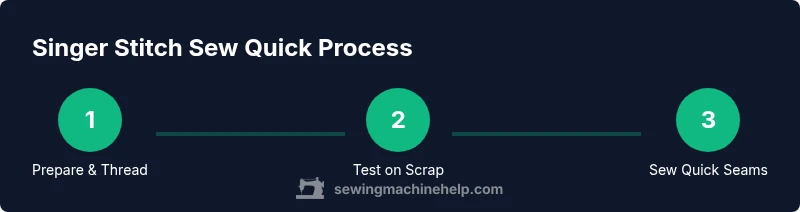
With the Singer Stitch Sew Quick, select a straight stitch, set a short stitch length, and thread both needle and bobbin. Test on scrap fabric, then feed fabric slowly with steady hands. Maintain a relaxed grip and use a compatible needle for your fabric. This approach yields precise, durable seams for light to medium-weight textiles.
What the Singer Stitch Sew Quick Is
The Singer Stitch Sew Quick is a practical sewing technique designed to deliver neat, durable seams quickly on lightweight to mid-weight fabrics. It leans on a standard straight stitch with a shorter stitch length to create a compact seam that resists fraying without adding bulk. For home sewists, this approach is forgiving and easy to learn, especially when finishing hems or assembling lightweight garments. According to Sewing Machine Help, the core idea is consistency: steady feed, even hand guidance, and controlled fabric movement rather than rush. Start by threading your machine correctly, selecting a straight stitch, and choosing a short stitch length. Test on scrap fabric to confirm how the thread interacts with your chosen fabric. If you notice puckering or uneven stitches, adjust tension slightly and re-test. The Singer Stitch Sew Quick excels on fabrics such as cottons, voile, and light linens, where a clean, flat seam matters most. Practicing on small samples builds confidence before tackling a full project.
Practical Fabric Scenarios for Singer Stitch Sew Quick
The Singer Stitch Sew Quick performs well on many light-to-medium fabrics, including cotton voile, chambray, and fine linen blends. For chiffon or delicate sheer fabrics, this technique still works if you reduce stitch length slightly and use a sharp needle for clean penetration. In knits, you may find the stitch behaves differently; in those cases, a stretch or zigzag variant can be substituted after confirming fabric resilience. In those cases, a stretch or zigzag variant can be substituted after confirming fabric resilience. According to Sewing Machine Help analysis, users report improved seam consistency when the fabric is supported and guided by hand, not forced through the machine. Keep fabric edges aligned with pins and use a straight edge to guide the seam allowance. For fabrics prone to fraying, finish the raw edge with a compatible seam finish, such as a light overcast or a narrow zigzag, while keeping the stitch length short. Finally, always choose the right needle type and size for your fabric: a finer needle for lightweight fabrics and a sturdier one for medium-weight textiles.
Tools and Setup for Consistent Results
Before you stitch, gather a few essentials and set up your workspace for efficiency and safety. A clean, well-lit table or sewing desk helps reduce eye strain and misfeeds. Ensure your machine is clean and lubricated per the user manual, with the needle installed correctly and the presser foot engaged. Use a straight stitch with a short length (often around 2.0–2.5 mm on many machines) for the Singer Stitch Sew Quick and a compatible bobbin. Keep a scrap fabric handy to test tension and stitch formation, then mark reference points on your fabric to stay consistent across the seam. The right thread weight matters: pick an all-purpose thread for woven fabrics and a slightly lighter option for delicate textiles. As Sewing Machine Help notes, dedicating a few minutes to setup reduces mid-project frustrations and ensures even feeding. Consider a walking foot for slippery fabrics to enhance fabric grip during sewing.
Step-by-Step Techniques and Setup (Overview)
The Singer Stitch Sew Quick relies on a controlled setup and consistent feeding. Begin with proper threading, test on scraps, and adjust tension until stitches lie flat and uniform. Practice with different fabrics to understand how thickness and fiber composition influence feed and stitch formation. This section is intended to complement the step-by-step guide that follows, giving you context about why each setup choice matters. Remember to align fabric edges precisely and to guide with your non-dominant hand to avoid pushing the fabric too hard into the needle.
Authoritative Sources
For readers who want to verify methods and safety guidelines, consult reputable sources: extension programs from universities and safety standards from government agencies. These references provide general sewing safety, technique explanations, and fabric-handling recommendations that support the Singer Stitch Sew Quick approach. In practice, your local extension service or university publications can offer fabric-specific tips and troubleshooting ideas that align with this guide. The following sources are cited to bolster engineering best practices and safety considerations in sewing environments: https://extension.illinois.edu, https://extension.umn.edu, https://www.osha.gov
Common Mistakes and How to Troubleshoot
Puckering usually indicates too much fabric being pulled or overly tight tension on the upper thread. If puckering occurs, loosen the tension slightly and re-test on a scrap. Skipped stitches can result from a dull needle, incorrect needle type, or incorrect threading path; re-thread from the beginning, insert a fresh needle, and test. Thread breakage often comes from taking a snagging path through pins or sharp edges; remove pins as you approach the needle and place them ahead of the seam, not in line with it. Foot pressure can also affect feeding; reduce or adjust presser foot pressure for thicker materials and recheck the stitch line on a scrap. With patience, the Singer Stitch Sew Quick becomes a reliable daily tool for home projects.
Getting Started: Practice and Projects
Begin with small, simple exercises to build muscle memory for the Singer Stitch Sew Quick. Create practice swatches using cotton, voile, and a lightweight linen blend, then compare seam strength by doubling the fabric and pulling gently to test integrity. Once comfortable, move to a basic garment hem, a lined pocket, or a tote bag seam. Keep a log of stitch lengths you used and fabric types to reference later. This hands-on approach reinforces technique and speeds up adoption for everyday sewing tasks.
Tools & Materials
- Sewing machine with straight stitch capability(Ensure it is threaded and functional)
- All-purpose sewing thread(Match weight to fabric (e.g., lighter for voile))
- Assorted needles (67/8 to 90/14)(Choose a sharp needle for woven fabrics; ballpoint for knits)
- Bobbin and bobbin case(Wound with same thread as top)
- Scissors or thread snips(Sharp blades for clean cuts)
- Pins or chart weights(Pin along the seam line; remove as you sew)
- Measuring tape and fabric chalk(For marking seam allowances and hems)
- Iron and ironing board(Press seams after stitching to finish cleanly)
Steps
Estimated time: 45-60 minutes
- 1
Prepare and thread the machine
Mount the spool, guide the thread through the path, and wind the bobbin. Thread the needle and place the bobbin in the bobbin case, pulling the thread under the presser foot. Check that the upper thread lies in the tension discs and that the needle is properly installed.
Tip: Always test the threading path with a scrap fabric to confirm smooth thread flow before stitching. - 2
Select stitch and set stitch length
Choose a straight stitch and set a short stitch length, typically around 2.0–2.5 mm for Singer Stitch Sew Quick. This prevents bulk and promotes a flat seam. Confirm needle alignment and ensure fabric is ready for the seam line.
Tip: Use a scrap swatch to verify how the stitch looks and adjust length as needed. - 3
Prepare fabric and align edges
Lay out your fabric flat, align edges along the seam line, and pin or clip to prevent shifting. Ensure the fabric edges are straight and bookmarked to avoid misalignment during sewing.
Tip: Place pins perpendicular to the seam direction and remove them just before the needle reaches them. - 4
Begin stitching with steady feed
Gently press the foot pedal and guide the fabric with your non-dominant hand while allowing the machine to feed the fabric. Maintain a relaxed grip and keep a consistent pace to avoid uneven stitches.
Tip: Do not push or pull the fabric; let the feed dogs move it along. - 5
Check tension and finish seam
Stop periodically to inspect stitch formation. If the top thread shows loops on the bottom or puckering on the top, adjust tension slightly and re-test on a scrap. Finish with a clean cut and press the seam.
Tip: Test on a scrap after any tension adjustment to confirm balance. - 6
Trim and press for a professional finish
Trim any loose threads, press seams flat with a proper iron setting for the fabric type, and inspect the final seam for consistency. Store tools and ensure the workspace is clean.
Tip: A brief press after sewing helps set the seam and reduces wrinkling.
Your Questions Answered
What exactly is the Singer Stitch Sew Quick and when should I use it?
The Singer Stitch Sew Quick refers to using a short-length straight stitch for neat, reinforced seams on lightweight fabrics. It's ideal for hems, pockets, and lightweight garments where a flat, durable finish is desired.
The Singer Stitch Sew Quick is a short straight stitch for lightweight seams, great for hems and lightweight garments.
How does this stitch differ from a regular straight stitch?
It uses a shorter stitch length and careful fabric feeding to produce a denser seam with less bulk. This helps reduce fraying and creates a crisper finish on light fabrics.
It’s a shorter, denser straight stitch for a cleaner, less bulky finish.
Can I use this technique on knits?
Yes, with caution. You may need a stretch or narrow zigzag option, and a compatible ballpoint needle for knit fabrics to prevent skipped stitches.
Yes, but you might switch to a stretch stitch or zigzag for knits and use the right needle.
What are the common signs of tension problems?
Look for loops on the underside or stacked threads on the top. Both indicate incorrect tension; adjust upper thread tension and re-test on a scrap.
Common signs are loops or uneven stitches; adjust tension and test again.
What safety steps should I follow when using this stitch?
Always remove pins before stitching, keep fingers away from the needle, and ensure machine maintenance is up to date to prevent jams or needle breakage.
Remove pins, keep fingers clear of the needle, and maintain your machine to prevent jams.
Watch Video
The Essentials
- Master the setup: thread, needle, and stitch length first.
- Keep fabric movement smooth; do not push or pull.
- Test on scraps to dial in tension and stitch quality.
- Choose fabrics and needles that match the stitch intent.
- Finish with a proper press for a professional look.