How to Get Rid of a Sewing Machine: A Practical Guide
Discover eco-friendly and practical ways to dispose of a sewing machine: donate, recycle, or sell it. This guide offers a step-by-step plan, safety tips, and local resources for home sewists.


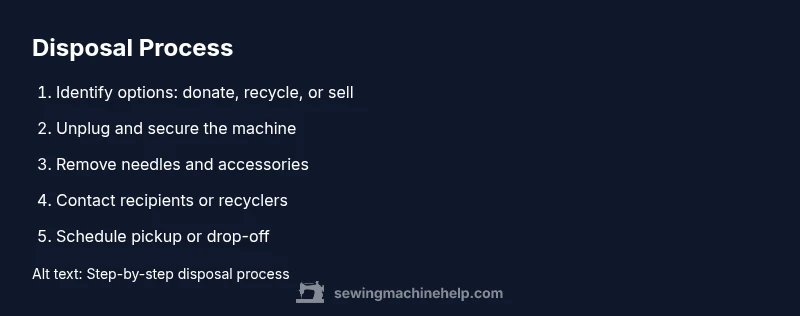
How to get rid of sewing machine? You can dispose responsibly by donating, recycling, or selling it through local programs. Start with a working machine: donate to thrift stores or charities; for broken units, check electronics recycling or sewing-machine repair shops that take old gear; never dump in the garbage. Prepare the machine by unplugging, bagging cords, and removing needles; arrange pickup or drop-off and request a receipt.
Why disposal path matters for a sewing machine
Choosing the right way to get rid of a sewing machine starts with its condition and your local options. A functioning machine can bring value to a charity, a school, or a beginner sewist who is just starting out. Even machines with minor issues can be donated if the organization can repair them or use spare parts. If the unit is beyond repair, recycling or safe disposal keeps hazardous components from ending up in landfills. By selecting an option that matches the machine’s condition, you help reduce waste and support others who are learning to sew. According to Sewing Machine Help, environmentally responsible disposal isn’t just about getting rid of gear—it’s about ensuring the machine finds a useful new life whenever possible and all parts are handled safely.
Donating vs. selling: weighing the best outcome
Donating a sewing machine to a charity, school, maker space, or community center can provide immediate benefit to learners and hobbyists who lack a machine of their own. When considering selling, look to local thrift stores, online marketplaces, or sewing groups where a working machine can fetch a small donation toward a nonprofit, or exchange for good karma and help with repairs. If you’re unsure about a sale price, check similar models in local listings to gauge fair value. Always verify that the recipient accepts used sewing machines and understands what parts or accessories are included. Sewing Machine Help recommends asking for a receipt if the donation is tax-deductible and keeping a record of the transfer for your own records.
Recycling options: where to take non-working machines
For non-working machines, recycling or take-back programs are often the most responsible route. Many municipalities offer e-waste or appliance recycling events that accept sewing machines as small appliances. Some repair shops may also take old machines for parts or proper disposal. If possible, disconnect electronic components and cords, store small metal parts separately, and check whether the recycler requires any disassembly beforehand. While not every program accepts every model, contacting the program ahead of time saves time and increases the chance of a smooth process.
Preparing the machine for removal
Preparation is a small step with big impact. Unplug the machine from power, remove the needle, take out the bobbin and accessories, and bag or box cords neatly to prevent trips or injuries. If you’re sending items with a recipient or recycler, include the manual, any warranty cards, and a quick note about model and any known issues. Photograph the machine from a few angles to document its condition, which can help with donation or resale, and provides a record if you need to reference it later. A tidy, well-documented package is easier for the recipient to process and helps ensure the machine is used rather than wasted.
How to schedule pickup or drop-off
Contact the recipient or recycling program to schedule pickup or confirm drop-off options. Some services offer curbside pickup for bulky items, while others require you to bring the machine to a designated drop-off location. Provide your address, preferred date range, and whether you have access to a vehicle or need assistance loading. You may need to provide a brief description of the machine and its condition. Expect a response within a few days; plan to be flexible to accommodate the service’s schedule. Keeping a list of options ensures you can choose the earliest convenient window.
Documentation and receipts
Request a receipt or confirmation of donation, resale, or recycling. This documentation is useful for tax purposes if the donation qualifies for deduction, or simply as a personal record of how you disposed of the machine. Save any contact names, pickup confirmations, and reference numbers. If you donated the machine to a non-profit, ask for how the machine will be used (teaching, fabric recycling, or community programs). A clear paper trail helps maintain transparency and reduces questions about the disposal process later.
Final thoughts: what you gain from thoughtful disposal
Getting rid of a sewing machine with care supports the environment, helps others learn, and provides closure. The process also gives you a chance to declutter, identify items you may want to reuse or repurpose, and ensure that even old machines contribute positively. By choosing reputable donation or recycling channels and documenting your actions, you create a responsible example for other hobbyists. Sewing Machine Help emphasizes that a well-managed disposal plan benefits both people and the planet.
Tools & Materials
- Sturdy box or large bag(Use a box or bag large enough to hold the machine with room for padding)
- Bubble wrap, towels, or blankets(Padding to protect machine and prevent movement during transport)
- Packing tape and markers(Label the box with contents and handling notes)
- Unplugged power cord and accessories(Keep cords untangled and bundled; separate loose foot pedals)
- Photos and model information(Capture condition shots and record model/serial if available)
- Transportation method(Car, SUV, or scheduled pickup; arrange help if heavy)
Steps
Estimated time: 1-2 weeks
- 1
Identify disposal path
Review the machine’s condition and list the best options (donate, sell, recycle). Confirm acceptance criteria with local centers or charities before proceeding.
Tip: Call ahead to confirm what they accept and any limits on item size or condition. - 2
Unplug and secure power
Unplug the machine from the outlet and disconnect all cords and pedals. Store cords neatly away from moving parts to prevent damage during transport.
Tip: Leave the power switch off until you’re ready to move the unit. - 3
Remove needles and accessories
Carefully remove the needle, presser feet, bobbin, and any accessories. Place small parts in a labeled bag to prevent loss and injury.
Tip: Keep the needle in a safe container to avoid accidental pricks. - 4
Document the machine
Take photos from multiple angles and note the model, age, and any issues. This helps donors or recyclers assess the item quickly.
Tip: Include a note about any known functional issues if donating. - 5
Contact recipients or recycling centers
Reach out to potential recipients, thrift stores, or e-waste recyclers to confirm pickup or drop-off availability. Share the photos and model info when possible.
Tip: Ask about documentation or receipts for donations or tax purposes. - 6
Schedule pickup or prepare for drop-off
Arrange a date and window that works for you and the recipient. If drop-off is needed, verify the address and parking guidelines.
Tip: If a pickup fee is involved, compare options to minimize costs. - 7
Pack the machine securely
Wrap the machine in padding, place in a box or protective bag, and seal with tape. Label the package: “Fragile – Sewing Machine.”
Tip: Avoid placing heavy items on top; ensure the load is balanced. - 8
Get confirmation and keep records
Obtain a receipt or pickup confirmation. Save contact details and reference numbers for future reference or tax purposes.
Tip: Take a final photo of the packed item for your records.
Your Questions Answered
Can I donate a sewing machine that still runs?
Yes. If the machine runs smoothly, donate it to a thrift store, school program, or community workshop. Include accessories and the manual if possible. Call ahead to confirm acceptance.
Yes, donate a working sewing machine to a thrift store or charity; bring accessories and the manual if possible.
Is it ever okay to throw a sewing machine in the trash?
Most municipalities discourage or prohibit discarding large appliances with electronics. Check local disposal guidelines and consider recycling or donation first. If no options exist, contact your local waste authority for guidance.
In most places, you should not trash a sewing machine; look for donation or recycling instead.
Where can I recycle or donate a broken sewing machine?
Look for local e-waste facilities, scrap metal recyclers, or repair shops that accept old machines. Some charities also accept broken machines for parts. Always verify acceptance criteria before dropping off.
Check local e-waste facilities or repair shops that accept old machines and verify what they accept.
Should I remove the needle before donating?
Yes. Remove the needle and place it in a safe container. Detach accessories to prevent injury during handling and to make the donation process smoother.
Definitely remove the needle and pack accessories separately for safety.
What documents should I keep after disposal?
Keep any donation receipts, pickup confirmations, and photos of the packed machine. These are useful for tax deductions and your records.
Hold onto the donation receipt and any pickup confirmation for your records.
Watch Video
The Essentials
- Assess machine condition and choose a disposal path.
- Prepare safely: unplug, bag, and label parts.
- Prioritize donation or recycling over dumping.
- Document the process with receipts and photos.