Needle Guide for Janome Sewing Machines
Learn how to pick the correct needle for your Janome sewing machine, with fabric-based tips, sizes, and types to improve stitch quality and avoid snags.


Definition: The right needle for a janome sewing machine is a standard home sewing needle chosen by fabric weight and stitch type. According to Sewing Machine Help, matching needle type to fabric is the fastest way to reduce skipped stitches and snags. For light to medium fabrics, use 70/10–90/14; for heavy materials, 100/16–110/18. Begin with a universal needle and adjust as needed.
Why the right needle matters for Janome sewing machines
The needle choice directly affects stitch consistency, fabric perforation, and overall machine performance. On a Janome sewing machine, a properly matched needle reduces skipped stitches, minimizes snags, and preserves fabric integrity. The needle’s shaft, point style, and size all interact with the machine’s feed mechanism and tension settings. For home sewists, investing in a small, purpose-built needle kit tailored to fabric categories can dramatically improve results and cut down on trial-and-error attempts. As you work through projects, you’ll notice fewer thread breaks and smoother seams when you start with the correct needle for janome sewing machine.
Needle types explained: universal, microtex, ballpoint, denim, jersey
Understanding needle types helps you align performance with fabric behavior. Universal needles cover most everyday fabrics with a balanced point that penetrates woven materials without snagging. Microtex (sharp) needles excel at fine woven fabrics, producing clean edges and precise seams. Ballpoint needles glide through knit fabrics like jersey without piercing the fibers, reducing runs. Denim or heavy-duty needles withstand thicker weaves and tougher fibers, while stretch needles are designed for jerseys and other stretch fabrics. For Janome users, selecting the right type by fabric category can prevent skipped stitches and improve feed reliability. The key is to match the needle’s tip geometry to the fabric weave and texture.
Understanding sizes and compatibility with Janome
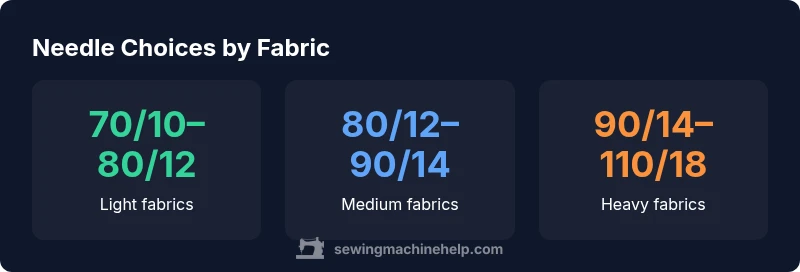
Needle size correlates with fabric weight and stitch type. In general, lightweight fabrics respond to smaller sizes (around 70/10 to 80/12), while medium-weight fabrics suit 80/12 to 90/14. Heavier textiles benefit from larger sizes (90/14 to 110/18). Janome machines typically accommodate standard home needles—but always verify your model’s manual for the exact shank and groove compatibility. When in doubt, start with a mid-range universal needle and adjust up or down based on stitch quality, thread breakage, and fabric perforation. With practice, you’ll develop a quick read on which size to choose for the needle for janome sewing machine in different scenarios.
How to read needle packaging and choose by fabric
Needle packaging usually lists the size, type, and recommended fabrics. Look for phrases like “lightweight woven,” “knit,” or “denim” to guide your choice. For beginners, a basic set including 70/10, 80/12, 90/14, and a denim or heavy-duty needle covers most projects. When selecting, ensure the needle is securely seated in the machine’s needle clamp and inserted with the flat side facing the correct direction. If you notice skipped stitches, snags, or broken threads, re-evaluate the needle type and size before adjusting tension.
Brand-specific tips for Janome users
Janome machines benefit from a disciplined needle kit approach. Keep a few core needles on hand: universal, ballpoint for knits, microtex for fine wovens, and denim for sturdy fabrics. Label the sleeves by fabric type and size, so you can quickly grab the right needle for janome sewing machine between projects. Regularly inspect needles for bents or burrs, and replace immediately if any damage is found. The right needle, paired with proper thread and tension, yields consistent stitches and fewer frustrating jams.
Common mistakes and troubleshooting needle issues
A frequent problem is using the wrong needle for the fabric, which leads to skipped stitches or fabric snags. Bent or dull needles can also cause poor perforation, thread breakage, and uneven stitches. If you experience tension issues, stop and re-check needle type and size first; many tension problems stem from an incompatible needle rather than a settings error. Always test changes on a scrap piece before starting your main project.
Maintenance and storage for needles
Store needles in a labeled case by size and type to prevent misplacement and accidental bending. After finishing a project, inspect and replace any needles that show signs of wear or deformation. Rotate needles regularly to avoid overuse on a single fabric type. Proper storage keeps needles sharp and ready for use, which minimizes friction and improves stitch quality over time.
Needle type and size recommendations by fabric
| Fabric Type | Recommended Needle Size | Needle Type | Notes |
|---|---|---|---|
| Lightweight woven fabrics | 70/10–80/12 | Universal or Microtex | Test stitch on scrap fabric |
| Medium-weight fabrics (cotton, linen) | 80/12–90/14 | Universal | Adjust tension if needed |
| Stretch knits (jersey, spandex) | 75/11–90/14 | Ballpoint or Stretch needle | Consider serging if applicable |
| Heavy fabrics (denim, canvas) | 90/14–110/18 | Denim or heavy-duty needle | Reduce stitch length and increase foot pressure |
Your Questions Answered
Why does my Janome skip stitches when using the wrong needle?
Skipped stitches are often caused by using an incompatible needle for the fabric. Try a needle with the correct tip for the weave, ensure the needle is not bent, and test on scrap fabric. If problems persist, inspect threading and bobbin setup.
Skipped stitches usually mean the needle doesn’t fit the fabric. Try a better-suited needle and test on scrap fabric.
Is a ballpoint needle better for knit fabrics on a Janome?
Yes. Ballpoint needles glide between knit fibers, reducing runs and snags. Use a size around 75/11 to 90/14 depending on fabric thickness and stretch.
Ballpoint needles are best for knits; start with a mid-range size and adjust as needed.
Can I use Schmetz needles in a Janome sewing machine?
Most standard home needles from reputable brands, including Schmetz and Janome-made equivalents, fit Janome machines as long as the size and type match the fabric and manual guidance. Always verify compatibility in your model’s manual.
Most standard home needles fit Janome machines if the size and type match the fabric and manual.
How do I know if a needle is dull or bent?
Signs include skipped stitches, fabric snagging, or rough perforation. Inspect the needle under light with a magnifier; replace immediately if bent or dull before continuing.
Look for bends or dull points and swap out the needle if you see rough stitching.
What needle size should I use for denim on a Janome?
Denim typically benefits from a heavier needle in the 90/14 to 110/18 range. Start with a denim or heavy-duty needle and adjust based on fabric thickness and thread choice.
For denim, start with a heavy-duty needle and adjust as needed.
How often should I replace needles?
Replace when the needle shows visible wear or after completing a tough project. Regular inspection helps prevent stitching issues and keeps tension balanced.
Replace worn needles as soon as you notice wear or after a heavy project.
“"Choosing the correct needle is the first step to flawless stitches on any Janome machine. A mismatched needle is the leading cause of skipped stitches and fabric snags."”
The Essentials
- Match fabric to needle type and size for Janome machines.
- Start with a universal needle before trying specialty types.
- Keep a small, organized needle kit for rapid swaps.
- Always test stitches on scrap fabric before committing to a project.