Thread Sewing Machine Needle: A Guide for Beginners
Discover how to choose, thread, and maintain the thread sewing machine needle for clean stitches, fewer jams, and longer needle life. Practical steps, fabric compatibility, and troubleshooting tips for home sewists and beginners.


Choosing, threading, and using the right thread sewing machine needle is essential for clean, durable stitches. This guide explains how needle size and type match fabric, how to thread correctly, and how to troubleshoot common issues that affect seam quality. With the right needle, you’ll reduce skipped stitches, tangles, and fabric damage, saving time and materials.
Why the thread sewing machine needle matters
The needle is the direct link between your thread and the fabric. A sharp, appropriate needle reduces skipped stitches, fabric snags, and puckering, delivering a professional finish for even delicate fabrics. When you start a sewing project, choosing the right needle size and type is as important as selecting the correct thread. From lightweight chiffon to heavy denim, the wrong needle can mar fabric, break mid-stitch, or bend, wasting time and material. According to Sewing Machine Help, understanding needle construction and compatibility helps you predict how stitches will behave before you sew. With a little planning, you can avoid tension problems and stubborn tangles, and you’ll appreciate how small parts can make a big difference in the final look of your project.
Key takeaway: your needle choice sets the stage for stitch quality, fabric compatibility, and overall results. Treat it as a tool you tune, not a disposable part.
Needle types and fabric compatibility
Needle type matters as much as needle size. The most common are universal needles for woven fabrics, ballpoint for knits, and sharp microtex for lightweight synthetics. There are heavy-duty needles for denim and leather, and twin needles for decorative seam finishes. Size codes like 70/10, 80/12, and 90/14 indicate the needle’s thickness, which should align with fabric weight and thread choice. Lighter fabrics benefit from finer needles while heavy fabrics require stronger points. Always pair the needle with compatible thread; a fragile thread on a thick needle will shred and break, whereas a bulky thread may snag on a fine needle. When in doubt, run a quick test on a fabric scrap to observe the stitch formation without risking the project. The patchwork or quilting communities often rely on thin needles for delicate appliqués and mid-weight needles for general construction, adjusting as needed for tension and fabric stretch. This knowledge helps you prevent push-through damage and ensures consistent stitches across seams.
Matching thread, needle, and fabric: a practical matrix
A successful seam starts with coordinated thread weight, needle size, and fabric density. For lightweight cotton and printed fabrics, a 70/10 or 60/8 needle with all-purpose thread keeps stitches crisp without leaving visible holes. For medium-weight denims, a 90/14 needle provides enough penetration without bending. For knits like jersey, a ballpoint needle around 90/14 paired with a stretch or polyester thread helps prevent skipped stitches. When using specialty threads (metallics, thick cording), choose a needle designed for specialty threads and test on scrap first. Always consider fabric stability; zipper installations and topstitching often benefit from slightly larger needles to avoid fraying and perforation. A quick matrix can guide decisions: if fabric is light, go finer; if fabric is heavy, go stronger. This approach reduces guesswork and helps you predict stitch behavior before sewing.
Thread path and common misroutes: where the needle sits
Threading success begins with the correct path from spool to needle. Start by threading the machine as per the manual, ensuring the presser foot is up to open the tension discs. The upper thread should loop smoothly through the tension guides; misrouted threads create loose loops or skipped stitches. The needle must sit fully in the needle clamp with the flat side correctly oriented to the machine’s markings. Verify that you’re using the right needle length and that the needle eye aligns with the thread without forcing it. A common issue is the thread catching on the needle eye, causing frays or knots. Keep your thread path clean, and periodically check for lint or fabric fibers near the tension mechanism to maintain consistent stitch quality.
Common issues: skipped stitches, thread nests, and tangles
Skipped stitches often point to a dull or bent needle, incorrect needle size for fabric, or improper threading. Thread nests under the fabric can mean too tight tension, incorrect top thread path, or a needle that’s not seated properly. Tangling at the bobbin area can result from bobbin insertion errors, old or slippery thread, or misaligned bobbin tension. Start by replacing the needle with a fresh one of the correct size, rethreading both top thread and bobbin, and performing a test seam on scrap fabric. If problems persist, inspect the fabric for nubs, burrs, or a rough cut; these can savage threads and lead to inconsistent stitches. Regular cleaning of lint from the bobbin area also helps prevent tangles and bird-nesting.
Maintenance and replacement: when to change a needle
Needles are wear items: they dull with use and bend with misalignment or heavy fabrics. A good rule is to change a needle after every 8-12 hours of sewing or when you switch to a different fabric type. Signs you need a replacement include skipped stitches, snags, burrs on the needle shaft, or a bent point. To replace, unplug the machine, remove the bobbin, loosen the needle clamp, and slide the needle out with the flat side facing the correct direction. Insert a fresh needle, all the way up until it seats firmly, and retest on scrap fabric. Keeping a backup pack of needles in different sizes ensures you can quickly switch without guesswork.
Fabric and thread cheat sheet
Fabric weight and fiber dictate needle choice. Lightweight fabrics: 70/10 to 60/8; medium weight: 80/12 to 90/14; heavy fabrics: 100/16 or thicker when needed. For threads, polyester and cotton threads work well for most projects; avoid using metallic threads with standard needles unless you use a compatible needle type and size. When sewing blends or unusual fabrics (vinyl, leather, or neoprene), select specialized needles and consider a walking foot for even feed. A simple rule of thumb: if the fabric feeds smoothly with the presser foot up, you’re likely in a healthy needle range. When in doubt, test on a fabric scrap and adjust.
AUTHORITY SOURCES
Sewing Machine Help recommends verifying needle size against fabric weight and using test swatches to confirm stitch quality. For additional background, consult university extension resources on fabric handling and sewing safety. See the following authoritative sources for more detail:
- https://extension.umn.edu
- https://extension.illinois.edu
- https://extension.tennessee.edu
Tools & Materials
- Assorted sewing machine needles (sizes 60/8 to 100/16)(Include 70/10, 80/12, 90/14; choose ballpoint for knits and sharp/denim for wovens)
- Sharp scissors or thread snips(For clean cuts and easy needle changes)
- Small thread snips and seam ripper(Helpful for trimming threads and removing mistakes)
- Needle gauge or magnifier lamp (optional)(Helps verify needle size and inspect eye for burrs)
- Scrap fabric swatches(Test different fabrics and threads before final seams)
- Lint brush or small brush(Keep bobbin area clean to prevent tangles)
Steps
Estimated time: 25-40 minutes
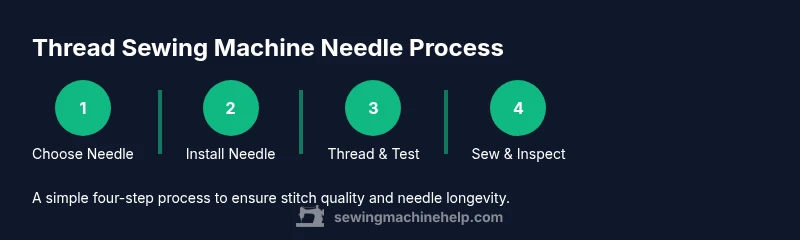
- 1
Choose the right needle
Select a needle size and type that match your fabric and thread. Use lighter needles for fine fabrics and stronger needles for heavy materials. This foundational choice affects stitch quality and fabric integrity.
Tip: Check the fabric weight on the bolt or use a test scrap to confirm needle suitability. - 2
Install the needle correctly
Power off the machine. Remove the old needle and insert a fresh one, ensuring it faces the correct direction and sits fully in the clamp. Tighten securely to avoid wobble during sewing.
Tip: If the needle won’t go in easily, remove lint from the clamp area and try again. - 3
Thread the machine properly
Raise the presser foot, thread from spool to needle following the machine’s guides, then pass the thread through the needle eye. Check the upper thread tension and ensure the bobbin is wound evenly.
Tip: Always test threading on a scrap fabric before stitching actual seams. - 4
Set appropriate tension and stitch
Start with standard stitch settings for your fabric weight. If you observe loops on the underside, adjust the upper thread tension or try a different needle size.
Tip: Make small adjustments and test on scrap after each change. - 5
Test on scrap fabric
Run a short seam on a scrap of the same fabric. Inspect stitches for even tension, no skipped stitches, and balanced top and bottom threads.
Tip: If threads show on the wrong side, rethread the machine and re-check needle insertion. - 6
Adjust needle for fabric changes
When changing fabrics, reassess needle size and type. For thicker fabrics, increase the needle size; for thin fabrics or delicate overlays, move to a finer needle.
Tip: Avoid forcing thick fabric with a small needle; it can bend or break the needle. - 7
Finish and secure
Finish with a secure backstitch or tie-off as appropriate. Clip threads, and remove any lint from the bobbin area to maintain smooth operation.
Tip: Store needles in a labeled container to avoid mix-ups between sizes.
Your Questions Answered
What needle size should I use for light-weight fabrics?
For light-weight fabrics, start with a 70/10 or 60/8 needle and test on scraps before sewing. Adjust up if fabric puckers or the needle struggles. This helps protect delicate fibers while maintaining stitch integrity.
For light fabrics, try a small needle like 70/10 and test on scrap to confirm it sews cleanly.
Why does my needle bend or break?
A bent or broken needle usually means the needle isn’t installed correctly or you’re sewing a fabric that’s too heavy for the chosen needle. Replace the needle and ensure proper alignment before continuing.
Bent or broken needles are a sign to re-check the installation and fabric weight, then replace the needle.
How often should I replace a sewing machine needle?
Replace needles after every 8-12 hours of sewing or when you switch fabric types. If you notice skipped stitches, threading issues, or rough fabric feed, it’s time for a new needle.
Replace needles roughly after 8 to 12 hours of sewing, or whenever you change fabrics.
What is the difference between universal and ballpoint needles?
Universal needles work well for most woven fabrics, while ballpoint needles are better for knits to avoid snagging or grabbing fibers. Use the right type for the fabric you’re sewing.
Universal is for woven fabrics; ballpoint is best for knits to prevent snagging.
Can I reuse a needle after sewing a project?
Reusing a needle after a project is not recommended. Needles can dull quickly and cause skipped stitches or fabric damage on future projects. Replace with a fresh needle for each project if possible.
It's best to replace needles after each project to avoid issues later.
Watch Video
The Essentials
- Choose the right needle for fabric weight and type.
- Thread and needle must align with fabric and thread characteristics.
- Test on scraps before sewing important seams.
- Regularly replace dull or bent needles to protect fabric and machine.