What Sewing Machine Stitch to Use for Stretch Fabric
Learn which sewing machine stitch works best for stretch fabrics, with needle/thread guidance, tension tips, and practical steps for knits and jerseys.


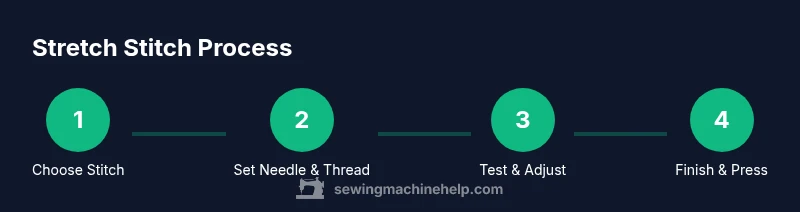
To sew stretch fabrics effectively, choose a stretch or narrow zigzag stitch paired with a ballpoint or jersey needle. Set a longer stitch length (about 2.5–3.5 mm, depending on fabric), and use a polyester stretch thread for elasticity. If you have a walking foot, attach it to reduce shifting. Always test on scrap fabric, then finish edges with a zigzag or overlock stitch.
What sewing machine stitch to use for stretch fabric
Stretch fabrics, including jerseys, knits, and ponte, demand stitches that move with the fabric rather than fight against it. The right choice keeps seams comfortable, resilient, and invisible under movement. According to Sewing Machine Help, selecting the correct stitch type for knit fabrics greatly improves durability and flexibility. In practice, you’ll want to test a handful of stitch options on scraps of the exact fabric you’re using, because fiber content, weight, and finishing threads all influence how a seam behaves. This guide expands on practical, field-tested guidelines you can apply to most stretch fabrics, from lightweight jersey to heavier ponte. Understanding knit structure helps: loops and columns of stitches distribute stress, so choose a stitch that spreads load rather than concentrating tension in one spot. A balanced approach—stitch choice, needle, and fabric handling—yields seams that flex with wear and washing. Throughout, Sewing Machine Help’s expertise informs the technique, while you practice on scraps to tailor settings to your fabric.
Stitch options that work well on stretch fabrics
There are several dependable stitches for stretch fabrics. For most knits, a stretch stitch (a narrow zigzag) or a three-step zigzag provides elasticity without excessive width. A straight stitch can work on very stable knits if you ease the fabric and avoid drafting too much tension; however, it risks skipped stitches on looser knits. A regular zigzag with a moderate width also serves well on mid-weight knits, especially when combined with a walking foot to prevent shifting. For delicate fabrics like lightweight jersey, a tiny zigzag or a tiny stretch stitch pattern can reduce distortion. A twin-needle hem on stable knits creates a clean, professional finish while preserving stretch. The core idea is to allow the seam to extend with the fabric while keeping the finish secure. Always test stitches on scrap fabric to verify stretch behavior before committing to a project.
Needle and thread choices for stretch fabric
Needle choice is crucial to knit fabrics. A ballpoint or jersey needle helps preserve fabric integrity by slipping between loops rather than cutting through fibers. Use a thread with some elasticity—polyester or a cotton-poly blend works well for many knits—so seams recover after movement. For hems and topstitching on light to medium knits, a twin needle can give a professional look, provided your machine supports twin-needle operation and the fabric can handle a two-line stitch. If your fabric is very stretchy or delicate, consider a serger or overlock for edges; on a standard machine, a narrow zigzag or a stretch stitch is often sufficient. Sewing Machine Help’s guidance emphasizes aligning needle type to fabric weight and fiber content to maximize elasticity and seam strength.
Tension and fabric feeding: getting a balanced seam
Stretch fabrics demand balanced tension and even feeding. Start with standard tensions and adjust after a test seam on scrap fabric. If the fabric shifts or the seam puckers, try increasing feeding aid with a walking foot or reducing presser foot pressure slightly. Avoid pulling or stretching the fabric as you sew; instead, guide the edge gently and let the feed dogs do the work. A well-balanced seam should stretch with the fabric and recover once unloaded. If your machine’s tension is high, the stitches may form little loops on the back; if it’s too low, you’ll see loose loops on the top. Make small adjustments and re-test until the seam moves with the fabric.
Finishing edges on knits and maintaining shape
Finishing edges is essential to prevent curling and fraying on knits. A standard zigzag or overcast stitch on a regular machine provides a flexible finish that preserves stretch. For a cleaner, more professional look, a serger offers a neat edge and efficient seam allowance removal, but it’s not mandatory. If you don’t own a serger, a zigzag with a narrow width or a twin-needle hem can still yield a durable finish. When finishing, press edges with a low heat setting to avoid distorting the knit’s recovery. The finish should allow the fabric to stretch without binding or tearing.
Fabric-specific tips and example projects
Jersey knit responds best to narrow or medium zigzag stitches and a ballpoint needle. Ponte requires a slightly stronger stitch and a stable feed, though it still benefits from a stretch stitch to accommodate movement. Swimwear fabrics demand robust stitches with more elastic thread and sometimes a reinforced seam allowance. Start with a simple project like a basic tee to practice your stitch choice and adjustment process. As you sew, keep a notebook of which stitches performed best on each fabric, so you can reproduce consistent results across projects. This experimentation mindset aligns with Sewing Machine Help’s recommendation to test on fabric scraps before committing to a final seam. By combining stitch choice, needle, thread, and feeding technique, you’ll build a reliable toolkit for stretch fabrics.
Tools & Materials
- Ballpoint needle (jersey/ballpoint for stretch fabrics)(Choose a size appropriate for fabric weight (e.g., 70/10 to 90/14).)
- Jersey/Stretch needle(Specifically designed for knit fabrics to reduce skipped stitches.)
- Universal needle (alternative)(Use only if stretch needle is unavailable and fabric is stable.)
- Stretch/Polyester thread(Provides elasticity and resilience for knit seams.)
- Walking foot (optional)(Helps feed fabric evenly on slippery knits.)
- Sewing machine with stretch stitch or zigzag capability(Needed for most stretch seams.)
- Pins or fabric clips(For securing knit fabrics without distortion.)
- Sharp scissors and fabric marking tool(Trim seams cleanly and mark notches accurately.)
- Scrap fabric for tests(Always practice on scraps before sewing your project.)
Steps
Estimated time: 25-40 minutes
- 1
Set up the machine for stretch fabric
Install a ballpoint or jersey needle and thread the machine with polyester stretch thread. Choose a stretch stitch or narrow zigzag. If available, attach a walking foot to improve fabric feeding. Always test settings on scrap fabric first.
Tip: Do a quick test run on scrap with similar weight to your project to confirm stitch elasticity and seam quality. - 2
Test on scrap fabric
Sew a short seam on scrap to observe stretch, recovery, and edge finish. Adjust tension and stitch length as needed based on scrap results. This step helps prevent surprises on your final garment.
Tip: Look for balanced tension where both top and bottom stitches align and the seam can stretch without gaping. - 3
Sew the main seam
Place fabric pieces right sides together and sew along the seam line using the chosen stitch. Maintain gentle guidance, do not pull the fabric, and let the machine feed at its own pace. If you notice humming or skipped stitches, switch to a slightly looser stitch or adjust needle position.
Tip: Take your time on curved areas where stretch fabric can collect. Slow sewing reduces distortion. - 4
Finish the seam
Finish the seam with a zigzag, overcast edge, or serger for a clean, flexible finish. If using a regular machine, ensure the finish matches the seam allowance and doesn’t add bulk at curves.
Tip: Use a narrow zigzag to reduce bulk while maintaining elasticity. - 5
Press and check the seam
Press seams gently with a low heat setting to avoid distorting the knit. Confirm the seam retains flexibility after pressing and that no creasing or flattening occurs.
Tip: Press from the wrong side when possible to protect fabric face and avoid shine. - 6
Assess and adjust for hems
If sewing hems, consider a twin needle on stable knits or a cover stitch if you have access to a compatible machine. Ensure hems have enough ease to allow movement without curling.
Tip: Test hem options on scrap to ensure the correct balance between look and stretch.
Your Questions Answered
What sewing machine stitch is best for stretch fabrics?
A stretch stitch or narrow zigzag is typically best for stretch fabrics because it allows elasticity and prevents puckering. For heavier knits, a three-step zigzag can be very effective.
A stretch stitch or narrow zigzag works best for stretch fabrics. It keeps seams flexible while providing durability.
Can I use a straight stitch on stretch fabrics?
Straight stitches can work on very stable knits, but they are prone to breaking on looser knits. If you must use straight, ease the fabric and test carefully.
Straight stitches can work on very stable knits, but testing is essential to avoid breakage.
What needle should I use for stretch fabrics?
A ballpoint or jersey needle is recommended for stretch fabrics to prevent snagging and gaping. Select needle size based on fabric weight.
Use a ballpoint needle or jersey needle for stretch fabrics.
Should I use a walking foot for stretch fabrics?
A walking foot helps feed the fabric evenly and reduces stretching or shifting, especially with slippery knits. Not always required but highly beneficial.
Yes, a walking foot helps a lot with knits.
Can I finish stretch fabric seams with a serger or overlock?
A serger provides a neat, stretchy finish, but a regular machine with zigzag or a twin-needle hem can also work well. Choose based on your equipment and fabric type.
A serger makes a clean edge, but you can achieve great results with a zigzag seam on a regular machine.
Watch Video
The Essentials
- Choose stretch stitches for knits and jerseys.
- Always test on scrap fabric to tailor settings.
- Use ballpoint/jersey needles with elastic threads.
- Finish edges to prevent fraying and distortion.
- Practice on scraps to build consistent results.