DIY Sewing Machine Lift: A Practical Step-by-Step Guide
This guide teaches home sewists how to design, build, and safely install a safe, adjustable DIY sewing machine lift to improve ergonomics, stability, and workflow in a compact sewing space.


You will learn to design and build a simple, safe DIY sewing machine lift that raises and lowers your machine for ergonomic comfort. This guide covers planning, material selection, base construction, mounting, height adjustment, and safety checks so your workspace stays stable, comfortable, and efficient.
Why a DIY sewing machine lift matters for home sewists
Working at a fixed table height can cause back, neck, and shoulder strain during long sewing sessions. A DIY sewing machine lift gives you an adjustable height platform to align your machine with your chair and your natural posture. This guide shows how to design and build a safe lift using common materials, so you can work more comfortably and complete projects with less fatigue. According to Sewing Machine Help, ergonomics in sewing setups dramatically impact precision and endurance over time. A well-built lift also protects your machine by distributing weight evenly and reducing torque on the cabinet. In this section, you will learn what a lift can do, and what you should plan before you start.
Design considerations: choosing a lift mechanism
There are several ways to implement a DIY sewing machine lift, from simple manual levers to mechanical screw jacks and gas-assisted systems. A screw-jack style is often the easiest to DIY with common hardware; it gives you smooth, controllable height changes. A hydraulic or gas-piston option can offer faster movement but requires careful planning for safety and seals. Consider how you will operate the lift, how much space you have, and how durable the mechanism needs to be for repeated use. In most hobby setups, a robust screw-based or lever system balances cost and reliability.
Planning space and weight capacity
Before you cut any wood or bolt in brackets, sketch a layout of the lift relative to your sewing table. Ensure there is clear space around the machine for cords, foot pedals, and fabric handling. Design for a stable center of gravity and a wide base that resists tipping. Your plan should account for how the machine will be mounted and how the lift will align with eye level and elbow height when seated. While exact numbers vary, aim for a height range that avoids reaching or bending and leaves room for comfortable hand movement. Based on Sewing Machine Help analysis, ergonomic alignment is key to sustainable sewing sessions.
Materials selection and safety standards
Choose materials that balance strength, weight, and cost. A rigid base frame made from solid lumber or metal offers the stability needed for lift operations. The top mounting plate should be flat and wide enough to support the machine’s mounting points. Use locking casters so you can move the lift when needed and lock it in place during sewing. When selecting fasteners, pick corrosion‑resistant screws and brackets, and seal wood joints with a simple finish to protect against humidity. Safety standards emphasize solid mounting, secure fasteners, and avoidance of pinch points around moving parts.
Step-by-step blueprint and build approach
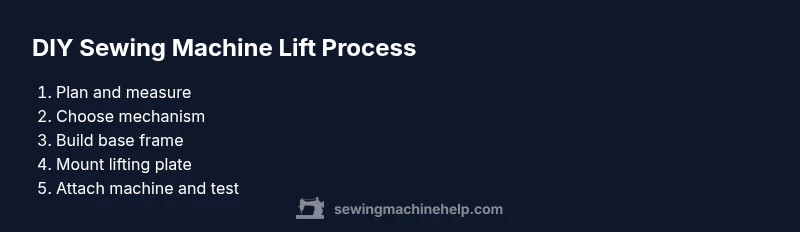
This section provides a high‑level blueprint you can adapt. Start with a sturdy base, add side supports, then install the lifting mechanism under a dedicated mounting plate. Attach the plate to the lift in a way that keeps the machine level and aligned with your chair. Finally, fit a user‑friendly height control and locking stops. Each decision you make should prioritize smooth operation, load distribution, and ergonomic access to the machine. This overview sets the stage for the class of detailed steps that follow in the dedicated step-by-step section.
Mounting the machine and aligning for comfort
Mount the sewing machine securely to the lifting plate using the machine’s mounting holes or a custom bracket that spreads the load evenly. Check that the plate sits flat and that the machine remains level as the lift operates. Alignment matters: a misaligned machine can cause uneven fabric feeding and awkward hand angles. Verify that the cords, foot pedals, and accessory cords have slack but stay clear of moving components. Precision here pays off with better stitch quality and less fatigue.
Height adjustment controls and ergonomic setup
Your lift needs a simple, reliable control for changing height. A hand crank or a small lever can work well in a hobby shop, while a locking hand wheel offers more control. Ensure the control is accessible from your seating position and that adjustments are resistant to unintended slips. Plan the stop points so you can return to your preferred height quickly. Ergonomics says the lift should place the needle at eye level and keep your wrists neutral during sewing.
Safety features, testing, and initial adjustments
Install positive stops at the highest and lowest settings to prevent over extension. Add anti‑tip brackets or cross bracing to prevent wobble during heavy use. Test the lift with the machine attached, without fabric, and then with light tasks before attempting longer sessions. Listen for creaks, check bolts for looseness, and verify that all moving parts are properly lubricated. Safety first keeps both you and your machine protected.
Maintenance, troubleshooting, and best practices
Regular inspection and gentle lubrication extend the life of your lift. Periodically check fasteners, rails, and the mounting plate for wear. If you notice uneven movement or binding, stop and re‑tighten joints and confirm alignment. For comfort, tape down cords and wires to prevent tangling, and recheck the height at the start of each sewing session. As Sewing Machine Help analysis shows, consistent maintenance reduces the risk of sudden failure and preserves your working posture.
Authority sources and next steps
For deeper safety and ergonomic guidance, consult reputable sources on workshop ergonomics and equipment safety. You may review materials from OSHA and CDC on safe lifting principles and tool use. In addition, professional sewing communities and engineering handbooks can provide design perspectives and load considerations to tailor a lift to your setup. The Sewing Machine Help team recommends validating your build against manufacturer mounting specs and maintaining a conservative load plan.
Tools & Materials
- Plywood sheet (top plate)(Choose a sturdy sheet with ample flat area to support the sewing machine.)
- Lumber for base frame(Select straight, strong boards for a rigid base.)
- Locking caster wheels(Four wheels with locking mechanism for mobility and stability.)
- Wood screws and brackets(Coarse-thread screws and metal brackets for secure joints.)
- Wood glue(For additional joint strength.)
- Metal angle brackets(Reinforce corners and load points.)
- Drill and bits(For pilot holes and assembly hardware.)
- Saw (hand or power)(To cut base and mounting components to size.)
- Measuring tape and level(To ensure flat, square alignment.)
- Bolt/nut set for mounting plate(To secure the lift and plate together.)
- Optional: Screw jack or gas spring kit(For a powered or smoother lift (optional).)
- Safety gear (gloves, goggles)(Personal protective equipment for tool use.)
Steps
Estimated time: 6-10 hours
- 1
Assess space and requirements
Map your sewing area and determine the target height range for comfortable operation. Consider chair height, table depth, and the space available for cords and fabric movement. This planning step prevents rework and ensures your lift integrates smoothly with existing furniture.
Tip: Document your measurements and keep a simple sketch handy. - 2
Choose lifting mechanism
Decide whether to use a screw jack, lever‑based system, or a gas‑assisted option. Each has different complexity, smoothness, and maintenance needs. Pick the mechanism that matches your tools, budget, and comfort level with carpentry.
Tip: A basic screw jack is usually the easiest to DIY with good control. - 3
Cut base frame pieces
Cut the base frame components to size based on your layout. Ensure the cuts are square and clean to prevent wobble once assembled. Sand edges to remove splinters before assembly.
Tip: Use a straightedge to verify true 90‑degree corners. - 4
Assemble base frame
Join the base pieces with screws and wood glue, reinforcing corners with brackets. Create a flat, wide base that distributes weight evenly and resists tipping.
Tip: Tighten joints gradually and check squareness as you go. - 5
Mount locking casters
Attach the locking casters to the base, ensuring they are evenly placed for balance. Test roll resistance and confirm the locks engage firmly. Casters should allow easy repositioning without compromising stability when locked.
Tip: Use captain’s screws to secure casters firmly. - 6
Install lifting mechanism
Secure the lifting mechanism to the base according to your chosen design. Ensure smooth operation through full travel without binding. Align components so movement is straight and stable.
Tip: Leave a little clearance for moving parts to prevent binding. - 7
Attach mounting plate
Fix the mounting plate to the lift, ensuring a flat surface for the sewing machine. Verify the plate is level and centered to avoid uneven loading.
Tip: If using brackets, distribute load widely across plate corners. - 8
Connect height control
Install the height control (crank, lever, or wheel) within easy reach from your typical seating position. Check that adjustments hold securely and don’t drift during use.
Tip: Test multiple heights with the plate loaded to simulate real use. - 9
Test alignment with machine
Mount the machine to the plate and verify it sits level through its travel. Check fabric handling for smooth operation and adjust as needed to avoid binding or misfeeding.
Tip: Run several stitches on scrap fabric to confirm stability. - 10
Finish and maintain
Sand edges, apply a protective finish, and perform routine checks on bolts and joints. Create a simple maintenance schedule to keep the lift safe and functional.
Tip: Keep a small maintenance log for periodic checks.
Your Questions Answered
What is a DIY sewing machine lift?
A DIY sewing machine lift is a self-built platform that raises and lowers a sewing machine to ergonomic height. It uses a stable base and a lifting mechanism, plus a locking system to hold a set height. The goal is to improve comfort and control during sewing.
It’s a self-built platform that lifts your machine for comfortable sewing at the right height.
What lifting mechanism should I use?
Common options include screw jacks, manual levers, and gas‑spring or hydraulic systems. Choose based on your tools, budget, and how smooth you want the lift to be. For most hobbyists, a robust screw jack or lever system offers a reliable balance of cost and control.
You can pick a simple screw jack or a manual lever for reliable control.
What safety features are essential?
Essential safety features include locking height stops, a sturdy mounting, and anti‑tip bracing. Always test without fabric first and inspect bolts for tightness after initial use.
Make sure it locks at several heights and can’t tip while you sew.
What tools are required?
Basic carpentry tools are needed: saw, drill, screws, measuring tape, and a level. Wear safety gear and work in a clear area to avoid accidents during cutting and assembly.
You’ll need simple tools and safety gear to build it safely.
How long does it take to build a lift?
Build time varies with design and skill, but expect a dedicated project session or weekend. Break the project into clear steps and test each stage before moving on.
It can take a day or two, depending on planning and your pace.
Watch Video
The Essentials
- Prioritize ergonomics by matching lift height to eye level and elbow comfort
- Plan space, weight distribution, and clearance before cutting or assembling
- Use secure mounting, locking mechanisms, and safety stops to prevent movement during sewing
- Regular maintenance extends the life of your lift and preserves safety
- Test thoroughly with the machine mounted and no fabric before working with real projects