How to Get Fabric Out of a Sewing Machine: A Practical Guide
Learn safe, practical steps to remove fabric stuck in a sewing machine, with tools, a step-by-step process, maintenance tips, and expert guidance from Sewing Machine Help.


Unplug the sewing machine and switch to a well-lit workspace. Assess where the fabric is jammed, then follow a careful, step-by-step method to free the material without bending the needle or damaging the bobbin. This guide covers disassembly basics, thread-clearing, and prevention tips for future jams.
Why Fabric Gets Stuck in a Sewing Machine
Fabric jams are common for home sewists, especially when using delicate textiles or complex stitches. In many cases, stray threads catch on the needle or presser foot, or fabric fibers wrap around the bobbin area as you stitch. According to Sewing Machine Help, jams often start with a loose thread path, an incompatible needle size, or fabric that’s being pulled too aggressively through the machine. When a jam occurs, the first instinct is often to yank, but that can bend the needle or damage gears. A calm, systematic approach reduces the risk of injury to the machine and to you and helps you identify underlying causes, such as thread tension or lint buildup. This mindset—careful assessment, not brute force—will serve you well across most jam scenarios.
In addition to immediate safety, consider the fabric type and the stitch you were using. A lightweight synthetic or woven cotton behaves differently than denim or leather, and your needle choice should reflect that. Always reference your machine manual for compatibility notes about needle size, thread type, and approved fabrics. Sewing Machine Help emphasizes that prevention begins with the right combination of needle, thread, and fabric, plus regular lint removal and timing checks.
Sewing sessions should feel predictable, not rushed. If you’re encountering jams frequently, it’s a signal to step back and inspect the machine’s overall maintenance routine. The goal is not only to free fabric this time but to minimize future jams by optimizing threading paths and keeping the bobbin area clean.
Immediate Safety Steps to Take
First, ensure personal safety and machine safety. Always unplug the machine from the power source and switch off the power at the outlet. Remove the foot pedal from the workspace to avoid accidental activation. If your model allows, set the needle in the highest position by turning the handwheel toward you. Good lighting is essential—use a bright lamp or headlamp to reveal threads and lint that may hide in crevices. Keep a small container handy to collect loose threads and fabric fragments as you work. By establishing a safe baseline, you reduce the risk of injury and mechanical damage while you investigate the jam.
Next, prepare your hands and tools. Keep tweezers, small scissors, and a flashlight within reach. A soft brush or compressed air can help clear debris from the throat plate, but use it with care to avoid pushing fabric deeper into the machine. Remember: never attempt to run the machine while it’s open or exposed. If you must remove a cover plate, do so only as directed by your model’s manual.
Assessing the Situation: Where the Fabric Is Jammed
Fabric can jam in several zones: behind the needle, under the throat plate, near the bobbin case, or along the feed dogs. Start by looking for obvious tangles near the needle clamp and presser foot. If you can see a clear path, gently release fabric fibers with tweezers rather than pulling. Check the bobbin area for lint or thread tails that are looping into the hook cycle. In many cases, jams are caused by a small loop of thread catching on a bent needle or a partially threaded path. Identifying the exact location helps you choose the least invasive removal method and reduces the risk of unintended disassembly.
If the jam seems severe or you can’t access the area safely, stop and consult the manual or seek professional help. For frequent jams, review threading order, needle size compatibility, and fabric recommendations for your machine. Keeping the throat plate and bobbin area clean is often the simplest preventative measure researchers at Sewing Machine Help recommend.
Step-by-Step: Freeing Fabric Safely
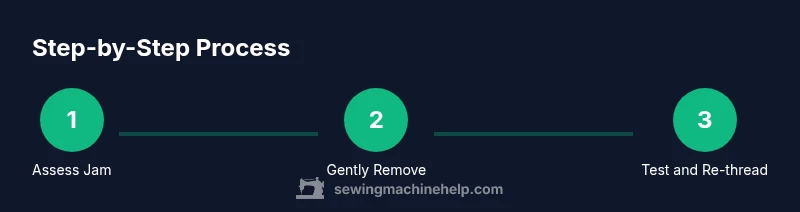
- Unplug the machine and secure the workspace. 2) Remove the presser foot and, if necessary, the needle to widen access. 3) Open the throat plate or needle plate to expose the bobbin area. 4) Gently loosen and lift fabric using tweezers—never yank. 5) Clear all threads from the bobbin area and guide path, ensuring there are no hidden tails. 6) Reinsert a compatible needle and re-thread the machine according to the manual. 7) Test on a scrap piece of fabric before resuming your project. This sequence limits damage risk while giving you clear checkpoints to verify serviceability.
Pro tip: Work slowly in a well-lit area, keeping lint and threads contained with a small tray. If fabric is deeply embedded, you may need to remove the bobbin case for deeper access. Always refer to your model’s instructions for disassembly limits.
Clearing Threading Paths and Bobbins After Removal
After freeing the jam, re-check every threaded path: from spool to needle, through the tension discs, and into the bobbin case. Re-threading helps prevent a repeat jam caused by misaligned thread segments. A common mistake is skipping the tension check when reassembling; niggling tension issues can lead to immediate future jams. Clean the bobbin area with a lint brush and ensure there’s no fabric fiber left behind. Once re-threaded, run a few test stitches on scrap fabric, watching for skipped stitches or bird-nesting in the bobbin area. If issues persist, revisit the needle size and fabric compatibility.
Preventing Future Jams: Maintenance Tips
Regular maintenance is the best defense against fabric jams. Schedule a quick monthly lint cleanout around the bobbin case and throat plate. Use a small brush to remove lint, and avoid oiling the needle area unless your model specifically instructs it. Ensure the needle is correctly installed and the presser foot is appropriate for the fabric weight. When sewing dense fabrics, slow down, use longer stitch lengths, and avoid pulling fabric. If your machine offers a cleaning cycle or self-lubrication option, follow the manufacturer’s guidance. By integrating these habits, you reduce the likelihood of jams and keep your machine running smoothly.
When to Seek Professional Help
If the jam remains after you’ve attempted the standard disassembly and there are signs of timing issues, unusual noises, or if you feel resistance when turning the handwheel, it’s time to consult a professional. A technician can inspect the internal gears, check belt tension, and verify timing—issues that are not safe to diagnose yourself. For home sewists, prioritizing safety and preserving machine longevity means recognizing when a jam indicates a deeper mechanical concern. A timely service can prevent more costly repairs later.
Common Mistakes to Avoid
- Forcing fabric or pulling hard—this can bend the needle or damage the hook.
- Ignoring the manual’s guidance on needle size and threading order.
- Sleeping-on-a-problem mindset: if the jam persists, don’t bypass steps; recheck every path and part.
- Skipping the unplug-and-work-safely rule; never attempt disassembly with power applied.
- Not cleaning lint after removal, which increases the risk of repeated jams.
Authority Sources
To support best practices, consider authoritative references:
- OSHA: https://www.osha.gov
- Britannica: https://www.britannica.com
- Consumer Reports: https://www.consumerreports.org
Tools & Materials
- Power off switch / unplug power cord(Always disconnect power before starting jam removal)
- Needle-nose pliers(For careful snag removal without bending parts)
- Tweezers or hemostat(Fine-point tool to grab threads in tight spaces)
- Small scissors(For trimming threads around the jam)
- Screwdriver set(If needed to remove throat plate screws or bobbin cover)
- Magnetic pickup tool(Helpful for retrieving dropped screws or small parts)
- Lint brush or soft cloth(Clean debris from bobbin area and throat plate)
- Flashlight or headlamp(Bright lighting to spot hidden fibers)
- Owner's manual(Consult model-specific disassembly guidance)
Steps
Estimated time: 20-40 minutes
- 1
Unplug the machine
Ensure the machine is completely powered down and the cord is removed from the outlet. This eliminates the risk of accidental starts during jam removal.
Tip: Keep the power cord in sight to confirm it’s fully disconnected before touching any moving parts. - 2
Remove the presser foot and needle
Take off the presser foot and, if needed, the needle to widen access to the jammed area. This reduces the chance of catching the fabric on the needle bar while you work.
Tip: Place tiny parts in a labeled tray so they don’t roll away. - 3
Open the throat plate
Access the bobbin area by loosening the throat plate screws or lifting the plate according to your model. Do not force; work with the screws to avoid damage.
Tip: Have a magnetic tray ready for screws and small parts. - 4
Gently free the fabric
Use tweezers to tug free fibers and loosen fabric without pulling hard on the needle. If fabric threads are tangled, work slowly and unwind fibers bit by bit.
Tip: Avoid yanking; steady, incremental movements protect gears. - 5
Clear the bobbin area
Inspect and remove any lint, thread tails, or fibers from the bobbin case and feed path. A clean area reduces future jams and birds-nesting stitches.
Tip: Wipe with a dry cloth or brush to avoid moisture near moving parts. - 6
Re-thread and reassemble
Rethread the machine following the manual exactly, reinstall the needle, and secure the throat plate. Correct threading prevents immediate re-stabbing of fabric.
Tip: Double-check the thread path in each guide before testing. - 7
Test on scrap fabric
Run a few stitches on a scrap piece to verify proper stitch formation and tension. If issues appear, adjust needle size or fabric choice accordingly.
Tip: If tension looks off, recheck threading and needle installation before continuing.
Your Questions Answered
Is it safe to remove fabric with the machine still on?
No. Always unplug the machine before attempting jam removal to avoid electric shock or accidental starts.
No—unplug the machine first to stay safe.
What should I do if fabric is wrapped around the needle?
Stop and unplug the machine. Remove the presser foot, then carefully free the fabric with tweezers. Replacing the needle may be necessary if the needle tip is bent.
Unplug, remove the foot and needle, then carefully free the fabric with tweezers.
Can I use oil to loosen fabric?
Oil is generally not recommended for jam removal. If your manual specifies lubrication, apply only in designated areas after cleaning. Avoid oil near fabric or thread paths.
Don’t oil the jam area unless your manual says to, and only in the correct places.
What if jam is behind the bobbin?
Remove the bobbin case and clear fibers from the area. Reinstall the bobbin carefully and ensure the case moves freely without obstruction.
If the jam is behind the bobbin, remove the bobbin case and clear it.
How can I prevent future jams?
Use the correct needle size for your fabric, maintain regular lint cleaning, and re-thread meticulously. Sewing on scrap fabric first helps confirm the setup.
Use the right needle, clean lint regularly, and re-thread carefully to prevent jams.
When should I call a professional?
If the jam persists after following steps or you hear unusual noises, contact a repair professional to inspect timing and gears.
If the jam won’t budge or you hear odd noises, get a professional check.
Watch Video
The Essentials
- Unplug before any handling.
- Identify jam location before disassembly.
- Re-thread accurately and test on scrap.
- Maintain the machine to prevent future jams.