How to Make Sewing Machine Stitches Tighter: A Step-by-Step Guide
Learn practical methods to tighten sewing machine stitches, diagnose tension issues, and adjust top and bobbin tension. Includes safe testing, step-by-step instructions, and troubleshooting tips for beginners and hobbyists.


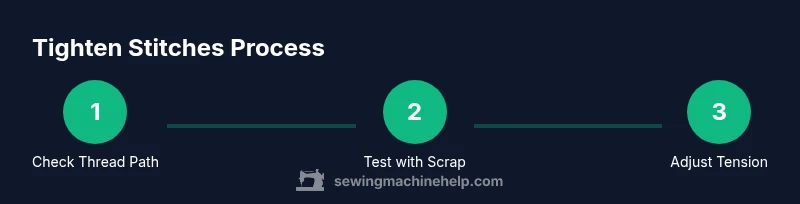
If you’re wondering how to make sewing machine stitches tighter, start with a plain-language checklist: verify correct threading, use a fresh needle, and test with a scrap fabric. Then adjust the top thread tension gradually, inspect the bobbin tension, and re-test. This guide provides a clear, step-by-step approach to achieving balanced stitches.
Understanding Stitch Tightness
If you want to know how to make sewing machine stitches tighter, you begin by understanding what controls stitch formation. Stitch tightness refers to how securely the thread is anchored within the fabric, and it depends on the harmony between the top thread tension, bobbin tension, and the thread path through the machine. A common misstep is assuming that turning the tension dial up will automatically fix all issues. In reality, tightening the top thread without inspecting the bobbin path or a bent needle can worsen bobbin loops on the underside or create skipped stitches. According to Sewing Machine Help, a systematic approach—checking threading, using a fresh needle, and testing on scraps—consistently yields reliable results. Use scrap fabrics to gauge changes before you sew your project, so you can adjust with intention rather than guesswork. A balanced tension also depends on fabric type; delicate fabrics need gentler settings than heavy denim, so approach each project with fabric-appropriate expectations.
Common Causes of Loose Stitches
Loose stitches can appear for a handful of reasons, and many of them are easy to fix with a careful inspection of the machine’s path and components. A common culprit is an incorrectly threaded machine, especially if the thread moves from the spool to the needle without following the proper route through the tension discs. Another frequent offender is a dull or bent needle; a tired needle can push the thread away from the fabric as it penetrates, producing loops on the underside. The bobbin can also be mis-threaded or wound unevenly, which creates inconsistent tension across stitches. Finally, lint and fabric scraps can accumulate inside the bobbin area, hindering smooth thread movement. By solving these issues, you’ll often find that stitches tighten naturally without aggressive dial turning. Consistency comes from a disciplined routine—thread path, needle integrity, and regular cleaning.
How Thread Path and Bobbin Interact
The interaction between the top thread and bobbin is fundamental to stitch tightness. If the top thread is too tight relative to the bobbin, your stitches may pull the fabric and create puckering. Conversely, if the bobbin tension is too tight, the bottom of the fabric will show excessive thread and possibly fabric damage. Both tensions must be calibrated in concert. Start by re-threading the machine completely, ensuring the thread passes cleanly through every guide and disc. Then wind and insert the bobbin as instructed by your manual, testing with scraps to observe how the upper and lower threads interlock. Adjusting one side without the other rarely yields durable, balanced stitches. Always practice incremental changes and document the settings you used for future reference.
Safe Testing Practices to Diagnose Tension
Testing is your ally when diagnosing stitch tightness. Use scrap fabric that mimics your project material to observe how changes affect the stitch. Start with a narrow seam and sew slowly, checking both the top and bottom stitches. If you notice looped top threads on the fabric surface, the top tension is likely too tight for that fabric; back off the top tension slightly and retest. If you see loose loops on the underside, the bobbin tension or bobbin path may need adjustment. Keep a notebook of each test: the fabric type, needle size, thread weight, and the exact dial setting. This habit reduces trial-and-error and helps you reproduce successful results.
Final Checks Before Sewing Your Project
When you’re ready to trust your stitches, perform a final check using a test seam on a fabric similar to your project. Confirm that the stitches lie flat, with no fabric distortion or thread loops on either side. Reassess tension by sewing in both forward and reverse directions to ensure stability. If your project involves critical seams (like zippers or buttonholes), run additional tests on sample scraps that include those features. Practicing these final checks minimizes post-project surprises and reinforces consistent results. Remember to replace any bent needles and clean the needle plate and feed dogs to keep tensions steady over time.
When to Seek Professional Help or Reassess Components
If stitches remain unreliable after a thorough self-diagnosis, consider reassessing machine components. Worn-out tension discs, a stretched belt, or a misaligned needle plate can cause persistent tension imbalance that simple dial adjustments can’t fix. A professional technician can inspect and calibrate your machine’s timing, tension mechanism, and overall function. At the same time, verify you’re using compatible thread types and fabric weights for your machine’s capabilities. Investing in a service check can save material waste and reduce frustration for frequent users. The Sewing Machine Help team recommends routine maintenance as the foundation of reliable stitch tightness, especially for machines used for regular sewing projects.
Tools & Materials
- Owner’s manual for your sewing machine(Consult for model-specific tension adjustments and bobbin setup)
- Replacement needle (universal, size appropriate for fabric)(Use a sharp needle; avoid bent or dull needles)
- Bobbin and bobbin case (clean and free of lint)(Have a spare bobbin for quick swaps)
- Scrap fabric for test swatches(At least 6x6 inches; use similar weight as project fabric)
- Quality sewing thread (matching project type)(Keep thread weight consistent with fabric; use same brand if possible)
- Lint brush or compressed air(Clean thread path and bobbin area)
- Tweezers(Remove lint or thread from tight spots)
Steps
Estimated time: 25-40 minutes
- 1
Prepare the machine and thread path
Unplug the machine. Remove the needle plate cover if needed and re-thread the machine from start to finish, verifying each guide. Ensure the spool sits correctly and that the thread follows the proper path through the tension discs. This establishes a clean baseline before any tension adjustments.
Tip: Double-check the thread goes through all guides and the tension discs without slipping. - 2
Check the needle and fabric compatibility
Install a fresh needle appropriate for your fabric type. Use a scrap fabric to test the stitch before sewing your project. Bent or dull needles can mimic tension problems by causing skipped stitches or uneven loops. Always test on a sample first.
Tip: If the needle is bent, replace it and retest; never sew with a damaged needle. - 3
Adjust top thread tension in small increments
Turn the top tension dial in small increments (¼ to ½ turn at a time) and sew a short test seam. Observe the balance of loops on the top and bottom. If top loops disappear, the top tension may be too tight for the fabric; back off slightly and test again.
Tip: Make only small adjustments and test after each change to avoid over-tightening. - 4
Inspect and adjust bobbin tension
Remove the bobbin and examine the bobbin case for lint or thread buildup. Rewind or replace the bobbin if necessary and reinsert it following the manual. Run a test seam to see if bottom loops improve. Adjust the bobbin tension only if your tests show bottom thread issues.
Tip: Keep the bobbin wound evenly; uneven winds can cause tension fluctuations. - 5
Sew a thicker seam to confirm stability
Test with a thicker fabric or layered fabric to push the machine’s tension system. If stitching remains balanced on thick fabric, you’re close to a stable setting for your project. If you see puckering or loose loops, refine both top and bobbin tensions together.
Tip: Document the settings that work best for thick fabrics for future projects. - 6
Document settings and perform final test
Record the exact needle size, thread weight, fabric type, and tension dial positions that produced the best results. Run a final test seam on scrap identical to your project. Store these notes for consistent results on future projects.
Tip: A small log keeps you from re-inventing the wheel with every project.
Your Questions Answered
Why are my stitches loose even after adjusting the tension?
Loose stitches often result from an incorrect thread path, a bent needle, or a mis-threaded bobbin. Start by re-threading the machine, replacing the needle, and ensuring the bobbin is properly wound and seated. If problems persist, inspect for lint buildup in the bobbin area.
Looseness usually comes from threading or needle issues. Re-thread, replace the needle, and clear the bobbin area, then test again.
How do I check top thread tension correctly?
Set the top tension dial to its mid-range position, sew a short line on scrap fabric, and observe the stitch. If the top thread forms loops on the bottom or pulls fabric, adjust the dial in small increments and re-test.
Start with the middle setting and adjust in small steps, testing after each change.
Can a damaged needle affect stitch tightness?
Yes. A bent or dull needle can cause improper penetration, leading to uneven stitches or skipped stitches. Replace the needle and re-test to see if tension issues resolve.
A damaged needle can throw off stitch balance. Replace it and test again.
What should I do if the bobbin tensions feel off?
If the bottom stitches are loose or uneven, inspect and adjust the bobbin tension as described in the manual. Clean the bobbin area and ensure the bobbin is correctly seated. Test on scrap fabric after adjustments.
Bottom stitches not right? Check bobbin tension and seating, then test.
Is it safe to adjust tension without a service manual?
Yes, you can adjust tension using the machine’s user guide and standard procedures. Avoid extreme changes and seek professional service if tensions remain inconsistent after careful testing.
You can adjust with the manual, but don’t overdo it—seek service if issues persist.
What’s the best way to test stitch quality?
Always test on scrap fabric that matches your project’s weight and fiber. Examine both the top and bottom stitches and ensure they lie flat without loops or puckering.
Test on scrap fabric; check both sides for balanced stitches.
Watch Video
The Essentials
- Test stitches on scrap fabric before sewing project pieces.
- Make small, incremental tension adjustments.
- Replace bent or dull needles promptly.
- Clean the bobbin area to remove lint and debris.
- Document settings for consistent results.