Sewing Machine Repair Near Me Within 5 Miles: A Practical Guide
Discover reliable sewing machine repair near me within 5 miles. Compare local shops, authorized centers, and mobile technicians with tips from Sewing Machine Help to get fast, trustworthy service.


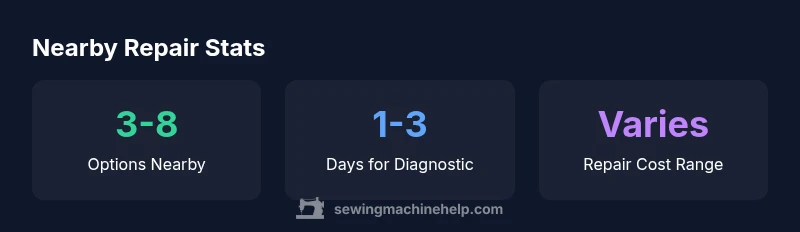
Nearby sewing machine repair options within 5 miles typically include local sewing shops, authorized service centers, and mobile technicians. To find them quickly, search 'sewing machine repair near me within 5 mi', read recent reviews, compare turnaround times, and ask about diagnostic fees and warranty. This approach helps you pick a reliable nearby repair service fast.
How Proximity Shapes Repair Options
For home sewists seeking sewing machine repair near me within 5 mi, proximity can strongly influence not just convenience but also the breadth of service models available. Short distances often enable in-person diagnostics, faster turnaround, and easier post-repair follow-up. According to Sewing Machine Help, nearby providers vary by model expertise, service type, and whether they offer in-store, on-site, or mobile options. In dense urban areas you may encounter more local shops that can perform rapid checks during business hours, while suburban areas tend to rely on mobile technicians who travel to your home or studio. When evaluating options, consider whether the shop supports your specific model brand, if they offer manufacturer-approved repairs, and whether they provide transparent estimates before any work begins. Accessibility, parking, and the ability to demonstrate the repair or test stitch on-site also matter. Above all, prioritize transparency about pricing and turnaround so you aren’t surprised by the final bill.
This is where distance intersects with trust. A nearby technician who communicates clearly and adheres to a written quote will often deliver a smoother repair experience and fewer follow-up visits. If you rely on public transit or have limited parking, a mobile technician can reduce hassle even when the price tag is similar to a shop. Keep in mind that proximity alone doesn’t guarantee quality; it’s the combination of location, expertise, and clear expectations that makes the difference.
What to Look for in a Nearby Repair Service
When you’re evaluating nearby repair options, look for a few essential indicators that reflect reliability and value. First, verify credentials and experience with your specific machine brand and model. Reputable shops often publish technician certifications or affiliations with sewing associations. Second, demand transparency: ask for diagnostic fees, a written repair estimate, parts pricing, and warranty terms on labor and parts. Third, check turnaround expectations—does the shop offer a firm window or only a rough estimate? Fourth, assess communication: prompt responses, clear explanations of problems, and regular status updates reduce uncertainty. Fifth, considerafter-repair support: will they double-check the machine after testing, and is there a return window if you notice posts repair issues? Finally, search for independent reviews from fellow home sewists; consistent positive feedback about accuracy, speed, and courtesy is a strong signal of dependable nearby service.
If you encounter any red flags—pressured up-selling, vague estimates, or lack of written quotes—step back and compare with another nearby option. A well-chosen local repair partner will provide the right balance of expertise, price, and reliability.
SewingMachineHelp emphasizes that the strongest local options combine model-specific knowledge with transparent practices, keeping your project on track while minimizing downtime.
How to Compare Costs and Turnaround
Cost and turnaround are core factors when choosing a nearby repair provider. Start by obtaining written quotes from at least two to three options within 5 miles, ensuring that quotes include diagnostic fees, parts costs, labor, and any minimum charges. Ask specific questions about what parts might be needed, whether replacements are original or compatible alternatives, and how warranty coverage is handled for both parts and labor. Turnaround can vary based on the complexity of the issue, availability of parts, and current workload. A short diagnostic window is helpful, but the ultimate timeline should account for potential delays if parts must be ordered. A good shop provides a conservative, written timeframe and updates if any changes occur.
To protect yourself, request a detailed breakdown and a written warranty that covers workmanship and replaced parts for a defined period. Compare not just the price, but the value you get: timely diagnostics, quality parts, and clear post-repair testing. If available, ask about bundled services such as maintenance checks that prevent future problems and extend the lifespan of your machine. A nearby provider who communicates proactively and offers transparent pricing is worth paying a little more for, given the reduced risk and easier follow-up.
How to Prepare Your Sewing Machine for Service
Preparation helps reduce repair time and avoid unnecessary costs. Begin by gathering essential information: the machine’s model number, serial number, and a concise description of the symptoms (e.g., missed stitches, thread bunching, non-responsive controls). Unplug the machine and remove batteries or detachable power sources if applicable. Clean visible lint around the bobbin area and feed dogs to give the technician a clearer view of the issue, but avoid disassembly unless explicitly instructed. Pack accessories that affect operation, such as feet, bobbins, manuals, and the foot pedal if you have it. Create a small, organized note detailing when the problem occurs (speed, fabric type, stitch pattern) and any recent changes or repairs. If you rely on a specific presser foot or needle type for your projects, bring those as well. Finally, back up important settings or stitch programs if your machine stores them digitally, and reset to default where possible.
Following these steps saves time, reduces miscommunications, and helps the repair technician reproduce the problem quickly. A small amount of prep can prevent multiple visits and help you return to projects sooner.
What to Expect During and After Repair
The repair journey typically follows a predictable sequence, even when you choose a nearby option. The technician usually performs an initial diagnostic to identify the root cause, validates symptoms, and confirms reproducibility on a test fabric. If parts are required, you’ll receive an estimate and, with consent, the replacement is ordered. After installation, the machine undergoes a functional test to verify stitching quality, tension, and stitch length across several fabrics. The technician should explain the repair work performed, any ongoing maintenance recommendations, and the warranty terms on both parts and labor. When you pick up the machine, inspect the work, confirm that the original symptoms are resolved, and ask for a quick post-repair test that you can observe at home. If something doesn’t feel right, request a follow-up or a return visit within the warranty window.
Keep copies of receipts and warranty cards, and maintain a short record of future concerns to help with potential follow-ups. A good repair experience also includes guidance on basic maintenance to prevent future failures, including routine oiling, cleaning, and tension checks.
DIY vs Professional Repairs: When to Seek Help
Not every sewing machine issue requires a professional repair, but many do. Simple maintenance tasks, such as cleaning lint and oiling external parts, can be confidently performed by most hobbyists with a basic toolkit. More complex problems—like timing issues, gear wear, motor faults, or electronic control problems—typically require a trained technician. If your machine is still under warranty, professional service at an authorized center is often advisable to preserve coverage. Issues that cause unusual noises, skipped stitches at higher speeds, or a non-functional bobbin system usually indicate mechanical or electrical concerns beyond routine upkeep. In these cases, seeking prompt professional help from a nearby repair provider within 5 miles can save time and prevent accidental damage. When in doubt, contact a trusted local technician for a preliminary assessment before attempting risky DIY fixes.
Finding Reputable Technicians Within 5 Miles: A Step-by-Step Plan
- Start with a targeted search: use queries like sewing machine repair near me within 5 mi and note the top results. 2) Filter by specialization: look for techs with experience on your machine brand and model. 3) Check credentials and reviews: read at least 3-5 recent customer experiences and confirm warranty practices. 4) Request quotes and timelines: ask for a written estimate and a clear turnaround window. 5) Verify guarantees: ensure parts and labor warranties are documented. 6) Contact the candidates: ask about accessibility, scheduling, and whether they offer on-site service. 7) Make a choice based on transparency, response quality, and demonstrated expertise. 8) After service, keep records for future maintenance. This practical step-by-step plan helps you locate reliable technicians quickly within 5 miles, reducing downtime for your projects.
Protecting Your Investment: Warranty and Maintenance
Warranty considerations matter after any repair. Clarify what is covered by parts and labor warranties, the duration, and what constitutes misuse or accidental damage. Routine maintenance—such as lint removal, needle checks, belt inspection, and regular oiling—helps prevent recurring issues and extends the life of your machine. Keep a simple maintenance schedule and record any recurring problems, so future technicians can anticipate issues more accurately. If you rely on the machine for important projects, consider enrolling in a preventive maintenance plan with a nearby shop within your 5-mile radius. Regular checkups can catch wear before it leads to failure, saving time and money in the long run.
Comparison of nearby repair options
| Option | Typical Turnaround | Typical Cost Range | Best For |
|---|---|---|---|
| Local repair shop | 2-5 days | varies by issue | In-person drop-off and pickup |
| Authorized service center | 3-7 days | higher range | Manufacturer-approved repairs |
| Mobile technician | 1-3 days | varies by issue | On-site repair at home or studio |
| DIY repair advice (not recommended) | N/A | N/A | When urgent but unqualified |
Your Questions Answered
What defines 'within 5 miles' in a dense city?
In dense urban areas, 'within 5 miles' typically includes multiple repair options reachable by car or public transit within a reasonable time frame. It may encompass local shops, authorized centers, and mobile technicians who travel to your location. Always verify travel time estimates when you request quotes.
Within five miles in the city usually means several nearby shops or mobile technicians can reach you quickly; confirm travel times when you get quotes.
Are mobile repair services as reliable as shops?
Mobile repairs offer convenience and often fast turnaround, especially for routine issues. Reliability depends on the technician’s brand expertise and parts access. Look for mobile providers with documented warranties and positive reviews, and ask about on-site testing after the fix.
Mobile repairs can be very reliable if the technician has proper brand training and offers a post-repair test.
How can I verify a technician's credentials?
Request evidence of manufacturer training, certifications, and any associations with sewing organizations. Read verifiable customer reviews, check for warranty terms, and ask for a written estimate before work begins. Contact the shop if you need clarification on their qualifications.
Ask for proof of training, certifications, and a written quote; read reviews before hiring.
What should I do if my machine is still under warranty?
If the machine is under warranty, request manufacturer-approved service to preserve coverage. Avoid third-party repairs if the warranty requires authorized centers. Always obtain written confirmation of what the warranty will cover after the repair and whether parts are OEM.
Check if the repair is warranty-covered before proceeding, and insist on written warranty details.
Should I repair or replace a failing machine?
Consider the machine’s age, frequency of issues, and repair cost relative to replacement. If repairs are frequent or components become scarce, replacement may offer better long-term value. Seek a professional assessment to compare projected costs over the next 2–3 years.
If it’s aging with repeated problems, replacement can be smarter than ongoing fixes.
What if I can't find repairs within 5 miles?
If local options are scarce, expand your search radius gradually and consider shipping the machine to an authorized service center if feasible. You can also consult mobile technicians who operate slightly farther away or seek remote diagnostic advice for simpler issues.
If you can’t find a nearby pro, widen the search or consider remote guidance for simple fixes.
“Nearby repair technicians can provide faster diagnostics and clearer communication, helping you avoid surprise costs. Proximity also supports easier follow-up if issues reoccur.”
The Essentials
- Start with nearby shops within 5 mi.
- Compare quotes and turnaround times.
- Ask about warranties and diagnostic fees.
- Prepare your machine before service to reduce cost.
- Consider mobile repair for convenience.