What is Wrong with My Sewing Machine Tension? Quick Fixes and Safe Steps
Diagnose and fix sewing machine tension problems fast with practical checks, step-by-step fixes, and safety tips from Sewing Machine Help to restore even stitches.


The most common sewing machine tension issue is misadjusted top thread or bobbin tension, usually from simple threading errors or a dull needle. Start with easy fixes: rethread both threads, replace the needle, and reset tension to the stock setting for your fabric. If looping or mis stitches persist, inspect the bobbin area for lint and ensure proper bobbin winding.
Why tension problems happen
Tension problems are among the most frustrating sewing machine issues, but they’re rarely catastrophic. In many cases, the cause is something you can fix with basic maintenance. According to Sewing Machine Help, tension problems are overwhelmingly linked to threading mistakes, needle issues, or fiber choices rather than a broken machine. When you see loops on the top or bottom of your stitches, it’s your cue to slow down and check the basics first. This section outlines the common culprits, explains how they affect stitch balance, and provides a practical, action-oriented path to restore even stitches for beginners and hobbyists alike.
Quick checks before you dig deeper
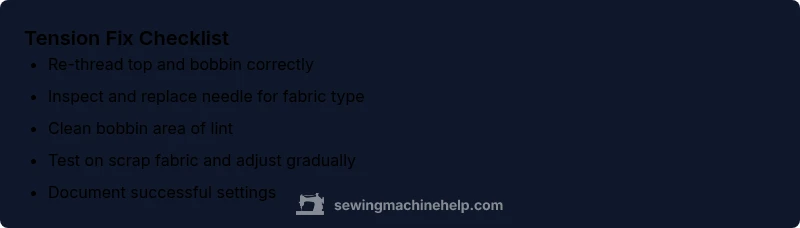
Before you start dismantling anything, run through a quick checklist that takes only a few minutes:
- Confirm the machine is threaded correctly from spool to needle, with the take-up lever engaged.
- Use the correct needle for your fabric and replace a bent or dull needle.
- Rewind and reinsert the bobbin, ensuring it moves freely and sits snugly in its case.
- Clean any lint from the bobbin area and feed dogs, especially if you sew dense fabrics.
- Test on a scrap swatch to compare fabric types and stitch settings.
These simple steps catch 90% of tension problems and prevent unnecessary disassembly. Remember, the goal is even stitches with balanced thread on both sides.
Re-threading and replacing the needle
Top thread tension issues often start with incorrect threading. Remove the thread entirely and rethread, paying attention to each guide and the take-up lever. Thread the bobbin correctly and wind it evenly. If the thread is catching or snagging, replace the needle with a fresh one of the appropriate type and size for the fabric you’re using. After rethreading, run a few stitches on scrap fabric to observe changes in tension. If loops persist on the top, move to the next checks with a clean slate.
In many cases, the needle is the simplest yet most overlooked culprit; a damaged or mismatched needle can throw off tension across all stitches.
Inspecting the bobbin and bobbin case
Bobbin tension problems are especially common when the bobbin is not wound evenly or inserted correctly. Remove the bobbin and clean the bobbin case of lint and thread fragments. Reinsert the bobbin so it spins freely in the correct direction and sits snugly. If the bobbin tension feels loose, gently adjust according to your machine’s manual—some machines allow a tiny adjustment with the screw, others require a full replacement of the bobbin case. Test on scrap fabric to gauge improvement after any adjustment.
Fabric, needle, and stitch settings interplay
Your fabric type heavily influences perceived tension. Lightweight fabrics often require looser top tension, while heavy fabrics need firmer tension and a stronger needle. Confirm you’re using the right needle size and shape for your fabric (e.g., sharp for woven, ballpoint for knit). Also verify stitch length and type suit the material. Balanced tension means you won’t see the top thread pulled too tight (causing fabric puckering) or bottom thread showing on the surface (indicating top tension is too tight or bobbin tension is off).
How to adjust tension safely and effectively
Adjust tension gradually, testing after each small change on scrap fabric. Start with the top thread tension; if stitches are loose on the top, tighten the top tension slightly and assess. If stitches are snarled or bottom thread appears on top, loosen the top tension or check bobbin tension. Use scrap fabric to compare results across several trials and document the settings you used. Always trim threads to avoid tangling and power off the machine when making large adjustments.
Testing, documenting, and long-term prevention
Create a small log of tension settings and fabric types you test on, so you can reproduce good results quickly. Keep a clean workspace, a good light source, and spare needles of various sizes. Regularly clean lint from the feed dog area and oil only as recommended by your machine’s manual. Finally, schedule routine maintenance, especially after sewing dense fabrics or long sessions, to maintain consistent tension and stitch quality.
Steps
Estimated time: 25-45 minutes
- 1
Re-thread top thread
Remove all thread. Re-thread spool, guides, take-up lever, and needle with the presser foot up. Run a few test stitches on scrap fabric to observe changes in tension.
Tip: Slow and deliberate threading reduces tension surprises. - 2
Replace the needle
Remove the old needle, choose a new needle appropriate for the fabric, and reinsert fully. Make sure the flat side faces the correct direction for your machine.
Tip: Always use a fresh needle for dense or delicate fabrics. - 3
Check the bobbin and case
Take out the bobbin, clean the area, and reinsert. Ensure the bobbin spins freely and sits snugly in the case without wobble.
Tip: Lint can masquerade as tension issues. - 4
Test and adjust top tension
Sew on scrap fabric and observe. If top stitches are loose, tighten the top tension slightly; if they’re tight and puckered, loosen it.
Tip: Make the smallest adjustment and test again. - 5
Check fabric compatibility
Confirm you’re using the right needle for the fabric and adjust stitch type/length to suit. Knit fabrics need different handling than woven fabrics.
Tip: Fabric choice often drives tension needs. - 6
Document results and plan maintenance
Record the successful settings and the fabric type. Schedule a routine cleaning and lubrication per the manual to prevent future tension drift.
Tip: Keep a simple notebook near your machine.
Diagnosis: Stitches looping or tension-balanced threads alternating between top and bottom; fabric puckering
Possible Causes
- highTop thread misthreading or incorrect threading path
- highBobbin inserted incorrectly or bobbin tension out of spec
- mediumWorn or incorrect needle for fabric
- lowLint or debris in bobbin area affecting thread path
Fixes
- easyRe-thread the top thread, ensuring it passes through all guides and the take-up lever
- easyRemove and reinstate the bobbin, clean debris, and reinsert correctly with proper bobbin tension
- easyInstall a fresh needle appropriate for the fabric and stitch type
- mediumClean the bobbin area, remove lint, and verify bobbin tension or consult the manual for bobbin-case adjustments
Your Questions Answered
Why is my top thread looping on the bottom of my stitches?
Top thread looping typically means the top thread is not threading correctly or the needle is dull. Re-thread the machine, test with a fresh needle, and verify the take-up lever is functioning properly. If looping continues, inspect the bobbin area for lint or misplacement.
Top thread looping usually means incorrect threading or a dull needle. Re-thread and test with a new needle; check the bobbin area for lint if it persists.
Why is the bottom thread showing on the top of the fabric?
This is commonly caused by tight top tension or loose bobbin tension. Re-check and adjust the top tension gradually, and ensure the bobbin is wound evenly and seated correctly. Test on scrap fabric after each adjustment.
Bottom thread showing on top usually means top tension is too tight or bobbin tension is off. Adjust gradually and test on scrap fabric.
Can fabric type cause tension problems?
Yes. Lightweight fabrics often need looser top tension, while heavy fabrics require firmer tension and a stronger needle. Always tailor needle type and stitch length to the fabric, and test on a scrap swatch.
Definitely. Fabric type affects tension; adjust needle and stitch length accordingly and test on scrap fabric.
Does replacing the needle fix all tension problems?
Replacing the needle can fix many tension issues, especially if the needle is bent or dull. Use the correct size and type for your fabric and re-test on scrap fabric after replacement.
Replacing the needle fixes many tension problems, especially if it’s worn. Test on scrap fabric after replacement.
When should I call a professional technician?
If you’ve exhausted rethreading, needle changes, bobbin checks, and fabric adjustments without improvement, or if the machine makes unusual noises, consult a professional. Ongoing tension issues may indicate internal wear or timing problems.
If basic fixes don’t work and the machine sounds off, it’s time to consult a pro.
How can I prevent tension problems in the future?
Regular maintenance, including lint removal, oiling per the manual, and replacing needles on schedule, reduces tension drift. Always test stitches after long runs or material changes.
Prevent tension issues with routine maintenance and testing after changes.
Watch Video
The Essentials
- Start with easy fixes: rethread, replace needle, inspect bobbin.
- Test on scrap fabric after each change to gauge tension.
- Keep the bobbin area clean to prevent tension drift.
- Document settings for repeatable results.
- Know when to seek professional help if issues persist.