What to Do When Fabric Is Too Thick for Sewing Machines
Discover practical, step-by-step strategies to sew thick fabrics like denim or canvas. Learn needle choices, feet, tension, feeding techniques, and safe alternatives to keep your project moving smoothly.


If your fabric is too thick for your sewing machine, stop and adjust before forcing the needle. Start with a sharp jeans needle (size 90/14–100/16), reduce stitch length, and ease presser foot pressure. Add a walking foot or roller foot, feed slowly, and test on scraps. For very bulky layers, consider a heavy‑duty machine.
Why Thick Fabric Causes Problems
According to Sewing Machine Help, thick fabrics often create resistance at the feed and bulk at the seams, leading to skipped stitches, jams, or uneven feeding. Heavy layers can place extra load on the needle shaft, causing bending or breakage if forced through too quickly. By approaching thickness with technique and the right tools, you can keep the machine happy and the fabric moving smoothly. The key is to respect the fabric’s bulk, plan the seam path, and use the correct needle and foot for multi-layer sewing. In practice, most problems arise from trying to push through bulk instead of adapting the approach.
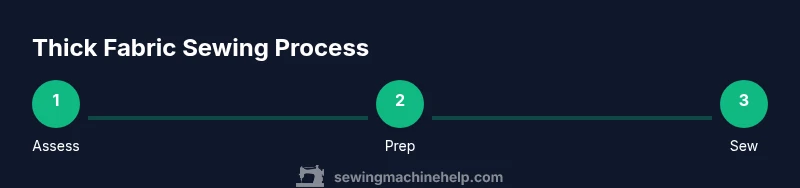
Prep before you sew thicker fabrics
Thick fabrics demand forethought. Begin by inspecting seam lines and bulk zones, trimming excess bulk at corners or folds, and pre-pressing to flatten layers. Cut carefully to avoid misaligned edges that create catches after stitching. Pre-pressing with a light spray or starch can help flatten stubborn folds without making the fabric stiff. Have a scrap swatch that mimics your project ready to test settings—the goal is to anticipate jams and adjust before you sew the actual garment or item.
Tools and materials for thick fabrics
Gather tools that specifically support bulky sewing. You’ll want a sturdy denim jeans needle, a heavy-duty needle, and a walking foot to feed multi-layer stacks evenly. A roller foot or non-stick foot helps with slick surfaces and leather-like fabrics. Keep strong polyester thread, sharp shears for bulk trims, and fabric clips to manage layers without distorting alignment. Having these at hand reduces improvisation and improves results.
Needle selection and threading
Choose a needle designed for thick fabrics (jeans/denim needle) or a heavy-duty universal needle, and thread with strong polyester. Thread path should be clean and taut to avoid skipping. If the needle hits a thick seam, pause and rethread to ensure there are no catches in the needle bar or thread guide. Always test threading on a scrap to confirm smooth operation before committing to the project.
Thread selection and tension considerations
For bulky fabrics, matching thread strength to fabric weight matters more than color. Use a robust polyester thread with good abrasion resistance. Start with a mid-range tension and adjust based on stitch formation observed on a scrap. If your stitches look loose or uneven on thick sections, increase needle sharpness and check that the upper thread is feeding evenly through the tension discs.
Presser feet and feeding techniques
A walking foot dramatically improves feeding for layered or bulky fabrics by equalizing feed from top and bottom. If you don’t have a walking foot, a roller foot can help prevent sticking and shift. Feed slowly with consistent pressure; avoid tugging or forcing fabric under the needle. Lightly lift the presser foot when turning at corners to avoid bunching.
Machine settings optimization for thickness
Reduce stitch length for a stronger finish on bulk, but avoid extreme shortening that can cause perforations. Slow your sewing speed to maintain control through dense sections. Adjust the presser foot pressure to provide enough grip without crushing the fabric. Neutral tension is a good starting point; test on fabric scraps and increase or decrease as needed based on stitch balance.
Stitching strategies and test swatches
Always start with a scrap swatch that mimics your project. Practice sewing a few inches of multiple-layer stacks to observe feed balance, needle clearance, and seam flattening. If your test shows puckering or skipped stitches at bulk zones, revise needle type, foot choice, or stitch length. Use a straight stitch for most thick layers, reserving zigzag only for stretch or edge finishing.
When to switch to a heavy-duty machine or service
If you consistently work with very thick layers like leather-backed canvas or multiple denim layers, a heavy-duty or industrial machine may be the practical long-term choice. These machines accept larger needles and provide higher torque for dense fabric. Regular maintenance—oil schedules, cleaning the bobbin area, and checking belt tension—also helps prevent recurring issues that plague high-bulk sewing.
Maintenance and troubleshooting tips
Keep the needle plate and bobbin area clean to prevent fibers from building up around moving parts. After sewing thick fabric, remove lint from the feed dogs and check tension alignment. If you notice thread shredding or skipped stitches, re-thread the machine and re-tension upper and lower threads. Regular valve cleaning or servicing by a qualified technician is advisable for older machines facing frequent resistance with bulk.
Alternative approaches: hand finishing and seams
When machine sewing remains stubborn, consider hand-finishing techniques for the critical bulk areas, such as hand-stitching along thick seams or using overcast blind stitches for edge finishes. You can also press seam allowances open and topstitch to reduce bulk visually while keeping the project secure. For some projects, a combination of machine sewing for the bulk and handwork for detail offers the best balance of durability and speed.
Practical checklist before your next thick-fabric project
- Inspect fabric for stiffness and bulk at seam lines
- Trim excess bulk and pre-press layers
- Gather the right needles, threads, and feet
- Create and test on a scrap swatch
- Sew slowly, with appropriate tension and pressure
- Consider a heavy-duty machine for frequent heavy work
Tools & Materials
- Jeans/denim needle (size 90/14 or 100/16)(Sharp needle designed for heavy fabrics)
- Heavy-duty universal needle (size 110/18 or 120/19)(Alternative if jeans needle isn’t available)
- Walking foot (even-feed foot)(Prevents unequal feeding on multiple layers)
- Roller foot(Helpful for extremely bulky seams)
- Non-stick/teflon foot(Good for vinyl, leather, and slick fabrics)
- Strong polyester thread(Choose color-matched thread with fabric weight)
- Sharp fabric scissors or shears(For trimming bulk and cutting bulk pieces)
- Fabric clips or clamps(Hold layers without shifting during feeding)
Steps
Estimated time: 60-120 minutes
- 1
Assess fabric thickness and seam allowances
Begin by evaluating where the fabric will be thickest, especially at fold lines and seam allowances. Mark starting points and plan your stitching path to minimize bulk. This initial assessment guides the needle choice and foot selection for smoother sewing.
Tip: Use a test swatch that mimics your project to confirm assumptions. - 2
Prepare and trim bulk
Trim excess bulk along seam allowances and corners. If needed, slice through bulk carefully with a sharp blade to reduce resistance while preserving fabric integrity. Proper bulk reduction reduces the risk of needle deflection.
Tip: Don’t over-trim—just reduce bulk enough to improve feed. - 3
Attach the correct needle and threading
Install a denim or heavy-duty needle and thread with clean threading. Check the needle’s clearance path and tension discs for obstructions. A clean threading reduces skip stitches and improves stitch balance on dense fabrics.
Tip: Re-thread from start if you encounter binding or misses. - 4
Set the foot and feed strategy
Attach a walking foot if possible; this equalizes feed from top and bottom. If unavailable, use a roller or non-stick foot. Avoid forcing fabric; instead, guide it steadily with even pressure.
Tip: Raise the presser foot when turning the fabric to avoid creases. - 5
Adjust stitch length and speed
Begin with a longer stitch length on bulk to prevent perforations. Dial back speed to maintain control through thick sections. Shorter stitches improve seam strength but can increase bulk if overused.
Tip: Test several inches on a scrap before finalizing. - 6
Test on a scrap swatch
Sew a multi-layer scrap that matches your project’s bulk to observe feed, tension, and needle clearance. Adjust settings based on test results before continuing the actual project.
Tip: Document settings that work for future reference. - 7
Begin stitching the project
Start at a bulk-prone edge and feed slowly, keeping hands steady without pulling. Pause to realign if the fabric shifts. Stop to fix thread tangles or fabric snagging before continuing.
Tip: Let the machine do the work; don’t push the fabric with force. - 8
Handle corners and transitions
Take extra care at corners where bulk accumulates. Pivot gradually and consider basting or trimming just at the corner to avoid a bulky turning point.
Tip: Short trims at corners help maintain seam shape. - 9
Finish seams and secure ends
Use backstitching on the first and last few stitches to lock the seam. Consider edge finishing if bulk makes the seam more prone to fraying. Trim threads neatly after finishing.
Tip: A clean finish reduces bulky thread buildup. - 10
Assess the completed seam
Inspect the seam for skipped stitches, puckering, and alignment. If issues appear, pause to re-thread or adjust tension before proceeding.
Tip: Address any issue in the bulk area on the spot. - 11
Maintenance after sewing thick fabric
Clean lint from the bobbin area and feed dogs after finishing. Check belt tension and oil if your machine requires it for heavy work. A well-maintained machine handles bulk better over time.
Tip: Keep a small maintenance kit handy for quick care. - 12
Choose the best path forward
If frequent thick fabrics are part of projects, consider a dedicated heavy-duty machine. Balance practicality with cost by weighing your typical fabric weight and project size.
Tip: Plan future projects to minimize repeated heavy sewing when possible.
Your Questions Answered
Why is my sewing machine struggling with thick fabric?
Bulky multi-layer sections can overwhelm the feed mechanism and needle clearance. Adjust needle type, foot choice, tension, and feeding speed before forcing the fabric. Testing on scraps helps you dial in settings.
Bulk fabric can overwhelm the machine; adjust needle, foot, and tension, then test on scraps before continuing.
What needle should I use for denim or canvas?
For denim or canvas, start with a jeans needle size 90/14 or 100/16. If unavailable, a heavy-duty universal needle in a similar size also works. Ensure the needle is sharp and not bent.
Use a jeans needle in the right size, or a heavy-duty universal needle if needed, and ensure it’s sharp.
Can I sew leather on a domestic machine?
Yes, with the right needle (often a leather needle) and a foot suited for leather, plus careful tension adjustment. A roller foot can help with slipping, but test on scrap leather first.
Leather can be sewn on a home machine with the proper needle and foot. Test first.
Is a walking foot necessary for multiple layers?
A walking foot is highly recommended when sewing multiple layers or slippery fabrics because it feeds layers evenly, reducing bunching and skipped stitches.
A walking foot helps feed thick layers evenly and prevent shifting.
Why do stitches bunch or skip on thick seams?
Bunching or skipping usually results from improper tension, a dull needle, or poor feed. Re-thread, adjust tension, switch to a sharper needle, and test on scraps.
Tension and needle sharpness cause bunching; re-thread and test on scraps.
Watch Video
The Essentials
- Plan bulk beforehand for dense fabrics
- Use the right needle and feet to improve feed
- Test on scraps before sewing the actual project
- Sew slowly and revise tension for bulk areas
- Consider a heavy-duty machine for frequent heavy sewing