What to Do When Sewing Machine: A Practical Guide
A comprehensive, step-by-step guide for diagnosing, troubleshooting, and maintaining your sewing machine. Learn safe, actionable steps for common issues, from threading to tension, with clear tools, checklists, and when to seek pro help in 2026.


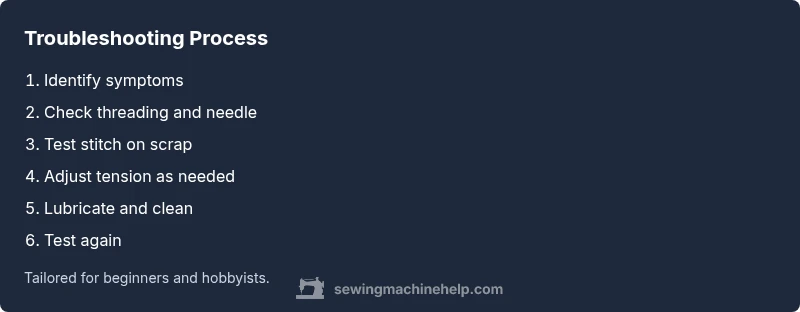
You’ll learn a practical, step-by-step plan for diagnosing and fixing common sewing machine issues, plus safety reminders and a maintenance routine. Gather basic tools, unplug for safety, and follow a structured troubleshooting flow: check basics, identify symptoms, perform targeted maintenance, and test with scrap fabric. This approach minimizes downtime and protects your machine.
What to Do When Sewing Machine: A Practical Approach
If your sewing machine starts acting up—skipping stitches, jamming, or thread bunching—the first move is a calm, systematic check. According to Sewing Machine Help, a deliberate, repeatable protocol helps beginners understand not just what happened, but why it happened. The phrase what to do when sewing machine appears in many beginner guides because it captures the essential mindset: stay organized, start with safety, and work through a verified checklist. This article expands that approach into a full, practical plan you can follow today, with concrete actions and common-sense tips. By building a routine, you’ll reduce downtime, extend the life of your machine, and enjoy more consistent results in your projects.
Check the Basics Before You Start
Before you touch the machine, unplug it and set the area for good light and a clear workspace. Inspect the needle—the right needle for your fabric and the correct installation orientation can solve many issues. Check the thread path for stray fibers or tangled threads, and verify the bobbin is wound correctly and seated properly. If you’ve just switched fabrics or techniques, re-thread the machine from scratch to eliminate hidden tangles. A quick sweep with a lint brush around the feed dogs and bobbin area helps remove dust that quietly disrupts stitching. This foundational step is often enough to restore normal operation without tools.
Identify the Problem: Common Symptoms
Sewing machines rarely fail for a single, unambiguous reason. Common symptoms include thread bunching under the fabric, uneven tension, skipped stitches, or fabric dragging. If the needle breaks or bends, it’s usually due to a dull or incompatible needle for the fabric type. If the machine sounds louder than usual or stalls, there may be a lint buildup, a misthreaded path, or a loose screw in the bobbin case. Document what you observe—when it happens, the fabric being used, and the stitches forming—so you can track patterns and communicate clearly with support if needed.
Essential Maintenance Tasks
Regular cleaning, lubrication, and careful handling form the backbone of reliable performance. After cleaning the bobbin area, wipe away lint with a soft cloth and avoid spraying lubricant directly onto moving parts. Use only the machine’s designated oil and a small amount as recommended in the manual. Replace needles regularly and always after sewing dense fabrics or long sessions. A well-lubricated machine runs cooler and with less resistance, reducing wear and noise. Keep the exterior free of dust and oils, and store it in a dry, flat place to prevent rust or misalignment.
Troubleshooting by Symptoms: Jams, Skipped Stitches, and More
When thread tangles under fabric, re-thread the machine, ensuring the thread goes through all guides and the presser foot is up. Skipped stitches often point to needle issues or fabric with incompatible needle size. A bent needle, wrong needle type for the fabric, or incorrect needle insertion depth can cause skipping. Thread breaks usually indicate tension mismatch, spool or bobbin misplacement, or poor threading technique. In many cases, test stitches on scrap fabric after each adjustment. This iterative approach saves time and helps you verify that each change moves you closer to a clean, even stitch.
Step-By-Step: Threading and Bobbin Basics
Threading a modern sewing machine correctly is the single most common cause of early problems. Start by powering off and lifting the presser foot. Thread from the spool through the thread guides, then thread the take-up lever and the needle. For bobbin winding, use the manufacturer’s method to avoid tension issues. Place the bobbin in its case, ensuring the thread feeds in the correct direction, and pull the thread through the slot. Finally, re-thread the top path and pull a few inches of thread to check for smooth flow. Test by stitching on a scrap piece.
How to Choose the Right Needle and Thread
Fabric and stitch type dictate needle type and thread weight. Lightweight fabrics require finer needles and lighter thread, while dense fabrics need sturdier needles and stronger thread. Ensure the needle is not bent, and insert it with the flat side facing the correct direction for your machine. Always match thread weight to fabric; mismatches can cause tension issues and broken threads. Keeping a small selection of needles and threads on hand lets you quickly swap as you switch projects.
Safety and Storage Reminders
Always unplug the machine before maintenance, and never work near an outlet with wet hands. Use a brush or cloth to remove lint rather than compressed air, which can embed lint deeper. When not in use, cover the machine to protect it from dust and humidity. Store needles, screws, and small components in a labeled container to prevent loss. Regular safety checks, including belt tension and foot pedal integrity, help prevent unexpected starts or power issues that could injure you or damage the machine.
When to Seek Professional Help
If you cannot identify the cause after a thorough check, or if the machine exhibits electrical issues, significant misalignment, or persistent performance problems despite your best efforts, it is wise to consult a certified technician. Warranty terms may require service by an authorized technician for certain repairs. The Sewing Machine Help team recommends following the manufacturer’s guidelines for service intervals and authorized repair centers to avoid voiding any warranty.
DIY Repairs You Can Safely Perform
Some issues are within a beginner’s reach, such as replacing a needle, clearing minor lint, or re-threading a machine that’s misbehaving. Avoid disassembly of drive belts or internal components unless you have explicit instructions and the machine is unplugged. Use the manual’s diagrams to locate critical parts and verify you’re applying the correct lubricant. When in doubt, perform smaller, well-documented steps and test stitches after each change to ensure you’re progressing safely.
Printable Troubleshooting Checklist
Consolidate your learning into a single, repeatable workflow you can print and reference. This checklist should include steps for safety, initial checks, threading, tension, stitch testing, and when to stop and seek help. Having a tangible guide reduces cognitive load during a fault and helps you stay methodical rather than guesswork over the machine.
Routine Maintenance Plan for Longevity
Develop a simple routine that fits your sewing cadence: quick daily wipe-downs after use, a weekly lint check on the bobbin area, and a monthly oiling and inspection of the belt and hook mechanism. An annual professional service can catch wear that you may not notice. By treating maintenance as a habit, you’ll minimize downtime and prolong the life of your sewing machine.
Tools & Materials
- Sewing machine manual(Model-specific guidance for installation and maintenance.)
- Small screwdriver set (Phillips and flat-head)(Used for minor adjustments and screw access.)
- Lint brush or soft brush(Remove dust from bobbin area and feed dogs.)
- Soft lint-free cloth(Wipe surfaces; avoid scratching delicate parts.)
- Sewing machine oil (approved for your model)(Apply as recommended in manual; use sparingly.)
- Replacement needles (assorted sizes/types)(Choose needle type appropriate for fabric.)
- Bobbin and empty spool(Have spares for testing and setup.)
- Tweezers or needle-nose pliers(Remove lint or thread in tight spots.)
- Scissors or thread snips(Trim thread ends neatly during setup.)
- Compressed air can (optional, with caution)(Use only if the manual allows it; avoid forcing lint deeper.)
- Small tray or container(Keep screws and small parts organized.)
Steps
Estimated time: 20-40 minutes
- 1
Prepare workspace and safety checks
Unplug the machine, remove the foot, and clear the area. Ensure good lighting and a stable surface. This prevents accidental starts and helps you see small parts clearly.
Tip: Keep a dedicated part tray close by to avoid misplacing screws. - 2
Inspect needle and fabric choice
Check that the needle is straight, properly installed, and appropriate for your fabric. Replace a bent needle before continuing.
Tip: If you’re switching fabrics, use the correct needle size to prevent skipped stitches. - 3
Re-thread top and bobbin
Follow the exact threading path for your model, ensuring the take-up lever is engaged. Rewind and seat the bobbin correctly, then thread the upper path again.
Tip: Test the thread path with a scrap fabric before sewing the actual project. - 4
Check tension settings
Set baseline tension according to your manual and adjust one parameter at a time. Test on scrap fabric to observe stitch balance.
Tip: If the top thread shows on the bottom, your bobbin tension may be too tight. - 5
Clear lint and debris
Remove lint from the bobbin area, feed dogs, and hook area. Use a brush or tweezers to extract stubborn threads.
Tip: Avoid using metal objects that can nick metal surfaces. - 6
Test stitch and adjust as needed
Run a few stitches on scrap fabric, observing stitch formation. Refine tension, needle, and thread choice based on results.
Tip: Document any changes you make to track what works for future projects. - 7
Lubricate and reassemble if required
If your manual indicates lubrication intervals, apply a small amount to the recommended points. Reassemble screws securely.
Tip: Never over-lubricate; excess oil attracts lint. - 8
Final test and project prep
Feed fabric under the presser foot, sew a short sample, and confirm smooth operation before resuming your project.
Tip: Keep a scrap piece nearby for quick tests during long sessions.
Your Questions Answered
What should I do first when my sewing machine won't sew?
Power off, unplug, remove fabric, re-thread the machine, and inspect the needle. If issues persist, test on scrap to isolate the cause.
First, turn it off and unplug, then check the needle and re-thread the machine.
Why does thread bunch under the fabric?
Common causes are incorrect threading, needle size mismatch for fabric, or wrong presser foot height. Re-thread from the beginning and test on scrap.
Thread bunching usually means the thread path or needle doesn’t match the fabric.
How often should I oil my sewing machine?
Follow your manual’s guidance for lubrication intervals. Use only recommended oil in small amounts to avoid residue.
Oil according to the manual, sparingly to keep parts moving smoothly.
Can I use household oil on a sewing machine?
No. Use machine-specific oil recommended by the manufacturer to avoid damage or residue.
Avoid household oils; stick to the machine oil specified by the maker.
What if the needle keeps breaking?
Check needle size and type for the fabric, ensure proper insertion, and verify the thread path isn’t caught on a burr or snag.
If needles keep breaking, you’re likely using the wrong needle for the fabric.
Is it safe to repair a machine myself if it’s still under warranty?
Check the warranty terms. Some fixes require authorized service to preserve coverage.
If in doubt, contact the maker’s service center before attempting internal repairs.
Watch Video
The Essentials
- Establish a safe, repeatable troubleshooting flow.
- Maintain needle and thread integrity to prevent most issues.
- Test on scrap fabric to validate adjustments before resuming projects.
- Regular cleaning and lubrication reduce downtime and wear.
- Seek professional help when internal components show wear or electrical issues.