Can You Use Embroidery Thread in a Sewing Machine: A Practical Guide
Explore whether embroidery thread can be used in a sewing machine, with setup tips, needle choices, tension adjustments, and best practices for different fabrics.


Yes, you can use embroidery thread in a sewing machine, but only under careful conditions. Start with compatible fabrics and a sharp embroidery or universal needle, and adjust the top tension to prevent looping. Always test on scrap fabric first to check stitch quality and avoid jams on your project. For consistent results, choose polyester embroidery thread and avoid very heavy fabrics.
Why embroidery thread behaves differently on a sewing machine
Embroidery threads are designed for decorative stitches and high sheen, which means they are often finer with a different twist and lubrication than standard sewing threads. This affects how the thread feeds through tensions and guides, and how it interacts with fabric. On a home machine, embroidery thread can shed, kink, or cause bird-nesting if tension isn't adjusted. According to Sewing Machine Help, understanding these differences is the first step to successful use. In this section we explore the mechanics behind thread behavior, spool winding, and the impact on stitch formation across common fabrics. For beginners, starting with scrap fabric tests and recording what works best with your machine is highly recommended to build confidence and avoid costly mistakes.
Can embroidery thread be used in a regular sewing machine safely?
Yes, embroidery thread can be used on many machines, but not all threads behave the same way. Rayon embroidery thread is known for a bright sheen but can be more prone to snagging on some fabrics, while polyester threads are generally stronger and more colorfast. Always use a sharp needle appropriate for embroidery thread and fabric weight. Start with a looser top tension and consider stabilizers for delicate or knit materials. If loops form on the top, loosen the upper tension or add stabilizer; if the thread breaks, inspect the needle eye for burrs or a damaged thread. The goal is smooth, even stitches without puckering, which often requires a short test on scrap fabric before committing to a project.
When it's appropriate to use embroidery thread (and when not)
There are times when embroidery thread brings delightful texture and color to sewing projects. Use it for decorative topstitching on woven fabrics, accent seams in quilts, or monograms on stable textiles, where the thread can shine without excessive stress. Avoid using embroidery thread for high-stretch garments or heavy loads unless you pair it with a stabilizer and a compatible needle system. If you are unsure about a specific fabric, start with a small swatch and evaluate how well the thread feeds, how the fabric handles tension, and whether the result matches your design intent. This approach keeps projects predictable and reduces waste.
Essential setup: needles, tension, and threading
Before sewing, select a needle appropriate for embroidery thread and the fabric weight—typically a sharper needle in a mid-range size works well for woven fabrics. Thread the machine using guides compatible with decorative threads, and keep upper-tension adjustments modest at first. A thread net or spool cap helps prevent static and tangling, especially with slippery rayon or metallic blends. Test a few stitches on a scrap swatch, watching for any looping, skipping, or broken threads. Stabilizers are often your ally on light or stretch fabrics; beginning with a tear-away stabilizer can reduce puckering and keep stitches looking clean.
Troubleshooting common issues
If embroidery thread shreds or knots, verify that the needle is not dull or bent, and ensure there are no burrs on the eye. Bird-nesting at the bobbin area usually points to thread-path issues or incorrect bobbin installation. If loops appear on the top, loosen the top tension slightly and confirm the thread path is correctly seated in the guides. Knots under fabric can indicate bobbin tension imbalance or a lint buildup in the bobbin area. For delicate fabrics, consider stabilizers or testing different thread brands to find a compatible balance. Regular maintenance and cleaning of the bobbin area also prevent many recurring problems.
Fabric types and stabilizers that help embroidery thread
Stabilizers play a crucial role when stitching with embroidery thread. Light woven fabrics benefit from light tear-away stabilizers, while heavier knits often require cut-away stabilizers or additional backing. For sheer or delicate fabrics, a backing fabric or spray-on stabilizer can prevent fiber sinking and puckering. When using metallic or specialty threads, stabilizers reduce noise and improve smooth feeding through the feed dogs. The combination of the right stabilizer with fabric weight supports consistent tension and satin-like finishes across multiple stitches.
Testing and maintenance for long-term results
Always test new thread and fabric combos on a scrap swatch. Note how the thread behaves under different tensions, fabric weights, and stitch types. After sewing, clean lint from the bobbin area and oil the machine per manufacturer guidelines to extend life when working with embroidery thread, which can leave more fiber behind than regular sewing thread. Consider having spare needles ready and replace them when they show any sign of wear. Regular checks keep your machine running smoothly and reduce surprises during final production.
Quick-start checklist: choosing the right thread and getting started
- Pick polyester embroidery thread for most projects to balance sheen, strength, and durability.
- Use a sharp, appropriate needle for the fabric weight; avoid worn or bent needles.
- Test stitch on a scrap swatch; adjust tension and stabilizer as needed.
- Maintain a clean bobbin area and check for burrs or lint buildup.
- Keep your machine settings consistent and document successful thread/fabric combos for future projects.
Tools & Materials
- Embroidery thread (polyester or rayon)(Choose same weight across top and bobbin when possible; test colorfastness first.)
- Embroidery/Universal needle(Size 70/10 to 90/14 depending on fabric weight.)
- Scrap fabric for testing(Use your project fabric or a close substitute to test tension and feed.)
- Bobbin thread (matching weight)(Ensure proper winding to prevent tension issues.)
- Spool net or spool cap(Helps prevent tangling on lightweight threads.)
- Stabilizer (tear-away or cut-away)(Useful for knits or delicate fabrics to prevent puckering.)
- Scissors and thread snips(Sharp, clean cuts prevent fraying.)
- Lint brush / soft cloth(Keep bobbin area clean to avoid jams.)
Steps
Estimated time: 45-60 minutes
- 1
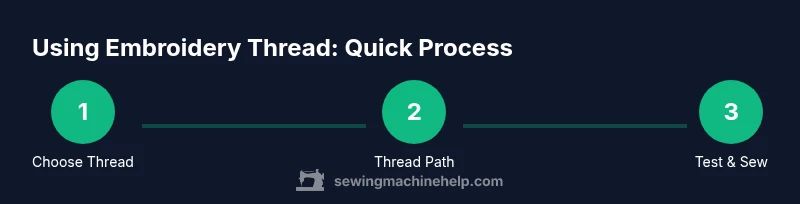
Choose the right thread and fabric
Select compatible embroidery thread and fabric; verify fiber type, fabric weight, and stitch goal. This initial choice reduces tension problems later and helps achieve clean results. Start with a light or medium-weight woven fabric for best outcomes.
Tip: Test a small swatch first to confirm the thread behaves as expected. - 2
Install the correct needle
Replace the needle with an embroidery- or universal-type sharp needle sized for the fabric. A fresh needle reduces skipped stitches and thread breakage when sewing with delicate or decorative threads.
Tip: Avoid using a dull needle; it can scratch the thread and fabric. - 3
Thread the machine with embroidery thread
Follow the thread path guides designed for decorative threads and ensure the thread sits properly in each guide. Use a spool net or cap if your thread tends to snag, and guide the thread gently to prevent snags.
Tip: Keep thread tension consistent during threading to avoid fluctuations. - 4
Adjust tension for embroidery thread
Set a lighter top tension initially and test on a scrap. If you see loops on the top or bottom, fine-tune the tension gradually and re-test until stitches are balanced.
Tip: Document the settings that work for a given fabric and thread. - 5
Test on scrap fabric
Sew a short sample that mimics your final design. Check for puckering, stitching consistency, and thread breaks. If issues persist, modify stabilizers, tension, or needle type.
Tip: Use scrap fabric with similar weave to your project. - 6
Proceed with your project
Once the test stitches look good, sew slowly and monitor thread behavior. Stop if you notice tension changes or thread breaks, and adjust before continuing.
Tip: Avoid rushing; embroidery threads perform best with steady, even feeding.
Your Questions Answered
Can embroidery thread damage my sewing machine?
Embroidery thread itself doesn’t typically damage a machine when used correctly. Most problems come from incorrect threading, tension, or incompatible fabrics. Regular maintenance and following the manufacturer’s guidelines help prevent issues.
Embroidery thread usually won’t damage your machine if you thread it correctly and monitor tension.
Should I use embroidery thread in the bobbin or only the top thread?
Start with embroidery thread in the top thread and matching bobbin weight if your machine allows. If the fabric puckers or stitches skip, adjust tension or use stabilizers. Some projects work best with a neutral bobbin thread in addition to the top thread.
Usually, start with embroidery thread in the top; adjust bobbin weight if needed.
What fabrics work best with embroidery thread?
Wovens with stable weaves (like cotton or linen) tend to perform best. Delicate knits may require stabilizers to prevent stretching and puckering. Avoid extremely stretchy fabrics unless you use appropriate stabilizers and a moveable foot.
Sturdy woven fabrics usually give the best results for embroidery thread.
Do I need stabilizers when using embroidery thread?
Stabilizers help prevent stretching, skewing, and puckering, especially on light or delicate fabrics. Tear-away stabilizers are common for woven fabrics, while cut-away stabilizers work well for knits and heavier materials.
Yes, stabilizers are often essential when using embroidery thread.
What should I do if the thread keeps shredding?
Check needle type and condition, ensure proper threading path, and verify tension. Replace a damaged needle and consider switching to a different embroidery thread brand or weight. Test on scrap fabric after each adjustment.
If shredding occurs, check the needle and threading path and test again.
Watch Video
The Essentials
- Test on scraps before final sewing
- Use the right needle for embroidery thread
- Stabilizers improve stability on knits and delicate fabrics
- Document settings to reproduce good results