Can You Use Yarn in a Sewing Machine? A Practical Guide
Discover whether you can use yarn in a sewing machine, when it's appropriate, and how to set up for decorative stitching. Includes yarn types, needles, tension tips, a step-by-step process, troubleshooting, and project ideas.


Yes, you can use yarn in a sewing machine, but mainly for decorative stitching or embellishment. You’ll get best results with medium-weight yarns (acrylic or cotton) and a compatible needle. Set lower stitch length and test on scrap fabric first to prevent issues like bird-nesting or skipped stitches. This isn’t for regular garment seams, but it opens creative options.
Can Yarn Be Used in a Sewing Machine? A Practical Reality Check
Using yarn in a sewing machine is possible, but it’s not standard practice for every project. Yarn-based stitching works best for decorative seams, embellishments, or free-motion effects rather than strong, everyday seams. According to Sewing Machine Help, yarn can be incorporated successfully when you understand the limits of your machine, yarn thickness, and tension settings. Expect occasional tangling, skipped stitches, and slower feed—it’s a learning process that pays off with creative results on the right fabrics. Always start with scrap fabric to gauge how your machine handles the yarn and to determine whether the result aligns with your project goals.
Yarn Types and Compatibility: What Works with Sewing Machines
Not all yarns behave the same when fed through a sewing machine. For decorative work, acrylic and cotton yarns tend to produce cleaner stitches than very bulky wool. Finer yarns can work with a thin needle, while bulkier options may require a larger needle and more careful tension. If you’re considering a yarn project, aim for a yarn weight that your machine can manage without excessive resistance. The Sewing Machine Help team notes that needle choice, hook type, and machine speed all influence the final look, so plan to test several combinations on swatches before committing to a larger piece.
Preparation Before You Begin
Preparation matters as much as technique. Ensure your machine’s tension is responsive to the yarn, and switch to a larger-eyed needle (or an embroidery needle) designed for thicker threads. Arrange the yarn so it feeds smoothly from the spool without snagging. Use a dedicated spool pin or a yarn guide to reduce tangling, and consider using a walking foot if your fabric requires more grip. Keep a scrap fabric handy to check stitch quality, thread balance, and needle clearance. This stage reduces the risk of damage and wasted material, a point emphasized by Sewing Machine Help during their tutorials.
When to Use Yarn: Decorative Projects and Limitations
Yarn shines in decorative applications like edge stitching, embroidery-inspired motifs, or textured hems. It’s less reliable for structural seams, especially on stretchy fabrics or dense textiles. Common projects include embellishing napkins, banners, or lightweight wall hangings where the yarn adds texture and visual interest. Always verify whether the yarn will be covered by a seam or visible as a decorative feature, and adjust expectations accordingly. Sewing with yarn can extend your creative repertoire, but it’s important to recognize limitations to avoid frustration and gear damage.
Common Problems and Fixes
Bird-nesting, thread breaks, and skipped stitches are typical early hurdles. These issues often trace back to tension, needle compatibility, or improper yarn threading. Start by testing tension on a fabric scrap and observe how the yarn interacts with the bobbin thread. If you see loops on the underside, loosen the top tension or, if needed, switch to a larger needle to accommodate the yarn’s thickness. Regularly clean lint from the feed dogs and presser foot area, as yarn fragments can accumulate quickly and jam the mechanism.
A Quick Project Plan: Decorative Yarn Stitching
Begin with a simple edge embellishment on a sturdy fabric like cotton or canvas. Use a straight stitch or a basic decorative stitch at a shallow depth, letting the yarn create texture along the edge. Work slowly, pause to untangle the yarn as needed, and keep your scrap swatch nearby to verify stitch form. Finish with a light pressing to set the yarn and prevent loose fibers from catching in the machine. Adopting this approach helps you build confidence before attempting larger projects.
Safety, Maintenance, and Care
Always unplug the machine before making tension adjustments or changing needles. Yarn fibers can accumulate in the bobbin area; clean regularly to prevent buildup that can affect stitch quality. Use the correct needle type and avoid forcing yarn through the needle hole. If you notice unusual sounds or resistance, stop and recheck threading path and tension rather than pushing through a tough spot. Regular maintenance, including oiling where recommended by your machine’s manual, extends the life of your equipment and reduces the risk of damage when experimenting with yarn.
Brand Insight and Practical Wisdom
Sewing Machine Help emphasizes practical testing and tailored setups; there isn’t a universal setup that works for every yarn or fabric. The team recommends documenting your test results (yarn type, needle size, tension setting, fabric) so you can reproduce or adjust later. By approaching yarn sewing as a controlled experiment rather than a leap, you’ll maximize success and minimize wear on your machine. For beginners, starting with smaller projects and scrap tests is the most reliable path to creative success.
Tools & Materials
- Medium-weight yarn (acrylic or cotton)(Avoid very bulky yarns; test for your machine’s tolerance)
- Large-eyed needle or embroidery needle(Size appropriate to yarn thickness)
- Spool pin or yarn guide(Prevents tangling and feed issues)
- Walking foot (optional)(Helpful on fabrics with grip or thickness)
- Scrap fabric for test swatches(Test tension, stitch, and feed)
- Scissors and thread snips(Trim ends and free yarn snags)
- Sewing machine oil and clean rag(Keep machine clean after yarn use)
- Patience and a slow, steady pace(Yarn sewing rewards care and practice)
Steps
Estimated time: 30-60 minutes
- 1
Check yarn compatibility
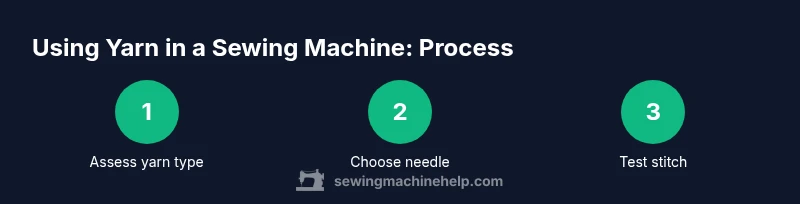
Assess yarn thickness and fiber; ensure it’s suitable for your machine and fabric. If in doubt, perform a quick test on scrap material to observe performance and tension.
Tip: Choose a yarn that won’t shred or shed aggressively on contact with the needle. - 2
Install the right needle
Use a large-eyed needle or an embroidery needle sized for your yarn. This reduces friction and allows yarn to pass through the needle eye without snapping.
Tip: Avoid forcing extremely thick yarn through a small needle hole. - 3
Thread the machine for yarn
Feed yarn along a smooth route with a clear path from spool to needle. Consider a yarn guide or spool cap to prevent looping and tangling.
Tip: Take your time routing the yarn; even small kinks can cause big thread jams. - 4
Adjust tension and stitch length
Decrease top tension slightly and test with a short stitch length. Yarn often wants to pull tighter; adjust gradually until the stitch sits evenly.
Tip: Document settings that work for future projects. - 5
Test on scrap fabric
Run a short sample of the intended stitch on scrap fabric to check balance and look. Stop if you observe bird-nesting or skipped stitches.
Tip: If issues persist, recheck threading path and needle choice. - 6
Sew your project
Proceed slowly on the final piece, guiding fabric with even pressure. Pause if the yarn binds or tangles, then re-thread and reset tension.
Tip: Take breaks to avoid overheating the fabric and needle. - 7
Finish and clean up
Trim yarn ends neatly and lightly press the finished area. Clean lint from the feed dogs and bobbin area to prevent future jams.
Tip: Store yarn separately to prevent it from tangling with other threads.
Your Questions Answered
Is it safe to use yarn in any sewing machine?
Not every machine is suited for yarn. Check your manual and test on scraps to avoid damage. Some low-end machines may struggle with thicker yarn or long runs.
Not every machine handles yarn well. Always test on scraps and follow your manual.
What yarn weights work best for yarn sewing?
Medium-weight acrylic or cotton yarns offer the best balance between ease of use and texture. Very bulky yarns may require specialized equipment or machines.
Medium-weight yarns are easiest to work with; bulky yarns can be problematic.
Can I use yarn in a serger/overlock machine?
Most sergers aren’t designed for yarn feeding. Decorative yarn work may be possible on some models with caution, but test extensively first.
Serger yarn use is limited; test before attempting any project.
Will using yarn damage my machine?
If used improperly, yarn can stress the needle, tension, or feed and cause wear. Stop if you hear unusual noises or see jams, and recheck setup.
Improper use can harm the machine—stop if you hear grinding or see jams.
What projects are best for yarn stitching?
Decorative hems, embellishments, and texture-focused accents on sturdy fabrics are ideal. Avoid heavy seams on lightweight fabrics when using yarn.
Great for decorative edges and textures on sturdy fabrics.
How do I fix a yarn jam?
Power off, rethread the machine, and remove the yarn from the path. Clear lint and test again on scrap fabric before continuing.
Turn off, rethread, clear lint, and re-test on scraps.
Watch Video
The Essentials
- Test on scrap fabric before committing to a project.
- Use medium-weight yarn and a compatible needle for best results.
- Adjust tension and stitch length with care to avoid damage.
- Inspect and clean the machine after using yarn.